The grape harvest, the vendemmia, is the busiest and most interesting time of year in Tuscan wine country. Tractors loaded with crates crawl along the roads, cellars smell of fermenting juice, and villages hold their wine festivals. This guide explains when the harvest happens, where to go, how to visit wineries during it, and which autumn events are worth planning around.
When the Harvest Happens
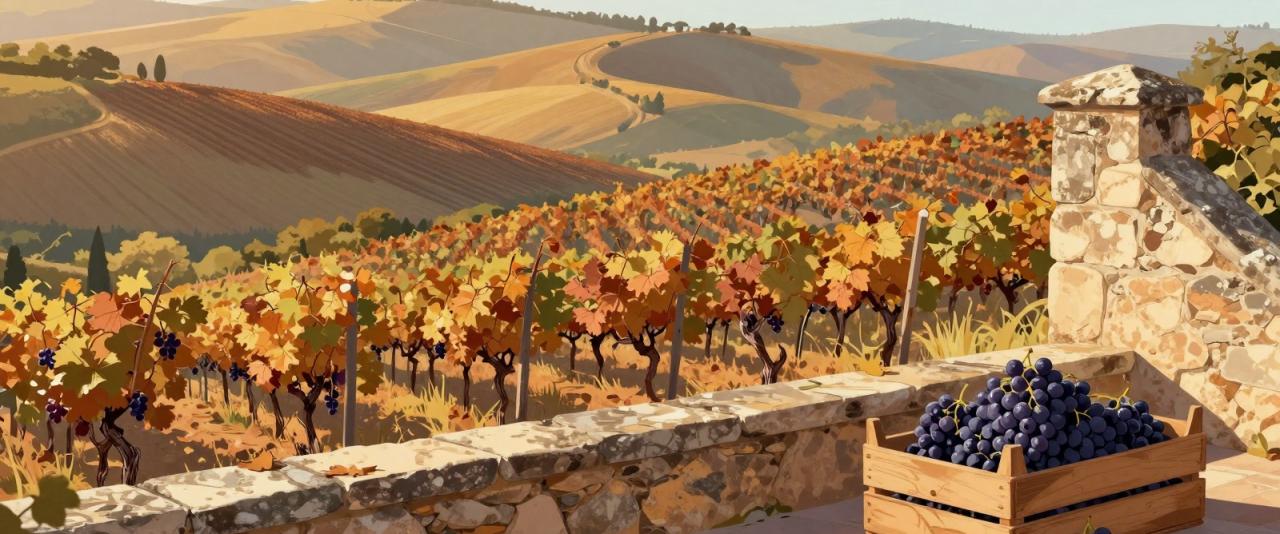
There is no single harvest date. Picking depends on the grape, the altitude and the weather of that year, and in recent hot summers it has tended to start earlier. As a rough guide, white grapes and early-ripening varieties are picked from late August into September. Sangiovese, the red grape behind Chianti, Brunello di Montalcino and Vino Nobile di Montepulciano, is usually picked from mid-September into October, with higher vineyards finishing last.
If you want to see the harvest in progress, the second half of September and the first half of October are the safest window. Each estate picks on its own schedule, and teams often work only a few days on a given vineyard, so the activity you see from the road is unpredictable.
Where to Go
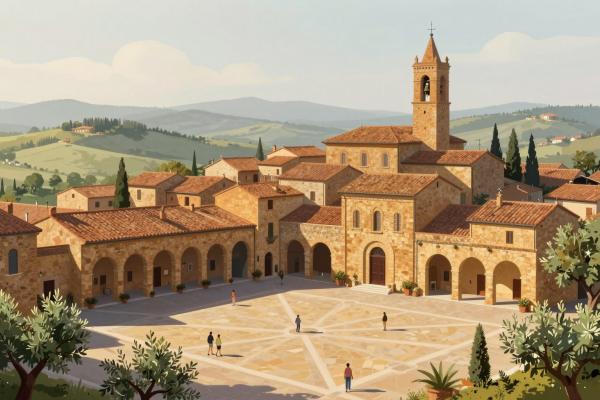
Chianti Classico, the hill country between Florence and Siena, is the easiest wine area to reach and the most varied. Its main towns are Greve in Chianti, Panzano, Castellina, Radda and Gaiole, linked by the SR222 Chiantigiana road and smaller lanes through vineyards, olive groves and woods.
Further south, Montalcino produces Brunello di Montalcino from Sangiovese alone, and the town sits on a hill above the vineyards of the Val d'Orcia. Montepulciano, east of it, is home to Vino Nobile di Montepulciano, and its historic centre has cellars cut into the rock under the palaces. On the coast, Bolgheri is known for its Bordeaux-style reds and its long cypress-lined avenue from San Guido.
Visiting Wineries During the Harvest
Harvest is the busiest season for winemakers, so book tastings and cellar tours in advance by email or through the estate's website, and be ready for shorter or rescheduled visits. Small family estates may not take visitors at all during picking. Larger estates usually keep their tasting rooms open and can show you the fermentation tanks in action.
Joining the picking itself is less common than travel brochures suggest. Harvest work is organised by professional teams for reasons of insurance and speed. Some agriturismi and wineries do offer guests a short harvest experience, usually picking for a morning followed by lunch; ask when booking rather than expecting to turn up and help.
Autumn Wine Festivals
Several long-running events fall in harvest season, though dates change slightly each year:
- Expo del Chianti Classico, Greve in Chianti - a wine fair in the town's main square, Piazza Matteotti, usually in the second week of September, with tastings from dozens of producers.
- Festa dell'Uva, Impruneta - held on the last Sunday of September, with decorated floats prepared by the town's districts. The festival dates back to 1926.
- Sagra del Tordo, Montalcino - usually on the last weekend of October, with a costumed parade, an archery contest between the town's districts and food stalls.
- San Miniato white truffle market - on November weekends, when the town between Florence and Pisa celebrates the local white truffle season.
Village sagre, small food festivals organised by volunteers, also run at weekends through the autumn, often around chestnuts, mushrooms or wild boar.
What to Eat and Drink in Autumn
Autumn menus in Tuscany change quickly. Porcini mushrooms appear after the first rains, chestnuts are roasted in the streets in October, and wild boar turns up in ragù for pappardelle. In November, olive mills begin pressing, and the new oil, olio nuovo, is poured over toasted bread rubbed with garlic, known as fettunta. Finish a meal with vin santo, Tuscany's amber dessert wine, served with cantucci almond biscuits for dipping.
Getting Around and Staying Safe
A car gives you the most freedom in wine country, but Italy's legal limit for drinking and driving is low, at 0.5 grams per litre of blood, and zero for drivers with less than three years' experience. Use the spittoon at tastings, agree on a driver, or book a guided wine tour. Without a car, buses run from Florence to Greve in Chianti, and Montalcino and Montepulciano can be reached by bus with some planning, though services are limited, especially on Sundays.
Stay in an agriturismo in the vineyards if you can, or in a town such as Greve, Radda or Montalcino. Autumn is popular, and weekends during the festivals fill early, so book a few months ahead. Bring layers: September days are warm, but evenings in the hills are cool by October.