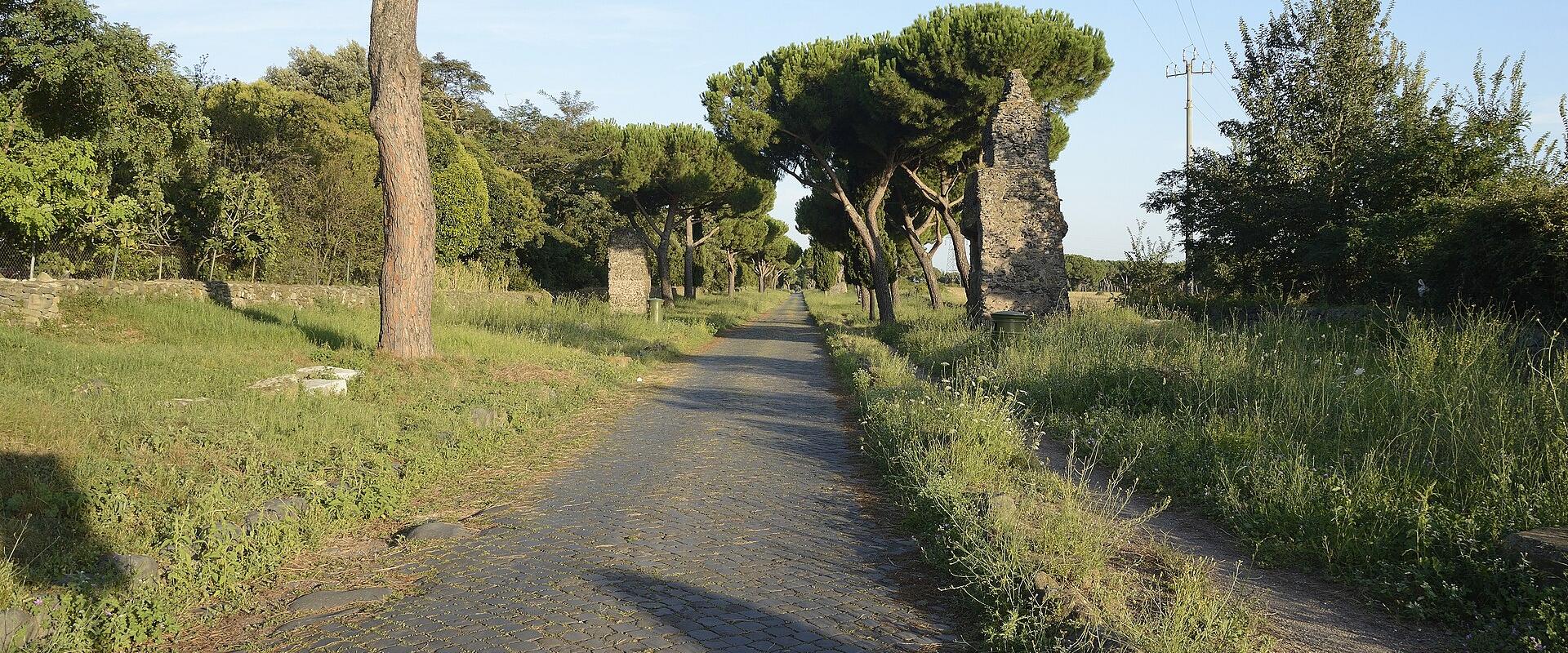
Stepping Back Into the Regina Viarum
Chi mangia bene, vive meglio. While this proverb suggests that good food leads to a long life, walking the Regina viarum offers something far more substantial: a direct taste of history. Appius Claudius Caecus ordered this road built in 312 BC, laying down basalt slabs with a stubborn permanence that has outlasted empires. The original pavement, roughly 4.10 meters wide, still stretches toward the horizon, its surface unyielding after two millennia.
Silent monuments line the route, acting as watchful sentinels over ancient patrician villas that once offered quiet refuge from the city’s noise. Today, the space breathes differently. Cyclists glide past catacombs that once guided pilgrims to sanctuaries beyond the city walls. The air here is distinct, carrying the scent of dry earth and wild herbs, completely free of the exhaust fumes that choke the urban center.
This stark beauty highlights the clash between rigid Roman engineering and the chaotic, sprawling growth of modern Rome. You do not need a guide to sense the weight of the past; the stones speak loudly. Here, Rome connects directly to the East, bridging the historical gap to Greece and Egypt. It is a journey through time, paved in stone.
Pedaling Past the Tomb of Cecilia Metella
Secure a reliable bicycle near Porta San Sebastiano for roughly ten euros a day. This sturdy mount will carry you along the Via Appia, an ancient artery laid down in 312 BC by the censor Appius Claudius Caecus. Its original basalt surface, spanning four meters, remains remarkably intact under the summer sun, offering a smooth, rhythmic ride that feels both historic and immediate.
The road’s dual purpose as a military thoroughfare and later a pilgrimage route creates a distinct rhythm unlike city riding. You will glide past the imposing cylindrical Tomb of Cecilia Metella, a massive monument commissioned by Marcus Licinius Crassus for his wife. This structure stands sentinel among other funerary remains, anchoring the landscape in centuries of memory.
Patrician villas now line the path, replacing early rural settlements as elites sought tranquil retreats from the capital. These estates hint at the road’s broader role in connecting Rome to trade networks stretching toward Greece and Egypt. The enduring basoli stones provide a consistent texture beneath your tires, grounding you in the present while your eyes trace the lineage of the past. This unique blend of movement and antiquity defines the Regina viarum: a place where history is not just observed but traversed.
Whispers in the Dark: Catacombs of San Callisto
Cool silence envelops you immediately upon entering the Catacombs of San Callisto. The air feels heavy, thick with two millennia of history, clinging to your skin. This underground network, hewn from soft tuff rock along the Appian Way, housed early Christians and martyrs during the first centuries of the Common Era, serving as a final resting place for those who could no longer remain above ground.
Narrow passages wind through the earth, leading to cubicula—small burial chambers lined on the walls. Faded frescoes here depict biblical scenes in vibrant hues that have survived the ages, their pigments still holding a faint vibrancy against the dark rock. Walking these tight corridors feels like stepping into a quiet sanctuary where ancient prayers still echo faintly, preserved in the stone.
The Appian Way, revered as the Regina viarum, served as more than a mere trade route. It acted as a sacred path guiding pilgrims toward these spiritual havens beyond the city walls. Today, visitors can walk through the Crypt of the Popes, the resting place for seven early pontiffs. This journey offers a tangible connection to Rome’s Christian roots, standing as a stark reminder of the faith that shaped Western civilization, preserved in the dark, earthy depths beneath the bustling modern city above.
Feasting Under the Cypress Shadows
The basalt stones beneath your feet, laid in 189 BC, hum with a quiet history. While the Appian Way began as a military artery, it now offers a serene retreat from Rome’s chaos. Lunch here is a ritual, not a rush. Seek a trattoria near the ancient funerary monuments lining the road, where tables often sit under cypress shade, carrying the scent of rosemary and grilled meats.
A bottle of local Primitivo pairs well with a hearty pasta dish. Expect to pay €15 to €20 for the meal, though the true value lies in the atmosphere. Notice the patrician villas that once stood here as quiet retreats for wealthy Romans. This route connected Rome to the East, but today it connects you to a slower pace of life. The silence is rare. Savor it.