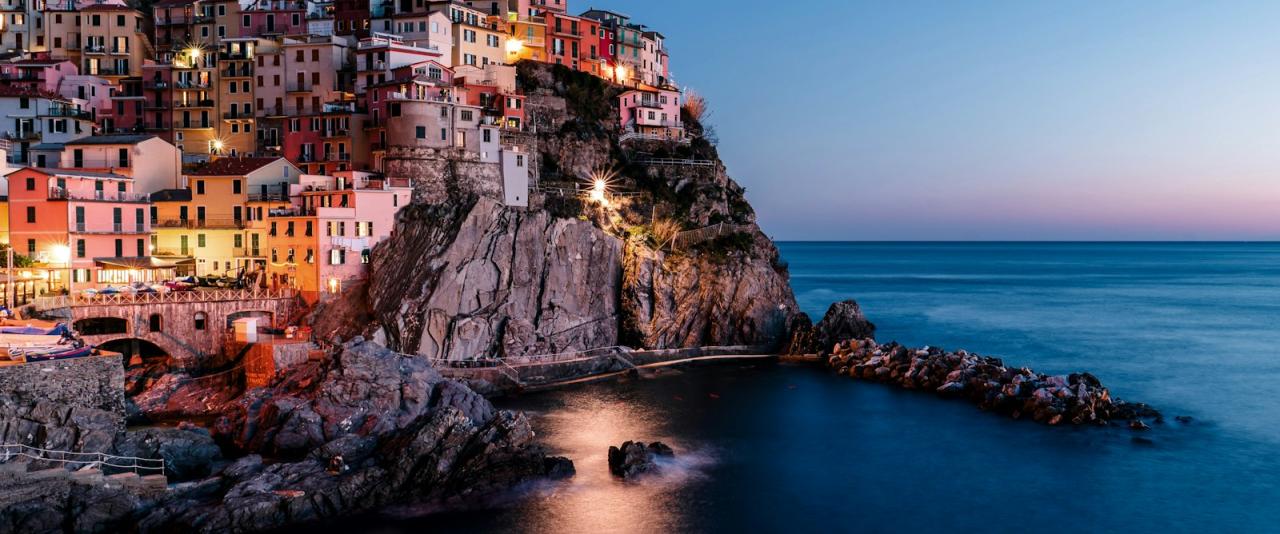
Five days is the right amount of time for the Cinque Terre. It lets you walk the open coastal paths without rushing, see each of the five villages at a quiet hour, and keep a spare day for the weather, which closes trails here more often than visitors expect. This itinerary assumes you arrive by train and do not use a car, which is the sensible way to visit.
Before You Go: Season, Base and Trail Passes
The five villages, from north to south, are Monterosso al Mare, Vernazza, Corniglia, Manarola and Riomaggiore. They sit on the regional railway between Levanto and La Spezia, and in high season trains run up to several times an hour, so moving between them takes minutes.
Pick one base and stay put for all five nights. Monterosso is the easiest: it is the flattest village and has the longest sandy beach. Vernazza and Manarola are more atmospheric but involve steps and steep lanes. Corniglia sits on a headland about 100 metres above the sea, reached from the station by a long brick staircase of more than 350 steps or by a shuttle bus. La Spezia and Levanto are cheaper alternatives just outside the park, with direct trains in.
The coastal paths that charge a fee are covered by the Cinque Terre Card, sold online, at park info points and at the La Spezia and Levanto stations. The Trekking version covers paths and park shuttle buses; the version with trains adds unlimited regional travel on the Levanto to La Spezia line. Prices change by season and date, so check the official park site when you book. The card season runs roughly from mid-March to early November.
Spring (April to early June) and early autumn (September to mid-October) give the best walking weather. July and August are hot and crowded, especially in Vernazza and Manarola. From November, many places close, the ferries stop, and rain brings more trail closures, though the villages are much quieter and paths outside the paid season are free to walk.
Day 1: Monterosso al Mare
Arrive, settle in and keep the first day easy. Monterosso is split in two by a short tunnel: the old town (Monterosso Vecchia) with its narrow lanes and the striped church of San Giovanni Battista, and Fegina, the newer side by the station with the long beach. Walk up to the Capuchin convent on the hill between them for a view down the coast. Swim if the season allows, and eat early: Monterosso is known for its anchovies, served fried, marinated or salted.
Day 2: Monterosso to Vernazza to Corniglia on Foot
This is the classic hike, on the Sentiero Azzurro (path no. 2). Monterosso to Vernazza takes about two hours and is the steeper half, climbing through terraced vineyards and olive groves before dropping into Vernazza's harbour. Rest there, then continue to Corniglia, roughly another hour and a half with views back over Vernazza. Start early: by late morning in summer the narrow path is busy and hot. Wear proper shoes with grip, carry water, and check the park's trail status page that morning, because paths close during weather alerts. Return to Monterosso by train.
Day 3: Manarola, Riomaggiore and the Via dell'Amore
The coastal path between Corniglia and Manarola has been closed for years after landslides, so take the train south. In Manarola, walk the short path above the harbour to the viewpoint by the cemetery and the vineyard terraces behind the village. The Via dell'Amore, the cliff-side promenade from Riomaggiore to Manarola, reopened in 2024 after a 12-year closure. Access is controlled and needs a separate, timed ticket or add-on to the card, so book it ahead. Spend the afternoon in Riomaggiore, the southernmost village, climbing to its castle and church of San Giovanni Battista above the main street.
Day 4: By Boat to Portovenere, or the High Paths
If the sea is calm, take the tourist ferry that runs along the coast between Monterosso and Portovenere in the main season. Seeing the villages from the water is a different experience, and Portovenere, just outside the Cinque Terre, has the church of San Pietro on its rocky point and a long row of harbour houses. Ferries do not run in rough weather, so treat this as a flexible day.
If you prefer to walk, the higher paths are quieter than the coast. A common choice is the climb from Manarola to the hamlet of Volastra and on along the vineyard terraces towards Corniglia. Another is the old pilgrim path from Riomaggiore up to the Santuario di Montenero, which looks down over the whole southern coast. These routes are steeper and more exposed than the Sentiero Azzurro, so allow extra time.
Day 5: Vernazza Slowly, Then Levanto or a Rest Day
Go back to Vernazza early in the morning, before the day trippers arrive, and climb the Doria castle tower above the harbour. Afterwards, either take the train to Levanto, a larger town at the northern end of the line with a surf-friendly beach and a seafront cycle and walking path through old railway tunnels towards Bonassola, or keep the day free. Bad weather often costs visitors a day here, and the last day is the one that saves the plan.
Food and Wine to Try
Liguria's food is simple and built on local ingredients. Look for pesto with trofie or trenette, focaccia, farinata (a thin chickpea pancake), and anchovies from Monterosso. The local white wine is Cinque Terre DOC, grown on the same terraces you walk past, and Sciacchetrà is the area's sweet wine, made from dried grapes and served in small glasses. Restaurants in the villages are small and fill up in summer, so book dinner in the morning.