







- Where
- Matera, Basilicata and Matera
- Directions
- Directions
The Rock Churches of Matera are located within the Sassi districts, specifically Sasso Caveoso and Sasso Barisano, and on the plateau of the Murgia across the ravine, in a city that is one of the oldest continuously inhabited settlements on Earth. Recognized as a UNESCO World Heritage Site in 1993, as part of the Sassi and the Park of the Rupestrian Churches, these structures are carved into soft tufa limestone using what is called negative architecture, a technique where space is created by subtraction rather than addition. The rock around Matera is soft enough to cut with hand tools, and it hardens when exposed to the air, which allowed people to dig dwellings, storerooms, cisterns and chapels directly into the cliff.
The area has been inhabited since prehistoric times, with Neolithic villages on the Murgia, but the churches belong to a later and well-documented chapter. They became prominent during the turbulent period following the fall of the Western Roman Empire, and especially from the 8th century onward, when monks and hermits, including Greek-speaking monks fleeing the religious conflicts of the Byzantine empire, as well as Benedictines from the west, settled in the canyon walls and carved elaborate chapels, decorating them with Byzantine-influenced frescoes. In the surrounding area, there are more than a hundred and fifty rock churches, ranging from tiny single-room chapels to complexes with several aisles, columns and altars cut from the stone.
Visitors can explore these sacred spaces through self-guided itineraries, allowing for a personal connection to the city’s soul. Several are open for visits, including Santa Maria de Idris, a church carved into a rock spur above Sasso Caveoso, connected to the crypt of San Giovanni in Monterrone, with surviving frescoes, and San Pietro Barisano, one of the largest in the Sassi, with rows of niches in which the dead were once seated. Santa Lucia alle Malve, a convent church, has frescoes of the Virgin and saints. On the plateau across the ravine, churches such as Madonna delle Virtù and San Nicola dei Greci give a sense of the monastic life of the area, and the nearby crypt of the Original Sin, a short drive away, with its early medieval frescoes, is sometimes called the Sistine Chapel of rock painting.
The evocative landscape has also served as a filming location for major biblical productions, including The Gospel According to St Matthew, the 1964 film by Pier Paolo Pasolini, and The Passion of the Christ, directed by Mel Gibson, adding a layer of cinematic history to the site. Matera was named European Capital of Culture in 2019, which brought a wave of restoration and visitors. Exploring the churches offers a profound insight into the religious and architectural ingenuity of the region’s inhabitants.
It is advisable to check local tourism resources for any seasonal variations or guided tour options, as some churches are open only at certain times or with a guide, and tickets may be needed. Sturdy shoes are essential, because the paths are steep and the stone is uneven, and the heat in summer can be intense. The experience of walking through these ancient rock-cut sanctuaries provides a tangible link to the past, highlighting the resilience of the community that has inhabited Matera for millennia. For visitors, the Rock Churches offer a unique blend of spiritual history, artistic heritage and dramatic natural scenery, and they combine well with the Cathedral on the Civita and the cave houses of Vico Solitario.
Categories
More photos coming soon
Nearby Attractions
Other places to visit in Matera
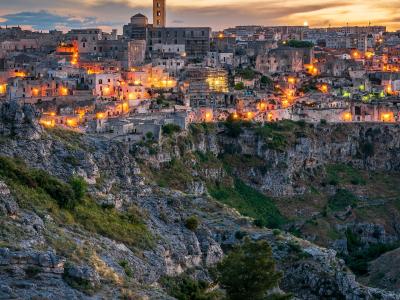
Belvedere di Murgia Timone
Observation deck with views of Sassi di Matera
Historic Churches · Scenic Viewpoints
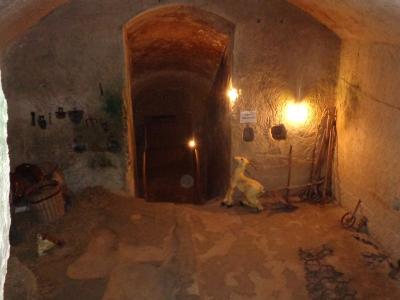
Casa Grotta di Vico Solitario
Historic Sassi cave dwelling with rupestrian church
History & Heritage · Museums & Culture
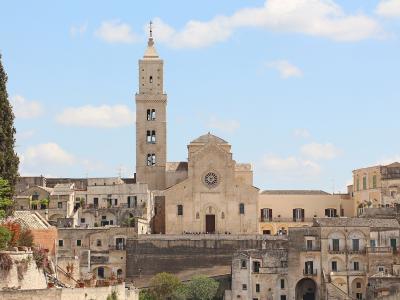
Cathedral of Matera (Duomo di Matera)
Romanesque cathedral with 18th-century polyptych
Free Architectural Monuments · Cultural Tours
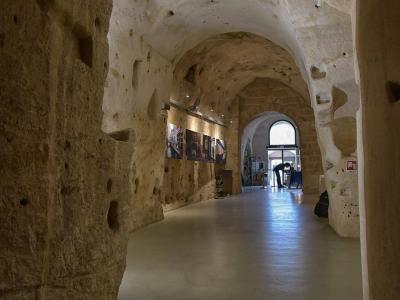
Grotte di Matera
Paleolithic cave dwellings in UNESCO Sassi district
History & Heritage · Museums & Culture
Questions people ask
Quick Facts
Best Time to Visit
Visit between April and June or September and October for mild temperatures and fewer crowds.