







- Where
- Genoa, Liguria
- Directions
- Directions
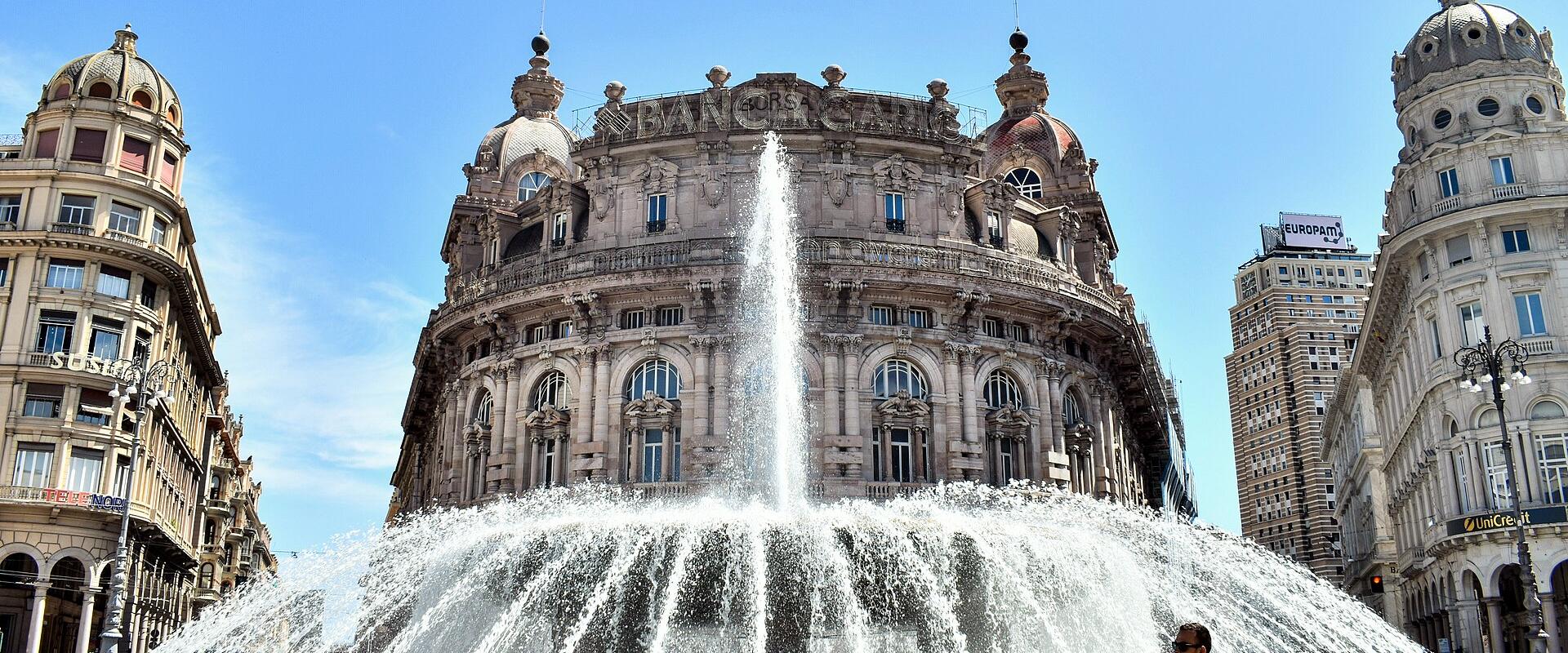
Piazza De Ferrari is the main square of Genoa, in the centre of the city, and it works as a hinge between the medieval old town and the modern business district, a large open space where the narrow lanes of the old port give way to broad avenues. It was laid out in the late 19th century, when Genoa, a prosperous commercial and industrial city, wanted a new centre worthy of its status, and the work, completed around the end of the 1800s, was part of the opening of Via XX Settembre, the grand street that runs eastward from the square. The square takes its name from Raffaele De Ferrari, Duke of Galliera, a banker and philanthropist who left much of his fortune to the city for public works. From the start, it was conceived as the economic centre of the city, and it is still surrounded by banks, offices and institutions.
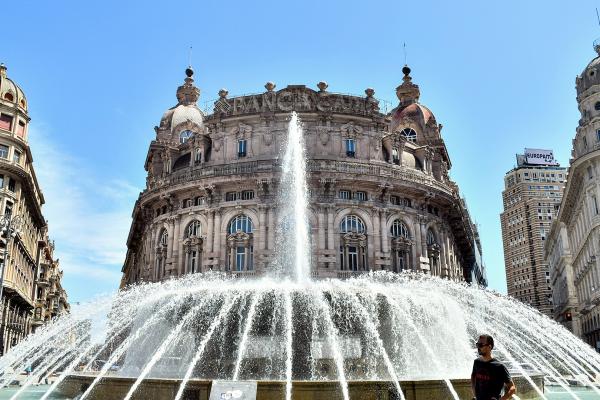
The focus of the square is its large bronze fountain, designed by the architect Cesare Crosa and installed in 1936, which stands in the middle of a wide circular basin and sends up a tall column of water surrounded by smaller jets. The fountain is the meeting point of the Genoese, and its water lit at night gives the square a lively atmosphere. Around it stand some of the city’s grandest buildings. On one side is the Palazzo Ducale, the former residence of the doges, now a cultural centre with exhibitions and events, with its tall facade and courtyards, and next to it the Church of the Gesù. Opposite, the Teatro Carlo Felice, the city’s opera house, which was bombed in the Second World War and reopened in 1991, and the Accademia Ligustica di Belle Arti, the fine arts academy, occupy the other side. The former stock exchange, the Palazzo della Borsa, with its elegant Neo-Renaissance facade, and several banking palaces add to the effect of a grand civic space.
The square acts as a central landmark for visitors and a gateway to the main sights. From here, it is a short walk to the old town, along Via Garibaldi, with its palaces, to the Caruggi, the maze of narrow alleys, and to Porta Soprana, the medieval gate beside the house said to be Columbus’s birthplace. In the opposite direction, Via XX Settembre leads toward the modern shopping district, with its arcades and elegant shops, and the Ponte Monumentale. The Aquarium of Genoa, the Galata Museo del Mare and Palazzo Tursi are further sights that can be reached on foot or by a short bus ride.
The square is open at all times and free, and it is a good place for a rest on the edge of the fountain, to watch the crowds, and to drink a coffee at the cafes around. It is busiest in the late afternoon, when the Genoese pass through, and in the evening, when the fountain is lit. Events, concerts and demonstrations often take place here, so the space is a living part of the city. Boccadasse, the Giardini di Nervi and the focaccia shops of the old town are among the other pleasures of Genoa. The Old Port and the Palazzi dei Rolli are other highlights of Genoa, Italy. The square suits anyone who wants to get their bearings in the city, and its mixture of old and new is typical of Genoa.
Categories
More photos coming soon
Nearby Attractions
Other places to visit in Genoa
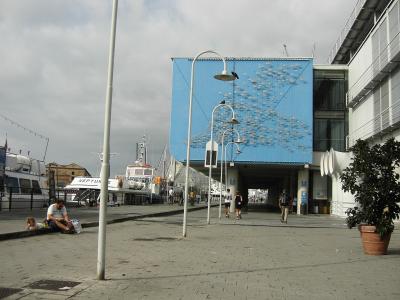
Aquarium of Genoa (Acquario di Genova)
Italy's largest aquarium in Renzo Piano's Porto Antico
Coastal & Maritime · Museums & Culture
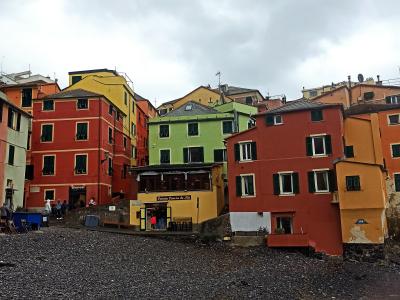
Boccadasse
Historic Genoese fishing village with colorful houses
Beaches · Fishing Villages
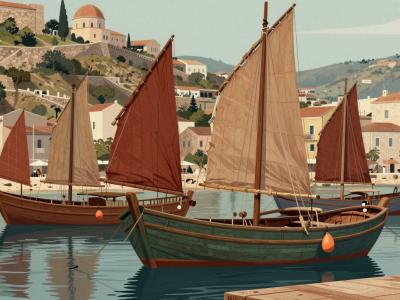
Caruggi (Old Town Alleys)
Europe's largest historic center with labyrinthine alleys
Cultural Tours · Historic Districts
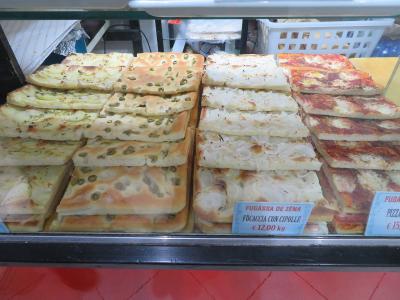
Focaccia Genovese
Genoa's iconic thin, crispy flatbread
Artisan Workshops · Local Cuisine
Questions people ask
Quick Facts
Best Time to Visit
Visit between April and June or September and October for mild temperatures and fewer crowds.