







- Admission
- Not open to the public
- Hours
- Not open to the public
- Where
- Montepulciano, Tuscany
- Directions
- Directions
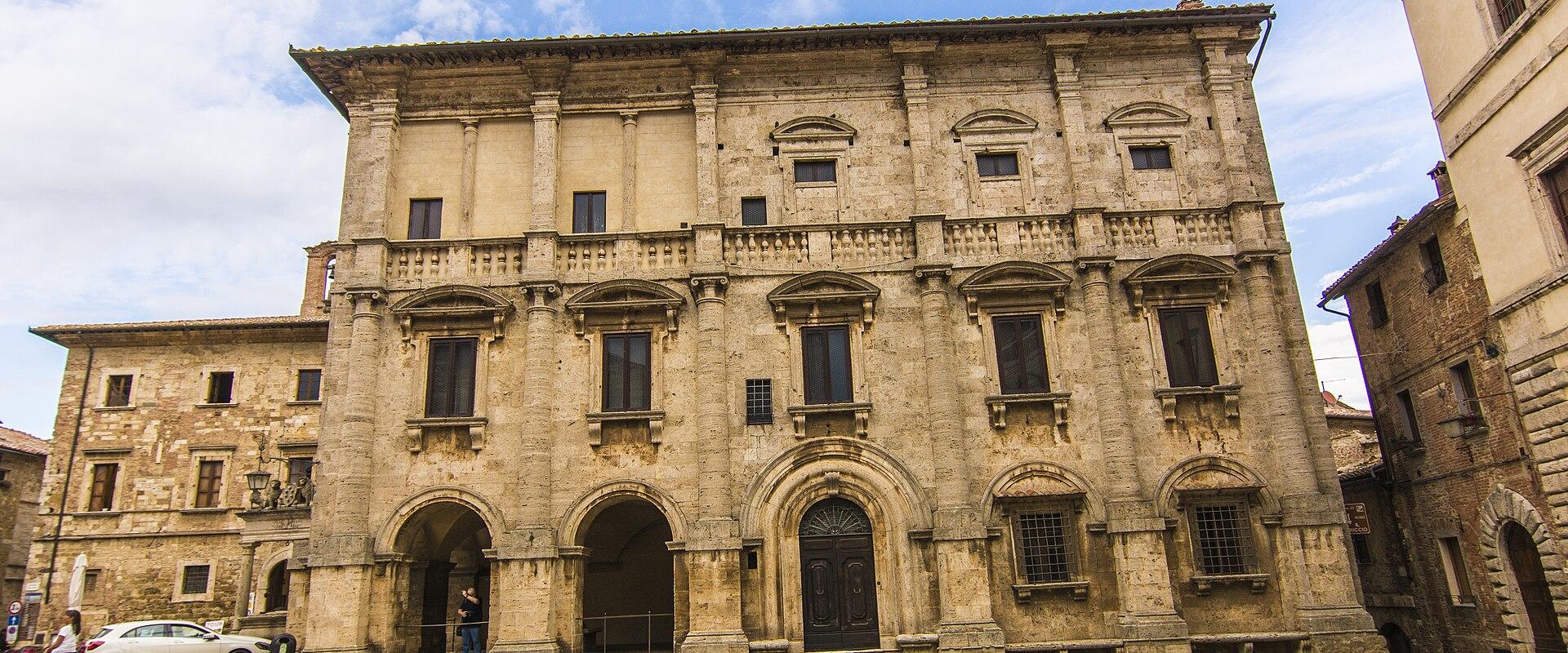
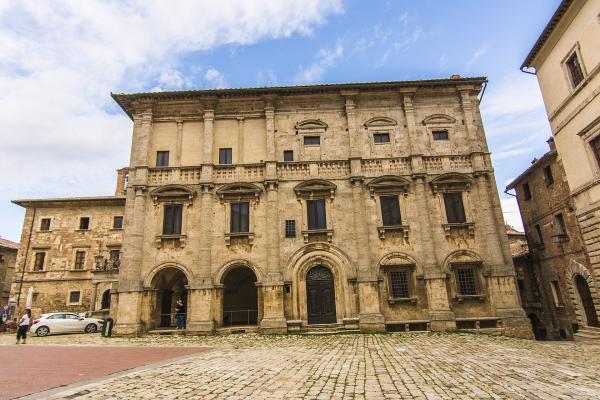
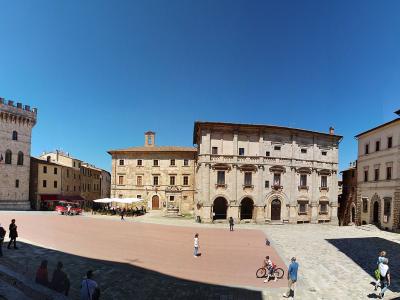
Palazzo Nobili-Tarugi, usually called Palazzo Tarugi, is one of the finest Renaissance palaces in Montepulciano, the hill town in southern Tuscany, and it stands on the north side of Piazza Grande, the main square of the town, directly facing the Duomo. The square sits at the highest point of the town, and its surrounding buildings form one of the most harmonious ensembles of the Tuscan Renaissance, with the Palazzo Comunale, the town hall, which has a tall tower modelled on that of the Palazzo Vecchio in Florence, the cathedral, and the palaces of noble families. The Palazzo Tarugi is one of the most prominent, and it gives the square much of its character.
The palace dates from the 16th century and is regarded as an important example of Mannerist architecture, the style that followed the High Renaissance and played with classical rules in a more flexible and inventive way. Its design has been attributed to major architects. The first attribution was to Antonio da Sangallo il Vecchio, the Florentine architect who also designed the nearby church of San Biagio, and more recent scholarship has favoured Jacopo Barozzi da Vignola, the architect who later became famous for the Gesù in Rome. The palace was built for the Nobili family, among the leading families of Montepulciano, and it passed later to the Tarugi family, whose most famous member was a cardinal, Francesco Maria Tarugi, a friend of Saint Philip Neri.
The most striking feature is the facade of the palace in Italy, which is completely clad in travertine, the pale local stone, giving the building an imposing, solid look. A ground-floor portico, with round arches resting on pillars, runs along the front, and it used to be open to the public as a covered passage. Above it, the noble floor, the piano nobile, has tall windows with curved pediments and Ionic semicolumns, and the second floor has Doric semipilasters, with a loggia at the corner and a strong cornice, in a restrained and elegant design. The proportions and the use of stone show the discipline of the architect, and the facade rewards a slow look from different points of the square, particularly in the evening, when the light warms the stone.
The palace is a private residence and does not function as a public tourist attraction, so it cannot be visited inside, and visitors admire it from the square. The ground-floor portico may be seen, but access may change. Seeing it takes only a few minutes, but it forms part of a walk around Piazza Grande, where one can also see the Palazzo Contucci, the Pozzo dei Grifi e dei Leoni, a well with carved griffins and lions, and the Duomo, the cathedral of Santa Maria Assunta, with its unfinished facade. Not far away, the Chiesa di San Agostino with its terracotta portal and the Duomo di San Biagio, a pilgrimage church at the foot of the town, are other sights. The palace suits those who like Renaissance and Mannerist architecture, and Montepulciano is also famous for its Vino Nobile, which can be tasted in the cellars below the palaces.
More photos coming soon
Hours & Fees
- Open
- Not open to the public
- Admission
- Not open to the public
Hours and prices change, especially out of season. Check with the venue before you go.
Nearby Attractions
Other places to visit in Montepulciano
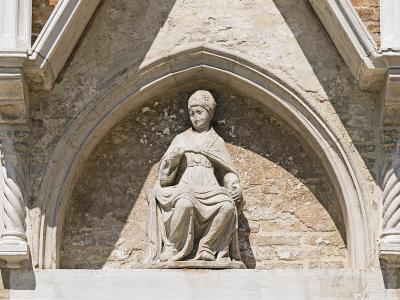
Chiesa di San Agostino
16th-century church housing the Madonna del Vino
Architectural Monuments · Historic Churches
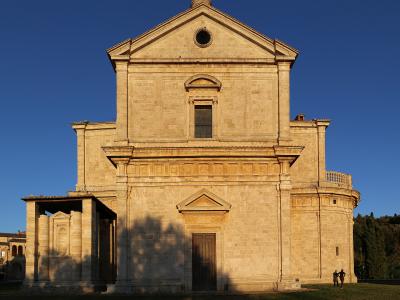
Duomo di San Biagio
Tuscan Renaissance temple of travertine
Free Architectural Monuments · Historic Churches
Piazza Grande
Renaissance civic square with Palazzo Comunale
Architectural Monuments · Historic Towns
Questions people ask
Quick Facts
Best Time to Visit
Visit between April and June or September and October for mild temperatures and fewer crowds.