







- Admission
- Free admission
- Hours
- Daily 9:00–12:30 and 15:30–19:30
- Where
- Montepulciano, Tuscany
- Directions
- Directions
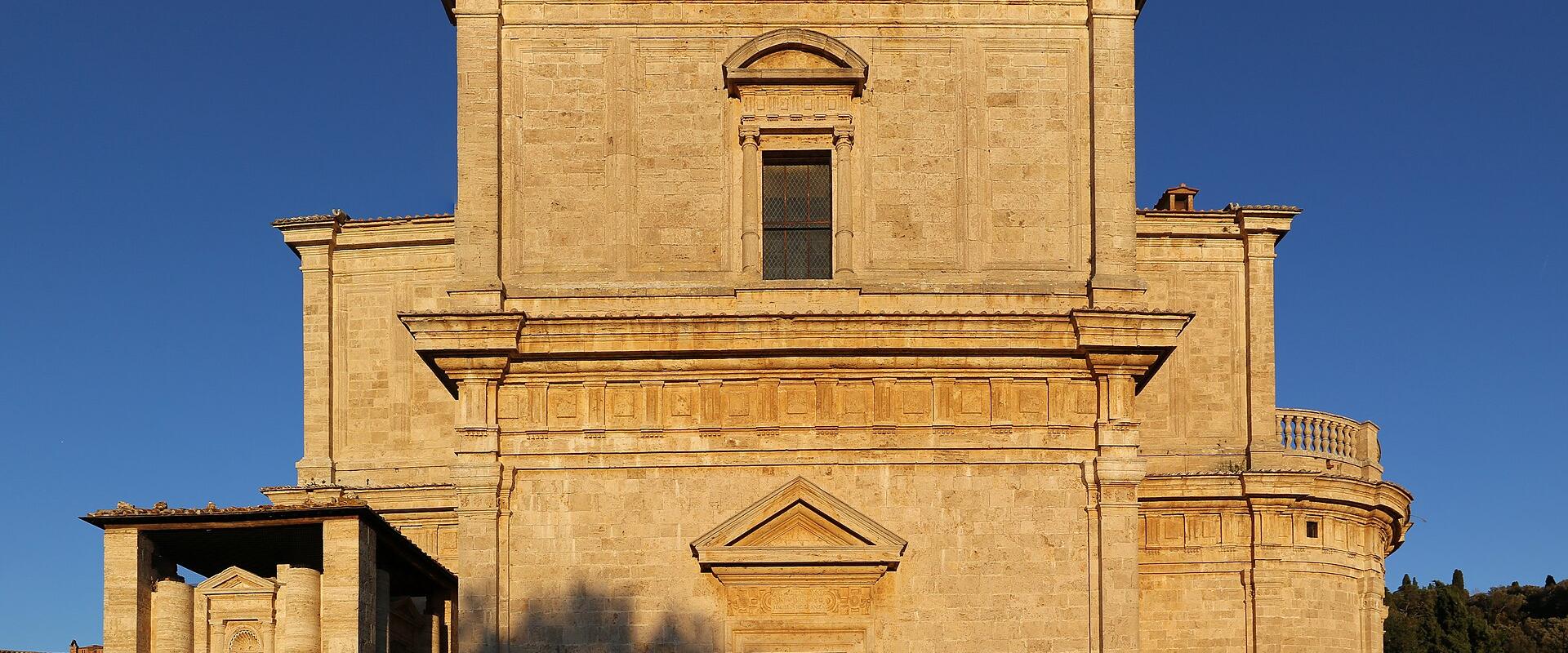
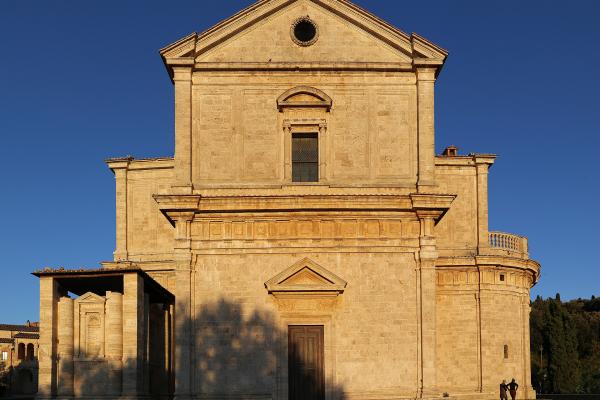
The Duomo di San Biagio, more correctly the Temple of San Biagio, the Tempio di San Biagio, is a Tuscan pilgrimage church in Italy that stands in the open country about a kilometre south-west of Montepulciano, at the end of a long avenue of cypresses, and it is regarded as one of the most beautiful Renaissance churches in Tuscany. Although it is often called a duomo, it is not the town’s cathedral, which is the Duomo di Santa Maria Assunta on Piazza Grande, but a shrine in the fields. It was built from 1519 to 1540 to a design by the Florentine architect Antonio da Sangallo the Elder, and it is dedicated to Saint Blaise, San Biagio in Italian. The church was commissioned to honour an image of the Virgin, which was said to have performed miracles, and the place became a goal for pilgrims.
The building is a masterpiece of the High Renaissance, and it was designed according to the ideal of the central plan, in the form of a Greek cross, with four equal arms, a central dome and a perfect geometric balance. The architect was strongly influenced by Bramante and by the plans for the new Saint Peter’s in Rome, and he applied the same principles on a smaller scale. The church is built of travertine, a warm golden stone from the region, which gives it a glowing colour, especially at sunset, and which has weathered to a mellow tone. Two bell towers were planned, at the corners of the facade, but only one was completed, the other remaining at the height of the nave, which gives the front an asymmetrical look.
The interior is harmonious, light and austere. The four arms of the cross meet under the dome, and walls of travertine, simple pilasters and a high drum lit by windows create an atmosphere of calm. The dome is lined with a coffered pattern, and the altars are plain, in keeping with the severity of the design. The high altar holds the painting of the Madonna that gave rise to the shrine. The exterior is equally harmonious, with pediments, classical pilasters and a series of semicircular arches, and the whole building is designed in perfect proportions, so that it feels at the same time monumental and gentle. Next to the church stands the Canonica, the canons’ house, in a similar style, with a cloister, and there is a small garden.
The temple is open daily, usually in the morning and again in the afternoon and early evening, but the hours vary, so check them before going. It lies below the town, along a path that leads down from the town walls through the cypresses, a pleasant walk of fifteen to twenty minutes, though the way back uphill is steeper, and it is also reachable by car. A visit takes about half an hour. Other places in Montepulciano include Piazza Grande, Palazzo Tarugi and the Chiesa di San Agostino, and the town is famous for its Vino Nobile wine. The temple suits lovers of Renaissance architecture and those who enjoy a peaceful setting.
Categories
More photos coming soon
Hours & Fees
- Open
- Daily 9:00–12:30 and 15:30–19:30
- Admission
- Free admission
Hours and prices change, especially out of season. Check with the venue before you go.
Nearby Attractions
Other places to visit in Montepulciano
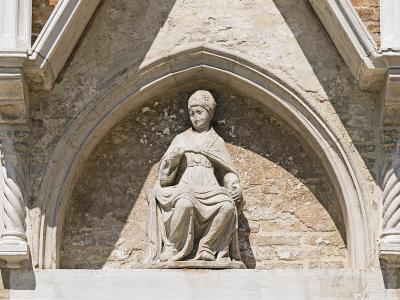
Chiesa di San Agostino
16th-century church housing the Madonna del Vino
Architectural Monuments · Historic Churches
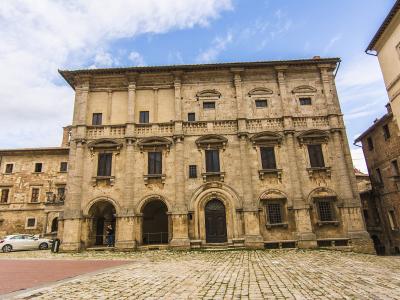
Palazzo Tarugi
16th-century Mannerist palace facing Montepulciano's Duomo
Architectural Monuments · Historic Palaces
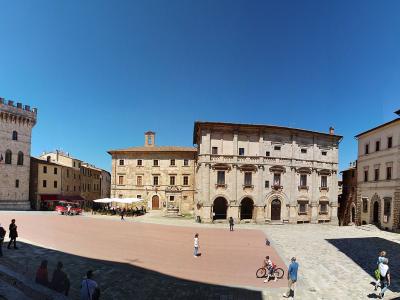
Piazza Grande
Renaissance civic square with Palazzo Comunale
Architectural Monuments · Historic Towns
Questions people ask
Quick Facts
Best Time to Visit
Visit between April and June or September and October for mild temperatures and fewer crowds.