







- Where
- Matera, Basilicata and Matera
- Directions
- Directions
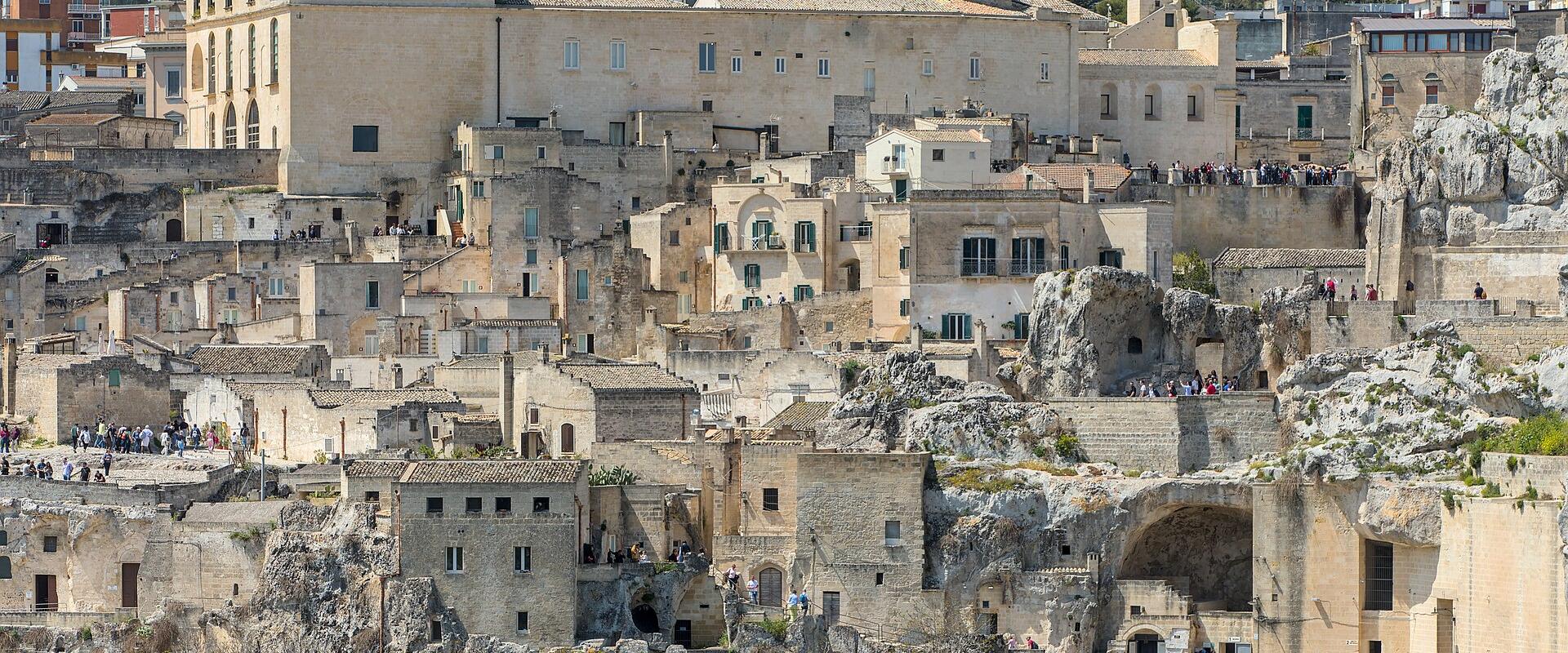
Palazzo Lanfranchi is a large Baroque palace in Matera, southern Italy, in the region of Basilicata, built in the 17th century as a seminary and named after the archbishop who commissioned it, Vincenzo Lanfranchi. It stands in the upper part of the town, on a square above the Sassi, the ancient cave-dwelling districts for which Matera is famous, and its long facade and interior courtyards recall the importance the Church had in the city’s life. The seminary trained priests for the diocese for generations, and the architecture, with its sober exterior and large halls, reflects that purpose, though the Baroque taste is visible in the portals and the staircases.
Today the building houses the Museo Nazionale d’Arte Medievale e Moderna della Basilicata, the National Museum of Medieval and Modern Art of Basilicata, which brings together works from the region and from the local diocese. The collection includes religious paintings and sculpture from the Middle Ages onwards, as well as works of the later centuries, and shows how art in this remote southern region reflected the influence of Byzantine, Norman, Spanish and Neapolitan traditions. Many of the pieces come from churches and convents in Matera and the surrounding countryside, and they help explain the religious history of a region that was long poor and isolated.
The palace is also the home of an important painting of the 20th century. Carlo Levi, the writer and painter from Turin, was exiled by the Fascist regime to a village in Basilicata in 1935 and 1936, and wrote about the experience in Christ Stopped at Eboli, the book that brought the poverty of the South to the attention of a wide audience. His large mural Lucania ’61, painted for an exhibition in 1961, is displayed in the Palazzo Lanfranchi and gives a vivid picture of peasant life in the region. The panel is around eighteen metres long and is one of the highlights of the museum.
A visit usually lasts about an hour or two, depending on your interest in art, and opening times and ticket prices are set by the museum and may change, so check them before going. The palace is a short walk from the Cathedral of Matera (Duomo di Matera), the Piazza Vittorio Veneto and the Sassi di Matera, so it fits into a day in the old town, together with the rock churches and the Casa Grotta di Vico Solitario, which show how people lived in the caves. It suits those interested in southern Italian history, in religious art and in Carlo Levi, and it offers a cool, quiet pause from the heat of the streets.
Categories
More photos coming soon
Nearby Attractions
Other places to visit in Matera
Belvedere di Murgia Timone
Observation deck with views of Sassi di Matera
Historic Churches · Scenic Viewpoints
Casa Grotta di Vico Solitario
Historic Sassi cave dwelling with rupestrian church
History & Heritage · Museums & Culture
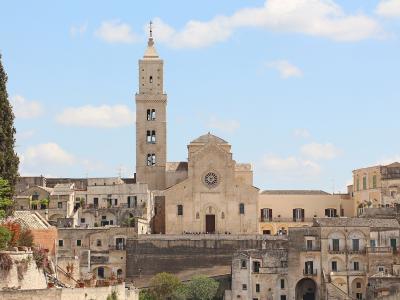
Cathedral of Matera (Duomo di Matera)
Romanesque cathedral with 18th-century polyptych
Free Architectural Monuments · Cultural Tours
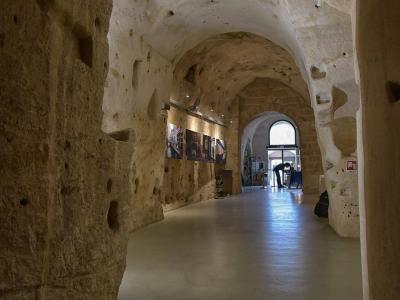
Grotte di Matera
Paleolithic cave dwellings in UNESCO Sassi district
History & Heritage · Museums & Culture
Questions people ask
Quick Facts
Best Time to Visit
Visit between April and June or September and October for mild temperatures and fewer crowds.