







Orvieto Duomo (Cathedral of Santa Maria Assunta)
14th-century Gothic cathedral housing the Corporal of Bol...
- Where
- Orvieto, Umbria and Marche
- Directions
- Directions
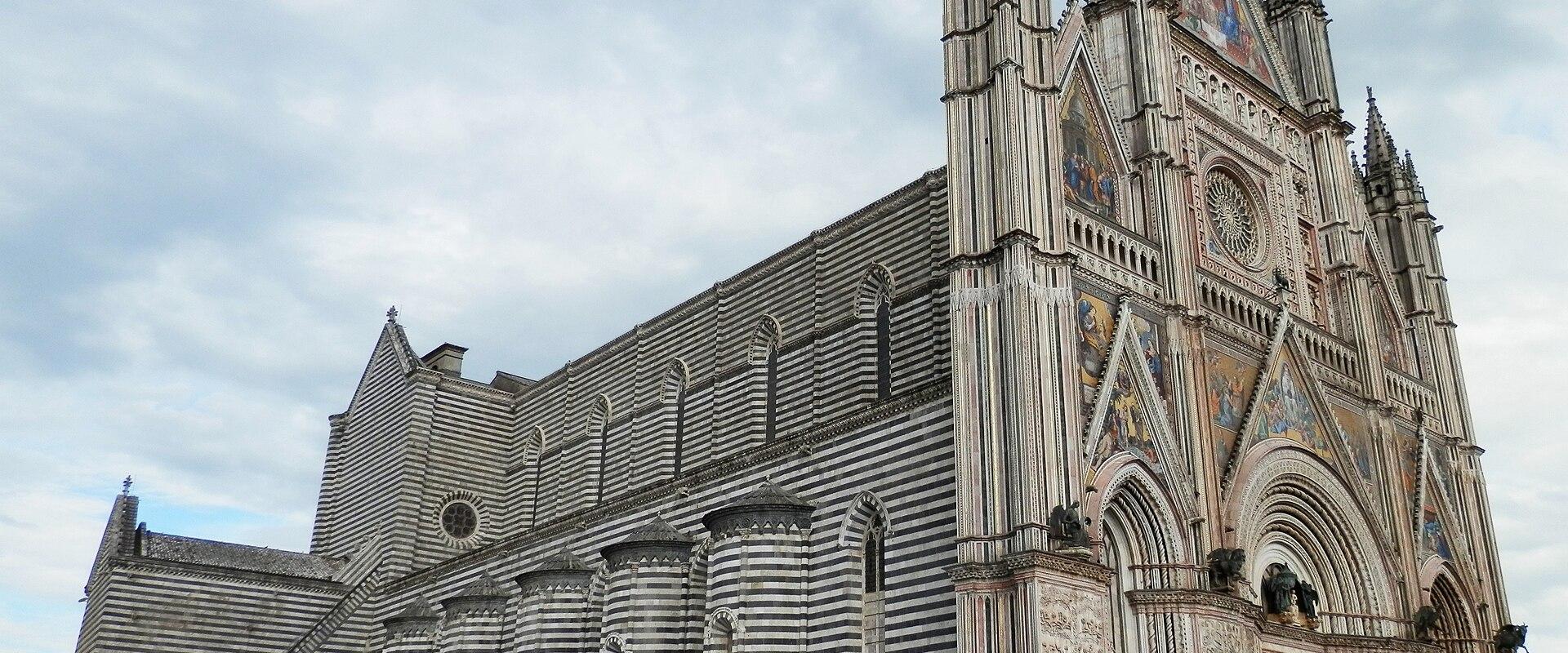
The Orvieto Duomo, formally the Cathedral of Santa Maria Assunta, is a Roman Catholic church, the cathedral of the Diocese of Orvieto-Todi, and one of the supreme works of Italian Gothic architecture. It stands on the edge of a great block of volcanic tufa in southern Umbria, and its facade, covered with mosaics, sculpture and gold, is visible as soon as you turn into the cathedral square. Its origins are linked to a Eucharistic miracle. In 1263, according to tradition, a priest in the nearby town of Bolsena who doubted the real presence of Christ in the Eucharist saw blood fall from the consecrated host onto the altar cloth, the corporal. The cloth was taken to Orvieto, where Pope Urban IV was then living, and in 1264 he established the feast of Corpus Christi. To house the relic, work on the cathedral began in 1290, when Pope Nicholas IV laid the first stone, and it continued for centuries, with the last work done in the 16th century.
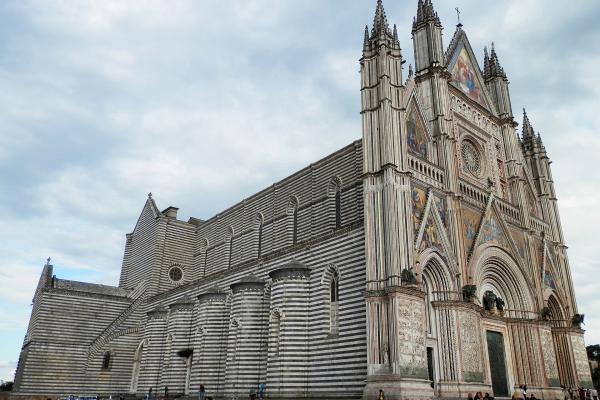
The facade is the glory of the building. It was designed in the early 14th century by the Sienese master Lorenzo Maitani, who directed the work for some twenty years. The front is divided into three gables with pinnacles, and richly decorated with mosaics that glitter in the sun, carved bas-reliefs on the piers showing scenes from Genesis and the Last Judgment, bronze symbols of the Evangelists and a great rose window by Andrea Orcagna. The mosaics were redone over the centuries, and the sculptured reliefs of the lower part, with their delicate marble carving, are among the finest of the Gothic period in Italy. The bronze doors are modern, made in 1970 by the sculptor Emilio Greco.
Inside, the nave is wide, with alternating bands of dark basalt and pale travertine on the arches and columns, a striped pattern that recalls Siena Cathedral, and a timber roof. The chief artistic treasure is the Chapel of San Brizio, whose walls and vault are covered with frescoes of the end of the world. Fra Angelico began the ceiling in 1447, and Luca Signorelli completed the cycle between 1499 and 1504 with his vivid scenes of the Last Judgment, including the Antichrist, the Resurrection of the Flesh, while other scenes recall the life of the Virgin, the damned and the elect, painted with a powerful sense of the human body that influenced Michelangelo. Opposite, the Chapel of the Corporal holds the reliquary of the Bolsena miracle, a masterpiece of enamel goldsmith work, and the cloth itself is shown on feast days.
The cathedral is an active church, so modest dress is expected, and visiting arrangements for the Chapel of San Brizio often involve a ticket, so check the current information. A visit takes an hour or more. The Museo dell’Opera del Duomo, next to the cathedral, displays sculptures, goldsmith work and paintings from its history. The Pozzo di San Patrizio, Orvieto Underground and the Abbazia di San Severo are other places to see in the town. The cathedral suits those interested in medieval art and architecture, in Renaissance painting and in religious history, and the facade is at its best in the late afternoon.
More photos coming soon
Nearby Attractions
Other places to visit in Orvieto
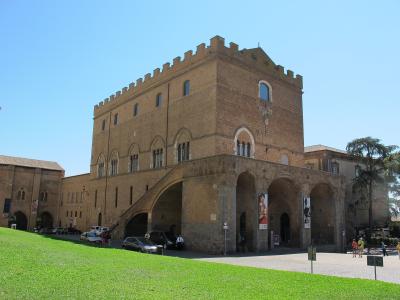
Museo dell'Opera del Duomo
Historic cathedral artifacts in Palazzo Soliano
From €5 History & Heritage · Museums & Culture
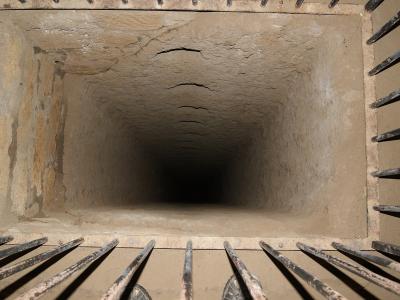
Orvieto Underground (Orvieto Underground)
3,000-year-old Etruscan tufa caves
From €8 History & Heritage · Museums & Culture
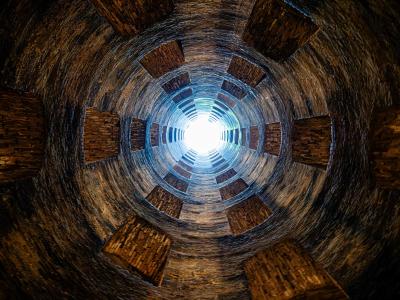
Pozzo di San Patrizio (St. Patrick's Well)
16th-century double-spiral well in Orvieto
Architectural Monuments · Educational Sites
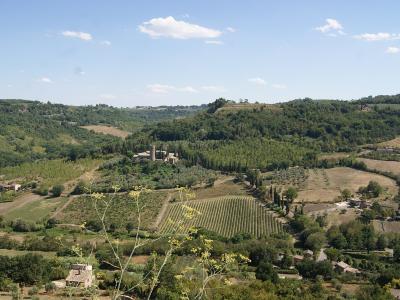
Tempio dell'Abbazia di San Severo
Medieval abbey ruins with frescoes near Orvieto
Ancient Ruins · Architectural Monuments
Questions people ask
Quick Facts
Best Time to Visit
Visit between April and June or September and October for mild temperatures and fewer crowds.