







Duomo di Santa Maria Assunta
12th-century cathedral with Michelangelo-inspired frescoes
- Hours
- Weekdays: 8:00–13:00 and 15:00–18:00. Holidays: 8:30–13:00 and 15:00–18:00.
- Where
- Todi, Umbria and Marche
- Directions
- Directions
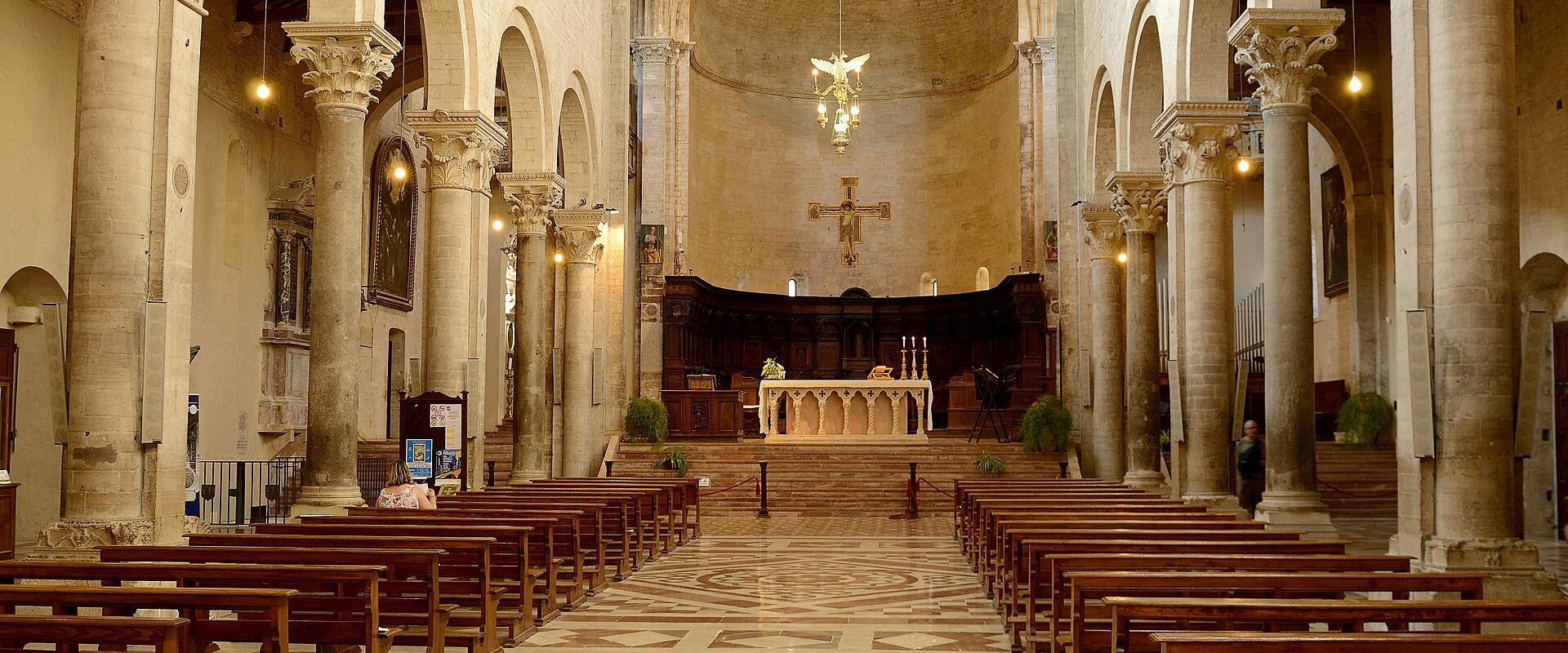
The Duomo of Todi, the Duomo di Santa Maria Assunta, also called the Concattedrale della Santissima Annunziata, is the main Catholic church of Todi, the hill town in Umbria that rises above the Tiber valley, and it stands at the head of the great Piazza del Popolo, the square that is the centre of the old town. The cathedral occupies the highest point of the hill, on a site that was probably the Roman acropolis, and tradition says that it was built on the ruins of a Roman temple. A broad flight of steps leads up from the square to the facade, so that the church looks over the open space, and together with the medieval palaces opposite, it forms one of the most harmonious urban groupings in central Italy.
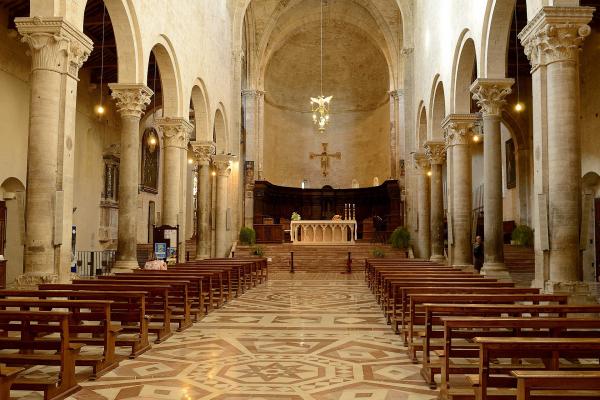
The church was begun in the 12th century, in a Romanesque style of the Lombard type, with a Latin cross plan, and it was rebuilt and enlarged over the following centuries, so that the finished building mixes Romanesque and Gothic elements, with Gothic predominating. The facade, of the 13th and 14th centuries, is plain and well proportioned, with a central portal that has fine carved decoration and a large rose window above, and the lines are simple and strong. Alongside rises a squat bell tower. The interior is wide and light, with aisles separated by columns and pointed arches, and a carved wooden choir of the 16th century adds to the sense of craftsmanship.
The church’s most famous work of art is a large fresco on the entrance wall, a Last Judgment, painted in 1596 by Ferraù Faenzone, a painter from Faenza who settled in Todi. It is a clear homage to Michelangelo’s Last Judgment in the Sistine Chapel, in the muscular figures, the swirling composition and the division between the saved and the damned, though it is less refined than its model and has a provincial energy of its own. The fresco shows how the influence of Michelangelo’s work spread through Italy in the generations after he painted it, and it is worth a few minutes’ study. The crypt below the church has columns from earlier buildings, and there are altarpieces and tombs of several periods in the chapels.
As the principal place of worship of the town, the Duomo is an active church, so visitors should dress modestly and keep quiet during services. Opening times vary through the year, and it may close in the middle of the day, so check locally. A visit takes around half an hour. In the same square stand the Palazzo dei Priori, the Palazzo del Capitano and the Palazzo del Popolo, the medieval civic palaces, and a short walk away is the Chiesa di San Fortunato, a handsome Gothic church. The cathedral suits anyone who likes medieval architecture, Renaissance painting and the atmosphere of a quiet Umbrian hill town, and the view of the square from the top of the steps is part of the pleasure.
More photos coming soon
Opening Hours
- Open
- Weekdays: 8:00–13:00 and 15:00–18:00. Holidays: 8:30–13:00 and 15:00–18:00.
Hours and prices change, especially out of season. Check with the venue before you go.
Nearby Attractions
Other places to visit in Todi
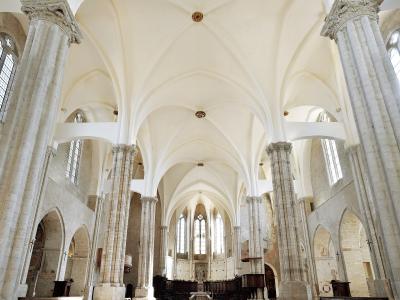
Chiesa di San Fortunato
Gothic-Renaissance church with panoramic Todi views
Architectural Monuments · Cultural Tours
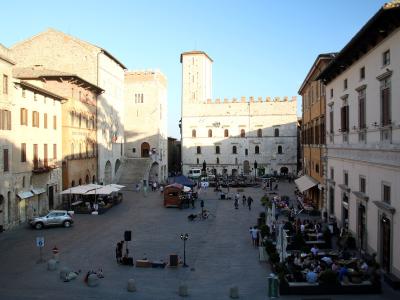
Palazzo dei Priori
14th-century Gothic palace housing the bronze Aquila di Todi
Architectural Monuments · Cultural Tours
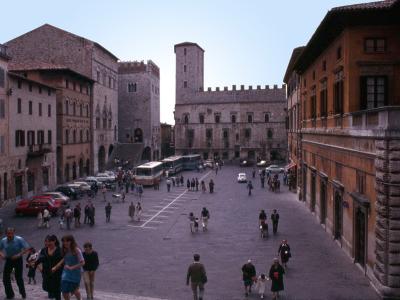
Piazza del Popolo
Roman forum site atop Nidoli hill
Historic Churches · Historic Palaces
Questions people ask
Quick Facts
Best Time to Visit
Visit between April and June or September and October for mild temperatures and fewer crowds.