







- Hours
- Visitors are advised to check opening hours to avoid crowds.
- Where
- Ravello, Campania and Amalfi Coast
- Directions
- Directions
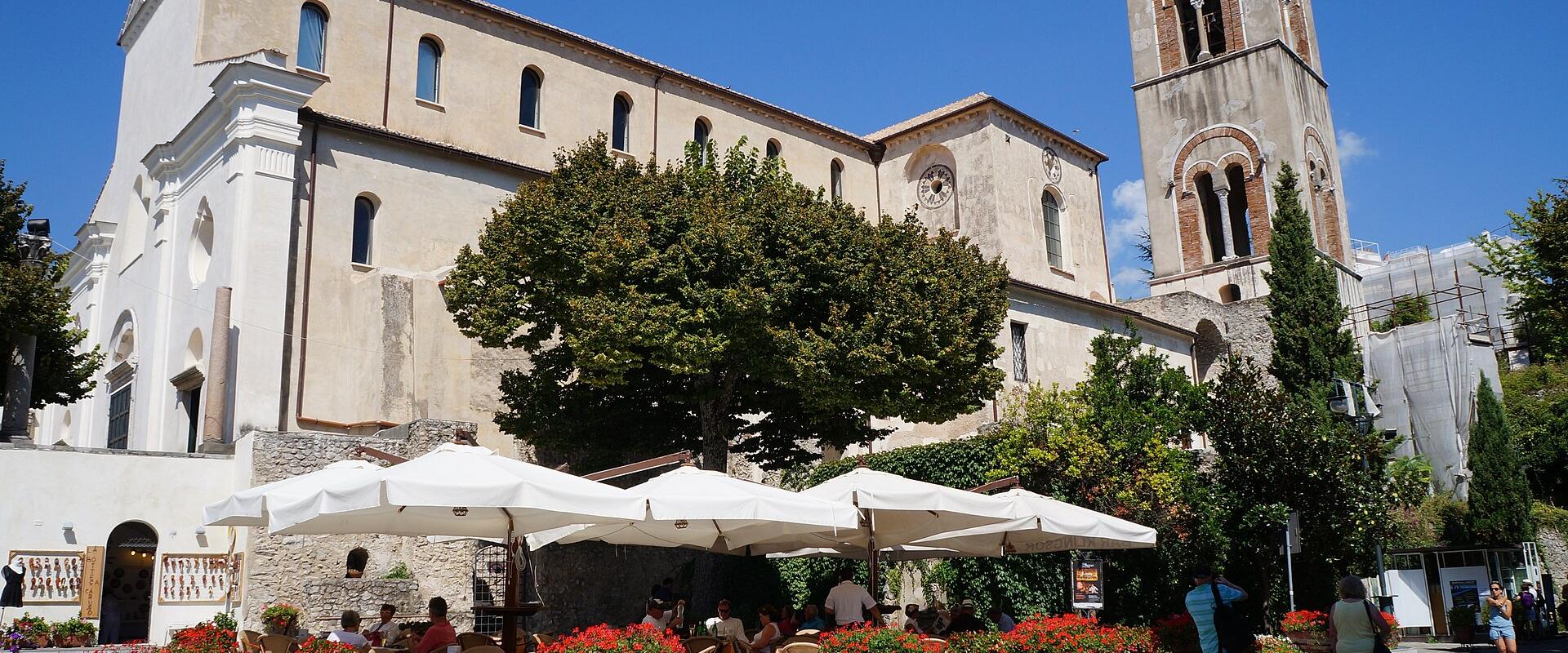
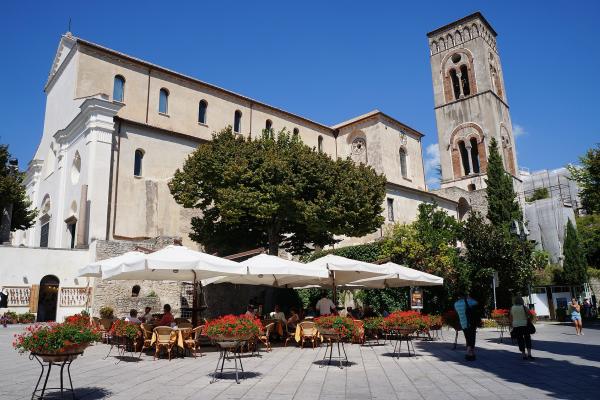
The Duomo di Ravello, officially the Cathedral of Santa Maria Assunta and San Pantaleone, stands on the main square of Ravello, a hill town high above the sea on the Amalfi Coast. The cathedral was founded in the late 11th century, by tradition in 1086, and consecrated the following year, at a time when Ravello was a rich trading town closely linked with the maritime republic of Amalfi. Over the centuries it has been changed several times, most visibly in the 18th century, when the interior received Baroque decoration, but a 20th-century restoration returned much of it to a simpler medieval appearance, with Romanesque arches and some Baroque remnants. The result is a bright, plain interior with a wide nave and a few chapels, in which the old works of art stand out.
The most celebrated feature is the great bronze door, made in 1179 by Barisano da Trani, one of the finest medieval bronze doors in southern Italy. It is divided into fifty-four panels with figures of Christ, the Virgin, saints and prophets and with scenes from the Passion, cast with a firm and expressive style that shows Byzantine influence. Inside, the pulpit, or ambo, given by the Rufolo family and finished in 1272 by Niccolò di Bartolomeo da Foggia, is a masterpiece of mosaic and sculpture. It stands on six twisted columns resting on stone lions, and its surface is covered with glittering decoration of gold and coloured tesserae, with a female bust, possibly Sigilgaita Rufolo, among the carvings. An older ambo, from the early 12th century, is decorated with mosaics, including a scene of Jonah and the whale.
The cathedral also honours Saint Pantaleon, the town’s patron, a physician and martyr whose blood is kept in a glass phial in the chapel dedicated to him. According to local tradition, the blood liquefies each year on 27 July, the saint’s feast day, and again on other occasions, a miracle that draws crowds of the faithful. The museum next to the cathedral displays sculpture, silver and fragments of the earlier decoration, and gives a fuller sense of the religious art of the town.
The cathedral is an active church, and modest dress is expected. Opening times and the museum ticket may change, and access can be restricted during services, so check locally, and visit outside the peak hours of the day if you can. It stands beside the entrance to Villa Rufolo, with its gardens and views, and a walk along Via San Giovanni del Toro leads past medieval houses, while the Belvedere di Villa Rufolo and Villa Cimbrone, at the far end of the town, offer famous terraces over the coast. The Duomo suits visitors interested in medieval art and craftsmanship, and anyone looking for a quieter side of the Amalfi Coast.
Categories
More photos coming soon
Opening Hours
- Open
- Visitors are advised to check opening hours to avoid crowds.
Hours and prices change, especially out of season. Check with the venue before you go.
Nearby Attractions
Other places to visit in Ravello
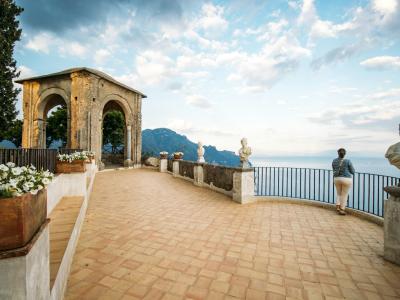
Belvedere di Villa Rufolo
13th-century clifftop gardens inspiring Wagner
From €8 Botanical Gardens · Historic Palaces
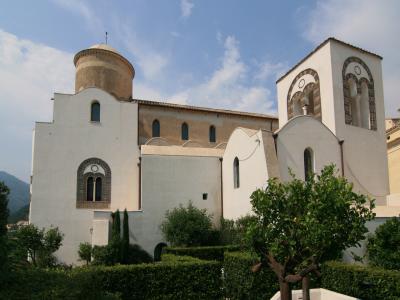
Via San Giovanni del Toro
11th-century church with 13th-century mosaic pulpit
Historic Churches · Historic Districts
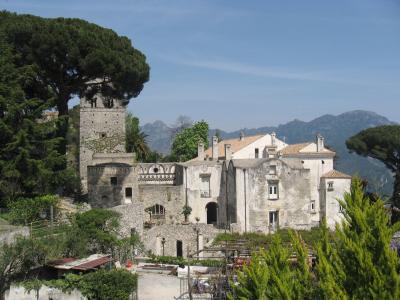
Villa Rufolo
13th-century gardens inspiring Wagner's Parsifal
From €8 History & Heritage · Museums & Culture
Questions people ask
Quick Facts
Best Time to Visit
Visit between May and June or September and October for warm weather and fewer crowds.