







- Admission
- Free admission
- Where
- Taormina, Sicily
- Directions
- Directions
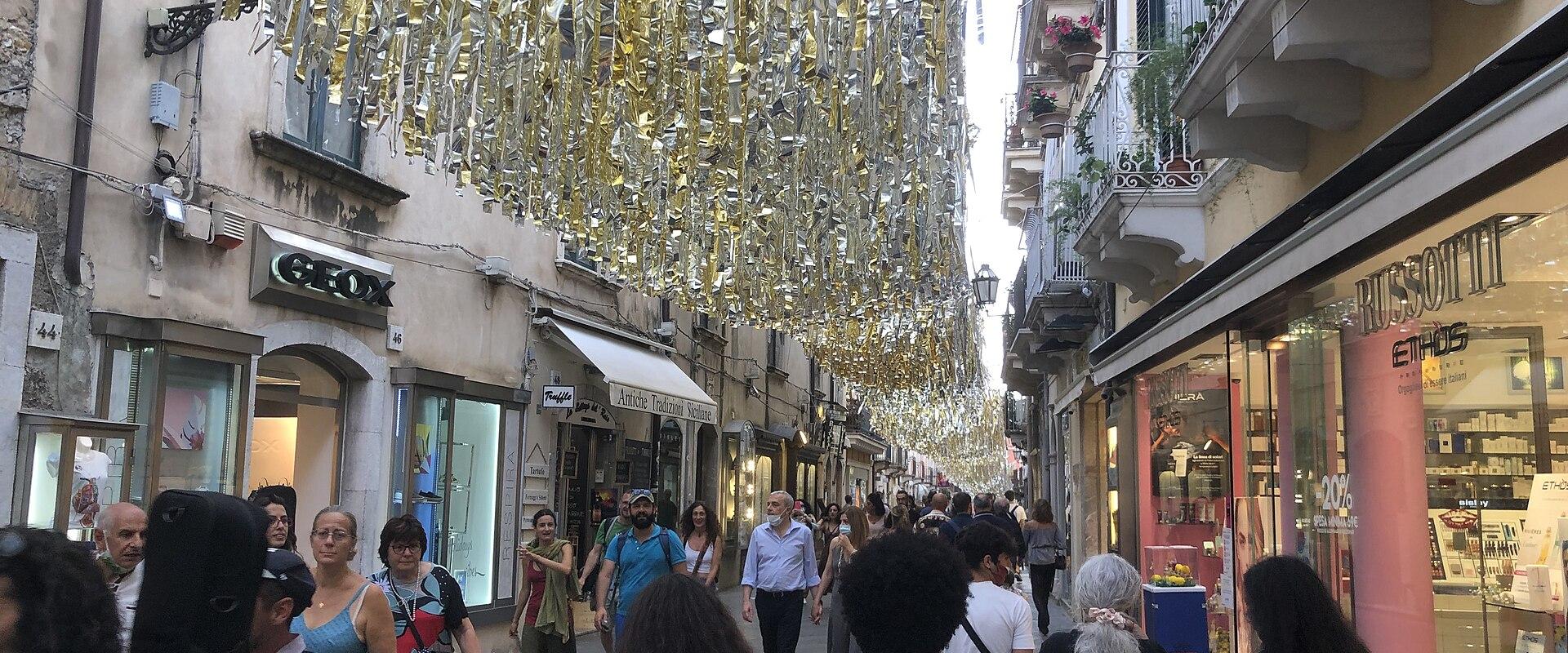
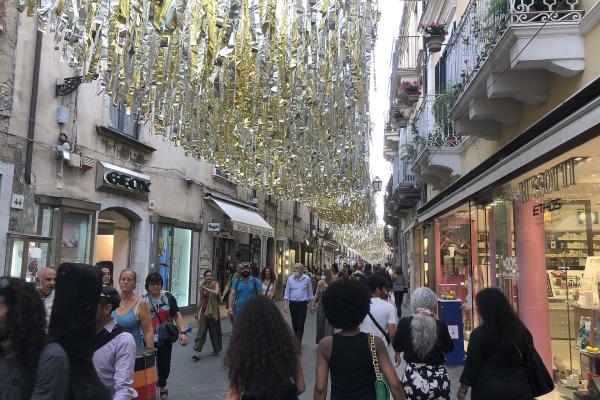
Corso Umberto is the main street of Taormina, in eastern Sicily, a pedestrian thoroughfare that forms the backbone of the old town and runs for about a kilometre between two gates, the Porta Messina at its north-eastern end and the Porta Catania at its south-western end. It is considered the top attraction of the town after the Greek theatre, and it is the best way to experience the spirit of Taormina. The street follows the line of the ancient Roman road, the Via Valeria, which crossed the island, a sign of the long importance of the town as a cultural and commercial centre. In the Middle Ages, it was the main axis of the town, which was built along it, and the monuments that stand on it today reflect many periods of history.
Walking along the Corso, one encounters a succession of palaces, churches and squares. The lively atmosphere comes from the luxury boutiques, craft shops, restaurants and cafes that occupy the ground floors of the colourful old buildings, with balconies, iron railings and flowers, and from the crowds of visitors. Along the way, you pass the Palazzo Corvaja, a medieval palace at the corner of Piazza Vittorio Emanuele II, where the Sicilian Parliament once met, and next to it the church of Santa Caterina and a small Roman odeon. Further on, the Palazzo Duchi di Santo Stefano, a Norman-Gothic palace with a rich mixture of styles, adds another piece of history. In the middle of the street opens Piazza IX Aprile, a terrace with a view of the sea and Mount Etna, which is the town’s drawing room, with a clock tower, a baroque church and cafes where people sit to watch the world go by.
Sicilian specialities are everywhere. Visitors can stop for a granita, a semi-frozen dessert of coffee or lemon, with a brioche, in a cafe, or buy almond pastries, cannoli and marzipan fruit in the pastry shops, and local wines and products such as ceramics, lace and lava stone jewellery are on sale in the shops. The street is busiest during the high season, from late spring to early autumn, when it is full of people at all hours, but it remains a picturesque hub of Sicilian charm at any time of the day, and in the evening, the lamps give it a romantic air. Early morning is the quietest time for a peaceful walk.
The street is open to all and has no admission fee, and it can be walked in about fifteen to thirty minutes, though many visitors take hours. From the Corso, side lanes and stairways lead up and down to hidden corners and views. The Teatro Antico di Taormina, the Greek and Roman theatre, is a short walk away, and the Duomo di Taormina (Cathedral of Saint Mary of the Island) stands near the middle of the street, while the Museo Civico Archeologico and the Palazzo Corvaja add culture. The street suits shoppers, food lovers and anyone who enjoys atmosphere, and it is the natural centre of any visit to Taormina, Italy, with the Ancient Greek Theatre and Isola Bella, the little island below, close at hand.
Categories
More photos coming soon
Admission Fees
- Admission
- Free admission
Hours and prices change, especially out of season. Check with the venue before you go.
Nearby Attractions
Other places to visit in Taormina
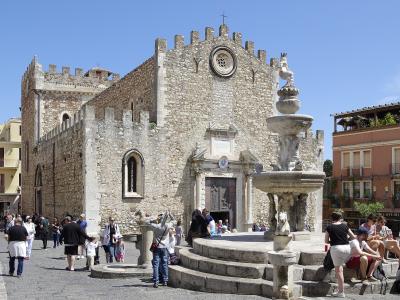
Duomo di Taormina (Cathedral of Saint Mary of the Island)
Gothic-Baroque fortress church in Piazza Duomo
Architectural Monuments · Historic Churches
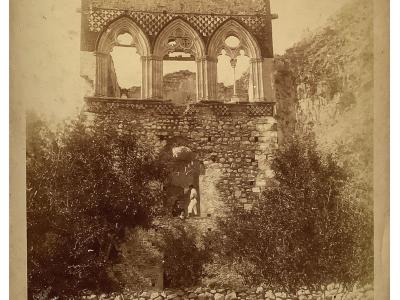
Museo Civic Archeologico
Hellenistic sculptures in Palazzo della Badia Vecchia
Free Archaeological Museums · Historic Palaces
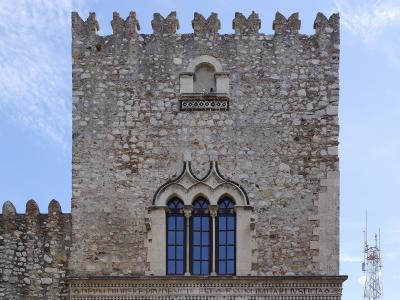
Palazzo Corvaja
14th-century medieval palace on Taormina's main street
Architectural Monuments · Historic Districts
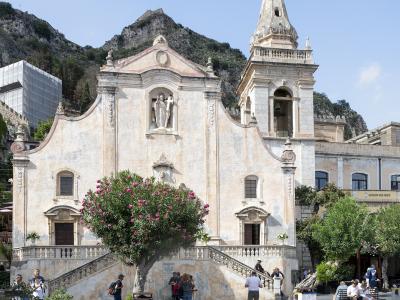
Piazza IX Aprile
Historic square with Sicilian Baroque church and Mount Et...
Historic Districts · Scenic Viewpoints
Questions people ask
Quick Facts
Best Time to Visit
Visit between April and June or September and October for mild temperatures and fewer crowds.