







- Where
- Cefalù, Sicily
- Directions
- Directions
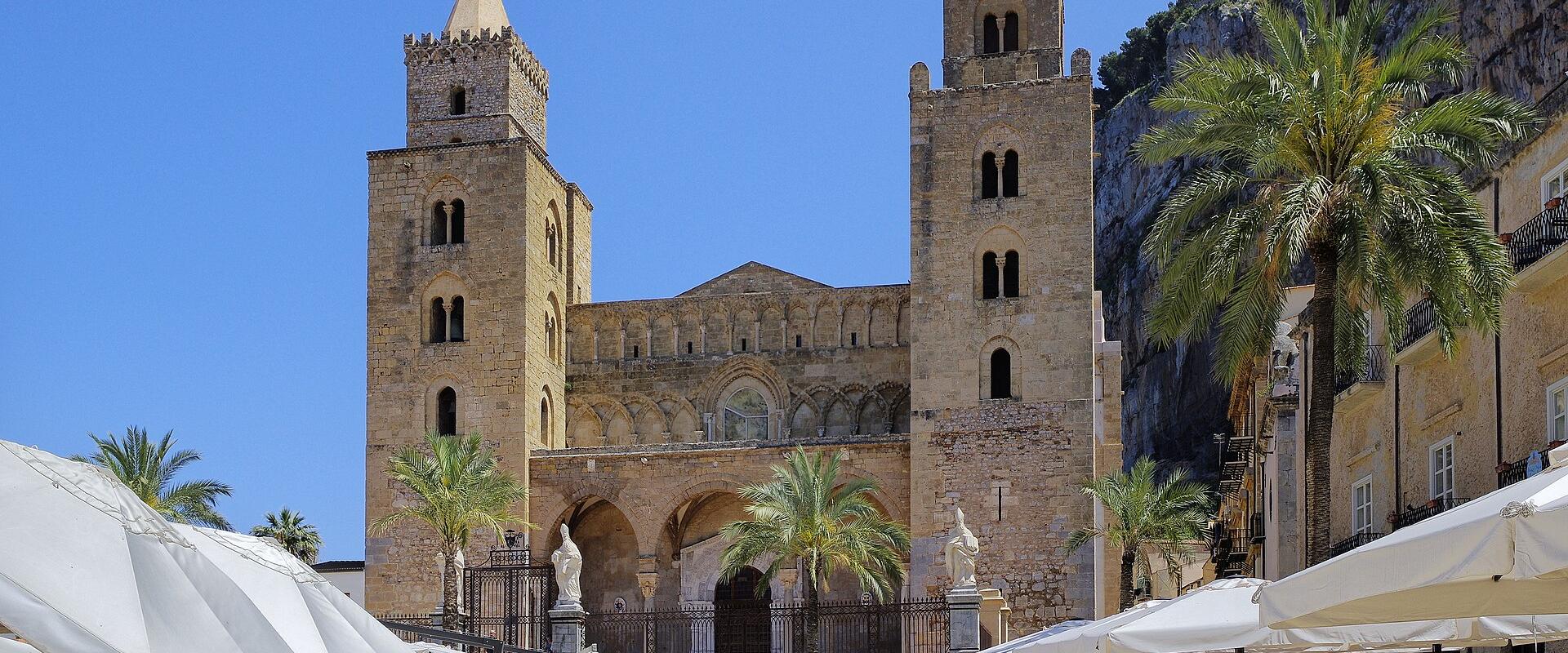
Cefalù Cathedral (Duomo di Cefalù) is a monumental Norman basilica in the historic town of Cefalù, on the northern coast of Sicily, standing at the head of the main square, Piazza del Duomo, beneath the great rock that rises behind the town. Commissioned by King Roger II, its construction, begun in 1131, is traditionally attributed to a vow made after the king survived a storm at sea, though it likely served political and military purposes as well, since the king wanted a grand church that could be a rival to Palermo’s and a burial place for himself. The building is architecturally significant for its inspiration from Islamic craftsmen and its imposing scale, which complements the ancient megalithic walls and the dominant rock promontory that overlooks the town.
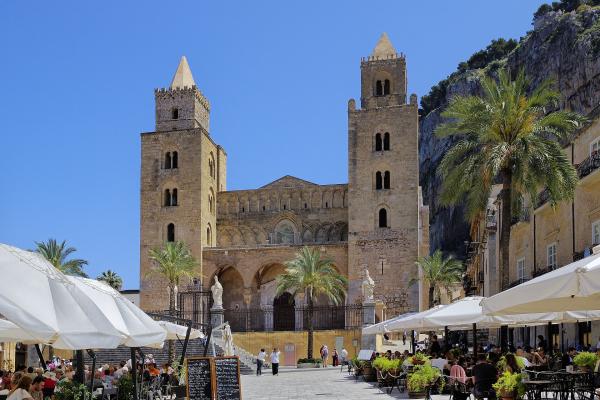
The facade is one of the best-known images in Sicily. Two massive square towers topped with small pointed roofs flank a portico with three arches, and the whole front is built of golden limestone, giving it the look of a fortress as much as a church. The decoration includes interlaced arches and carved details, reflecting the mixture of Norman, Arab and Byzantine traditions that marked Sicily under the Normans. The interior has a nave and two aisles separated by ancient granite columns, a Latin cross plan with a long transept, and a high wooden ceiling, and the walls are bare and austere, apart from the apse.
The apse is the treasure. As a UNESCO World Heritage site, as part of the Arab-Norman Palermo and the Cathedral Churches of Cefalù and Monreale, the cathedral is a prime example of Norman architecture and features Byzantine mosaics of astonishing beauty. High in the half-dome, a huge figure of Christ Pantocrator, Christ as ruler of all, with a raised hand in blessing, looks down on the congregation, surrounded by the Virgin, angels and apostles in rows below, all on a shining gold ground. They were made around the middle of the 12th century by Byzantine craftsmen, and they are among the oldest and finest of the Sicilian mosaics. Next to the cathedral, the cloister, with pairs of slender columns and carved capitals, offers a calm contrast, and the cathedral’s treasury holds sacred objects.
Visitor hours vary by season and religious services. During the high season, from April to October, the cathedral typically opens in the morning and again in the afternoon until evening, while low-season hours are shorter. Visitors are advised to check official schedules, arrive early to avoid crowds, and note that access to specific areas like the cloister or treasury may require separate tickets or have different hours. Modest dress is required, with shoulders and knees covered.
Exploring the cathedral offers insight into Sicily’s complex cultural history, blending Norman, Byzantine and Islamic influences. It is an essential stop to understand the region’s artistic heritage. The combination of architectural grandeur and spiritual atmosphere makes it a memorable destination. It complements visits to the nearby beach and the medieval old town, with its narrow lanes, the Museo Mandralisca and the climb up La Rocca, providing a view of Cefalù’s appeal.
More photos coming soon
Nearby Attractions
Other places to visit in Cefalù
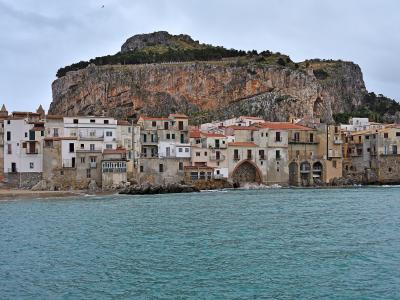
La Rocca
270m limestone peak with Norman castle and ancient temple...
From €5 Castles & Fortresses · Hiking Trails
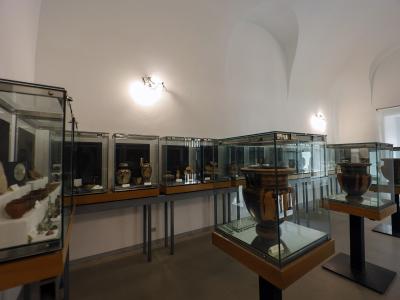
Museo Mandralisca
19th-century bequest in a historic Cefalù building
History & Heritage · Museums & Culture
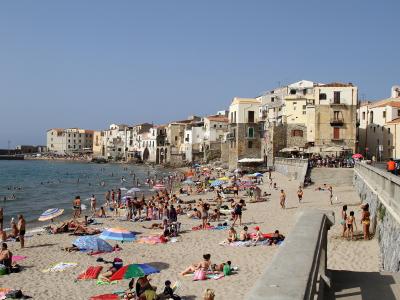
Spiaggia di Cefalù
Sandy beach beneath La Rocca promontory
Beaches · Historic Towns
Questions people ask
Quick Facts
Best Time to Visit
Visit between May and June or September and October for warm weather and fewer crowds.