







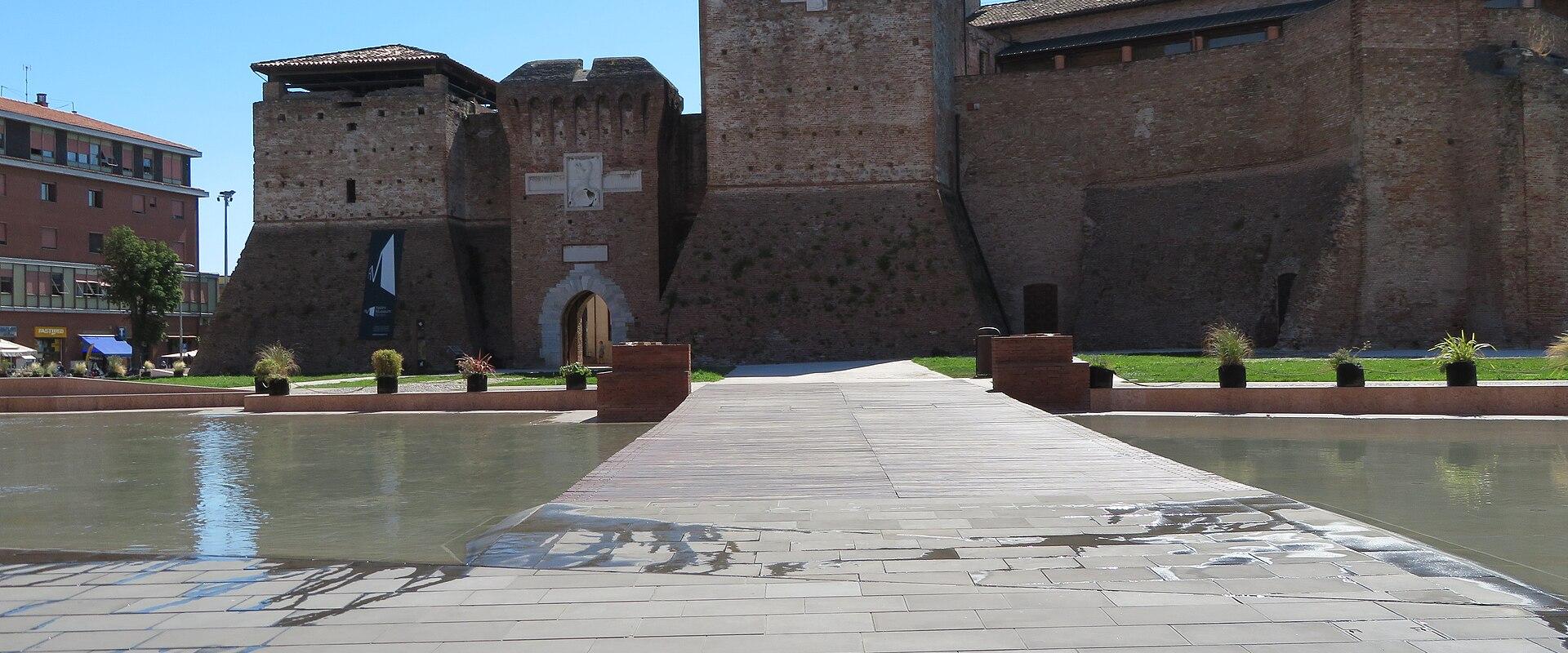
Cassero and Rocca di Rimini
15th-century Malatesta fortress housing the Fellini Museum
- Where
- Rimini, Emilia-Romagna
- Directions
- Directions
The Cassero and Rocca di Rimini, usually called Castel Sismondo, is the great 15th-century fortress in the centre of Rimini, on Piazza Malatesta, and it is the main monument of the Malatesta family, who ruled the city from the 13th to the 16th century. It was built between 1437 and 1452 for Sigismondo Pandolfo Malatesta, a condottiero, a soldier of fortune, and a patron of the arts, who wanted a stronghold that would serve both as a residence and as a defence against his enemies, as well as a statement of his power. The design is credited to Sigismondo himself, who was well versed in military engineering, and the architect Filippo Brunelleschi is reported to have given advice on the walls and the water works.
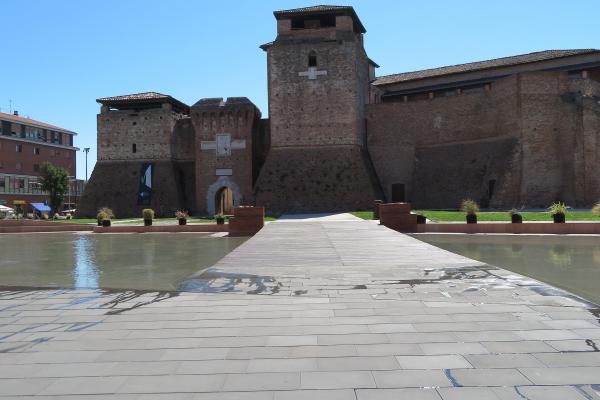
The castle was built to withstand the artillery of the mid-15th century, and it is a remarkable example of the transition from medieval to Renaissance fortification. The walls are massive and sloping, called scarp walls, which were meant to deflect cannon shot, and the corners are marked by square towers. The structure is made of red brick and white stone, and in the past it was surrounded by a deep moat, which has been partly restored. The plan was a hybrid, combining the functions of a military stronghold with those of a Renaissance palace, with state rooms inside the walls decorated for the court, including the emblem of the Malatesta, the rose. The castle stood at the centre of the city’s defences, and it was linked to the city walls by the Cassero, a fortified gate.
Today the interior houses the Fellini Museum, dedicated to Federico Fellini, the film director, who was born in Rimini in 1920 and whose memories of the town fed many of his films. The museum, which is spread between the castle and other sites in the neighbourhood, uses digital technology to create immersive sets and interactive exhibits that explore Fellini’s imagination, with film clips, sketches, costumes and recreated scenes. It makes a lively contrast with the stern walls of the fortress, and visitors can enjoy both the architecture and the exhibition.
The castle is on Piazza Malatesta, in the historic centre, a ten-minute walk from the railway station, and it is next to the Teatro Galli, the opera house that was rebuilt and reopened in the 2010s. Opening times and ticket arrangements for the museum change, so check before going. A visit takes about an hour or two. The Bridge of Tiberius, the Roman bridge over the old Marecchia, Fiume Marecchia Park, Giovanni Pascoli’s Garden and the Lungomare, the seafront, lie within the city, while Rimini Fiera is the large exhibition centre. The Arch of Augustus lies at the other end of the old town. Not far from the castle stands the Malatesta Temple, the church that Sigismondo had remodelled by Leon Battista Alberti. The castle suits those interested in Renaissance history, military architecture and cinema.
More photos coming soon
Nearby Attractions
Other places to visit in Rimini
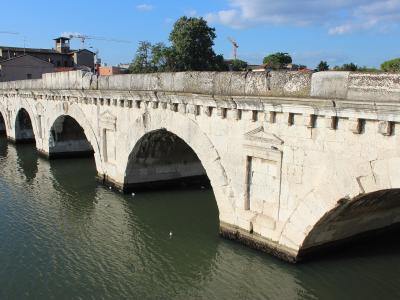
Bridge of Tiberius
Oldest surviving Roman bridge with Greek orders
Free Ancient Ruins · Architectural Monuments
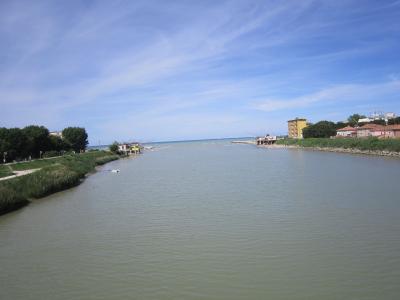
Fiume Marecchia Park
Rimini park along the Marecchia River
Cycling Routes · Hiking Trails
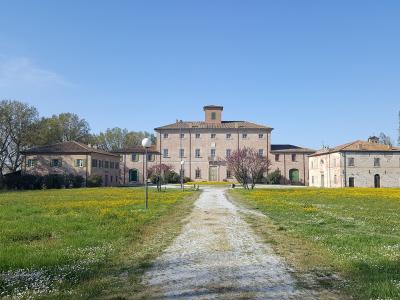
Giovanni Pascoli's Garden
Historic villa and poetry park dedicated to Giovanni Pascoli
History & Heritage · Museums & Culture
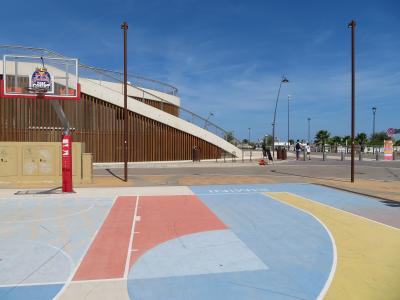
Lungomare
Historic Roman arch and bridge in Rimini's historic centre
Ancient Ruins · City Promenades
Questions people ask
Quick Facts
Best Time to Visit
Visit between June and September for beach activities or April to May for milder weather.