







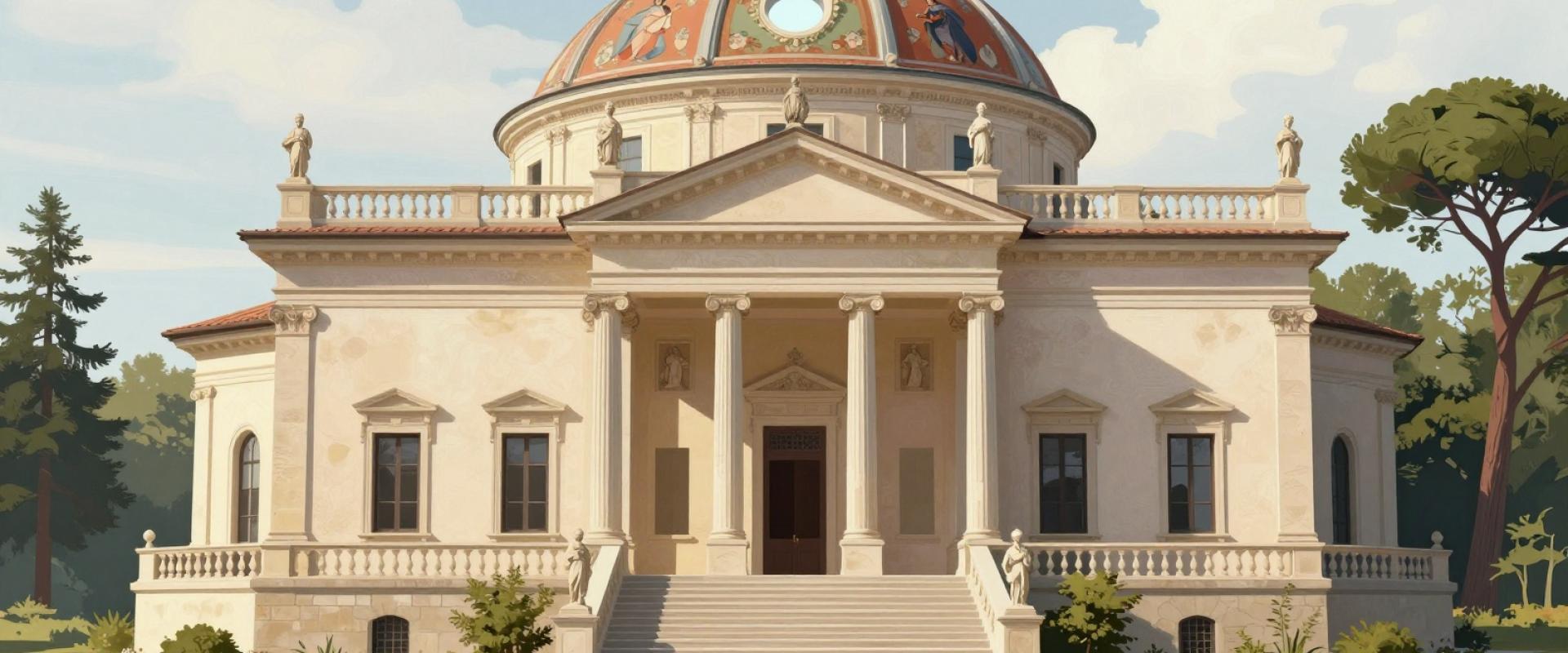
Villa Rotonda (Temple of the Muses)
Palladian villa with four identical temple fronts
- Where
- Vicenza, Veneto and the Dolomites
- Directions
- Directions
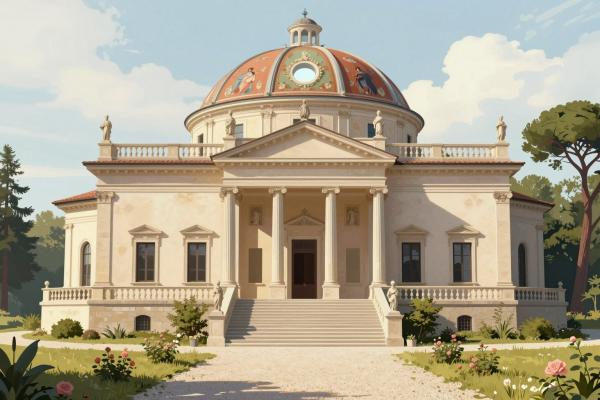
Villa La Rotonda, often called the Temple of the Muses, is the most famous country house designed by Andrea Palladio and one of the best known buildings of the Renaissance. It stands on a small hill just south of Vicenza, in the Veneto, in north-east Italy, in a green landscape of fields and woods, and it is meant to be seen from a distance. The design is a masterpiece of symmetry. A square building with a central circular hall under a shallow dome has four identical porticoed facades, one facing each direction, each with a flight of steps and a triangular pediment supported by Ionic columns, so that the villa seems to be a temple placed on the hill.
The villa was begun around 1566 for Paolo Almerico, a priest who had served the pope and returned to Vicenza to retire, and it was finished after Palladio’s death by the architect Vincenzo Scamozzi, who built the dome. Palladio described it in his treatise on architecture as a building with views on all sides, designed to take advantage of a site that was both an amphitheatre of hills and a place from which to see the city. The rooms around the circular hall are arranged in pairs, and the inside is decorated with frescoes of the late sixteenth and seventeenth centuries, including scenes of classical subjects, with a trompe-l'oeil sky in the dome. The design is an expression of the Renaissance ideals of harmony and proportion.
The history of the villa after Almerico is a record of ownership by noble families. It was sold to the Capra family, who completed the work, and later it passed to the Valmarana family, who still own it. For more than five hundred years it has welcomed poets, artists and statesmen, and it has been admired by travellers such as Goethe. The villa is a significant cultural landmark, and it is part of the UNESCO World Heritage listing for the city of Vicenza and the Palladian villas of the Veneto.
The influence of the Rotonda has been enormous. Its plan was copied or adapted by architects across Europe and America, and it inspired buildings such as Chiswick House in England and Thomas Jefferson's house at Monticello in Virginia, which makes it a key reference in Western architecture and a symbol of Vicenza’s Palladian heritage. In popular culture, it was used as a location for Joseph Losey’s film of Mozart's Don Giovanni.
Visitors can explore the interior, which includes frescoed rooms and the central circular hall topped by a dome, but opening days are limited, usually to a few days a week, and sometimes only the grounds are open, so check the official website. The villa is a pleasant walk or short drive from the centre of Vicenza, and the nearby Villa Valmarana ai Nani and the sanctuary of Monte Berico can be combined in the same excursion. The best light for photography is in the morning or late afternoon.
More photos coming soon
Nearby Attractions
Other places to visit in Vicenza
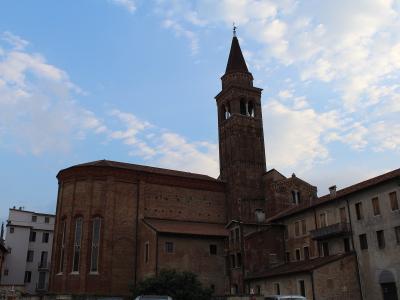
Basilica of Santa Corona
Gothic church housing a Holy Thorn relic
From €3 Art Museums · Historic Churches
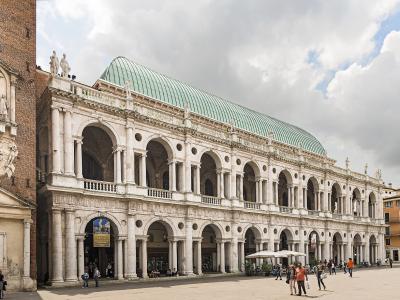
Basilica Palladiana
Renaissance civic building with distinctive white marble ...
From €4 Architectural Monuments · Cultural Tours
Mercato di Vicenza
Weekly markets in Piazza dei Signori and Piazza delle Erbe
Free Local Cuisine · Local Markets
Monte Berico
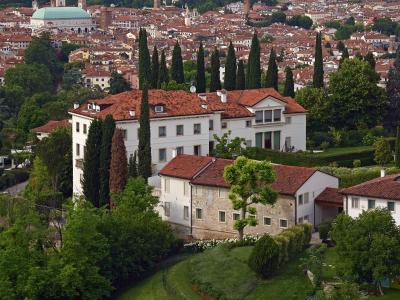
Hilltop basilica with panoramic views of Vicenza
Hillside Trails · Historic Churches
Questions people ask
Quick Facts
Best Time to Visit
Visit between April and June or September and October for mild temperatures and fewer crowds.