







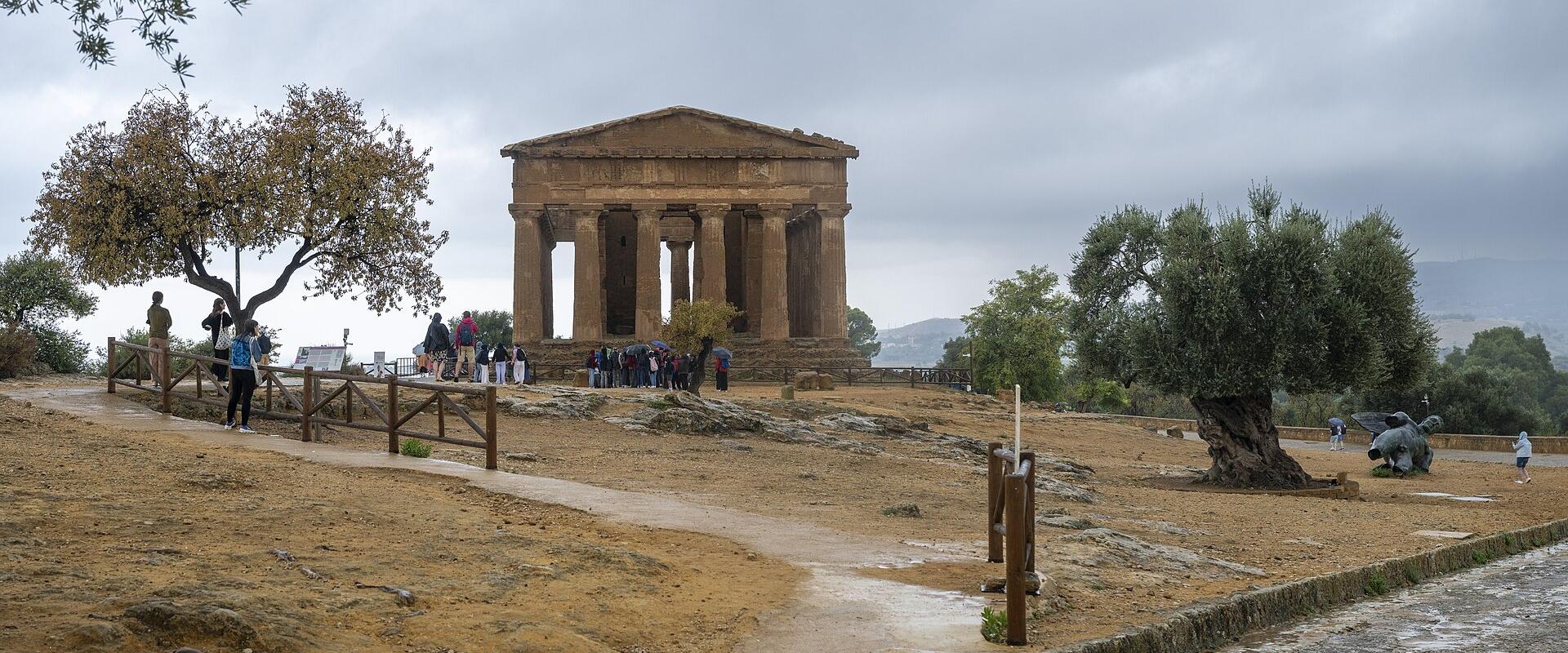
Valley of the Temples (Valle dei Templi)
Largest European archaeological park with Greek temples
- Where
- Agrigento, Sicily
- Directions
- Directions
The Valley of the Temples (Valle dei Templi) is a major archaeological site located on a ridge outside Agrigento, Sicily, on the southern coast of the island, about three kilometers from the modern city. Originally the ancient Greek city of Akragas, it is renowned as one of the finest examples of ancient Greek art and architecture in Magna Graecia. Despite its name, the site is situated on a ridge rather than in a valley, and the temples stand in a line along the edge, facing the sea, with the plain and the Mediterranean beyond. It has been a UNESCO World Heritage Site since 1997 and covers 1,300 hectares, making it the largest archaeological park in Europe and the Mediterranean basin.
Akragas was founded around 581 BC by colonists from Gela, themselves from Rhodes and Crete, and it grew quickly, becoming one of the richest and most populous cities of the Greek world in the 5th century BC, under the tyrant Theron and his successors. The poet Pindar called it the most beautiful of mortal cities. Most of the temples were built in that golden age, in the Doric style, using the local golden limestone, and they stand in a long row along the ridge as a statement of the city’s power. The city was later sacked by the Carthaginians, in 406 BC, and then became part of the Roman world, and the temples survived in part because some were converted to Christian use.
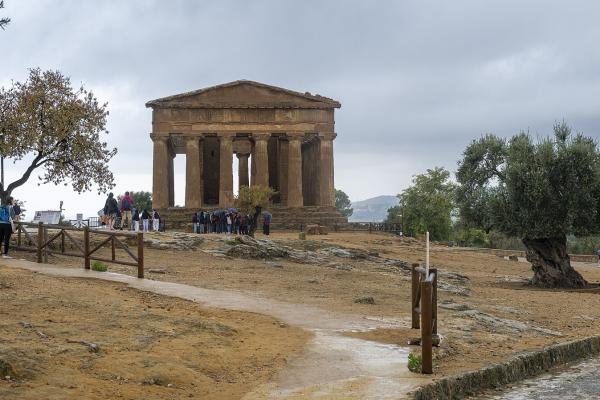
The site contains numerous ancient structures, including the Temple of Concordia, Temple of Olympian Zeus and Temple of Hercules. Visitors can explore these well-preserved ruins, which offer a profound insight into the grandeur of ancient Greek civilization in Sicily. The Temple of Concordia, built around 430 BC, is particularly notable for its exceptional state of preservation, one of the best-preserved Greek temples in the world, with its full colonnade and pediments intact, thanks to its conversion into a church in the 6th century. The Temple of Hercules, the oldest of the group, has only eight columns standing, while the Temple of Olympian Zeus, one of the largest Doric temples ever built, lies in ruins, with a gigantic stone figure, a telamon, lying on the ground. The Temple of Castor and Pollux, with its four reconstructed columns, has become the symbol of Agrigento.
Walking through the park allows visitors to appreciate the scale and architectural mastery of the temples, set against the backdrop of the Sicilian landscape, with almond and olive trees, and the sea in the distance. The path along the ridge, the Via Sacra, links the main temples, and the whole walk takes two to three hours, longer if the lower part of the valley is included. The best time to see the temples is early morning or late afternoon, when the light is soft and the temperature is lower, and in the evening some of the temples are illuminated. In February and March, the almond trees flower, and a festival is held in Agrigento to celebrate the blossoms.
It is advisable to check local tourism resources for current schedules and ticket prices. Exploring the Valley of the Temples offers a meaningful connection to the region’s deep historical roots. It is an essential stop to understand the cultural heritage of Sicily. The combination of archaeological significance and scenic beauty makes it a memorable destination. It complements visits to other landmarks in Agrigento, such as the Kolymbetra Garden, in the valley below, and the National Archaeological Museum, providing a view of the area’s ancient legacy.
Categories
More photos coming soon
Nearby Attractions
Other places to visit in Agrigento
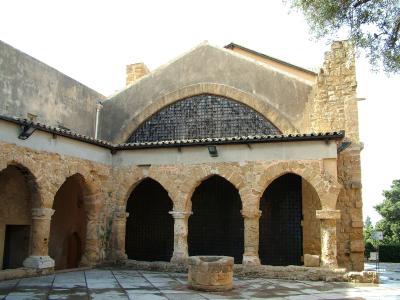
Archaeological Museum of Agrigento (Museo Archeologico Regionale Pietro Griffo)
Sicily's main museum on the Valley of the Temples edge
History & Heritage · Museums & Culture
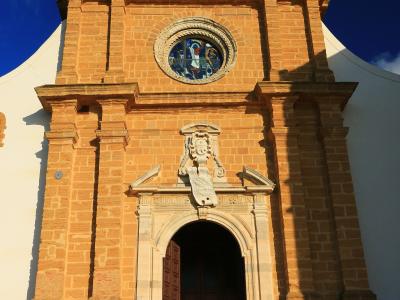
Cathedral of San Gerlando (Duomo di Agrigento)
Norman-Baroque cathedral with 85m whispering acoustics
Free Architectural Monuments · Cultural Tours
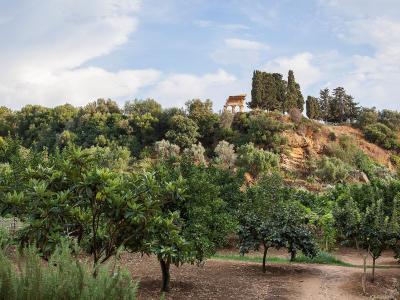
Giardino della Kolymbetra
Open-air archaeological and agricultural museum in Agrigento
History & Heritage · Museums & Culture
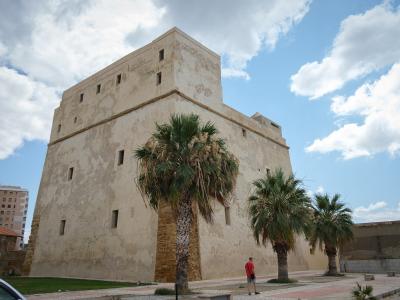
Porto Empedocle
Birthplace of Andrea Camilleri and gateway to the Pelagie...
Free Coastal & Maritime · Islands
Questions people ask
Quick Facts
Best Time to Visit
Visit between April and June or September and October for mild temperatures and fewer crowds.