Spaccanapoli
Ancient Greco-Roman decumanus splitting Naples' historic ...
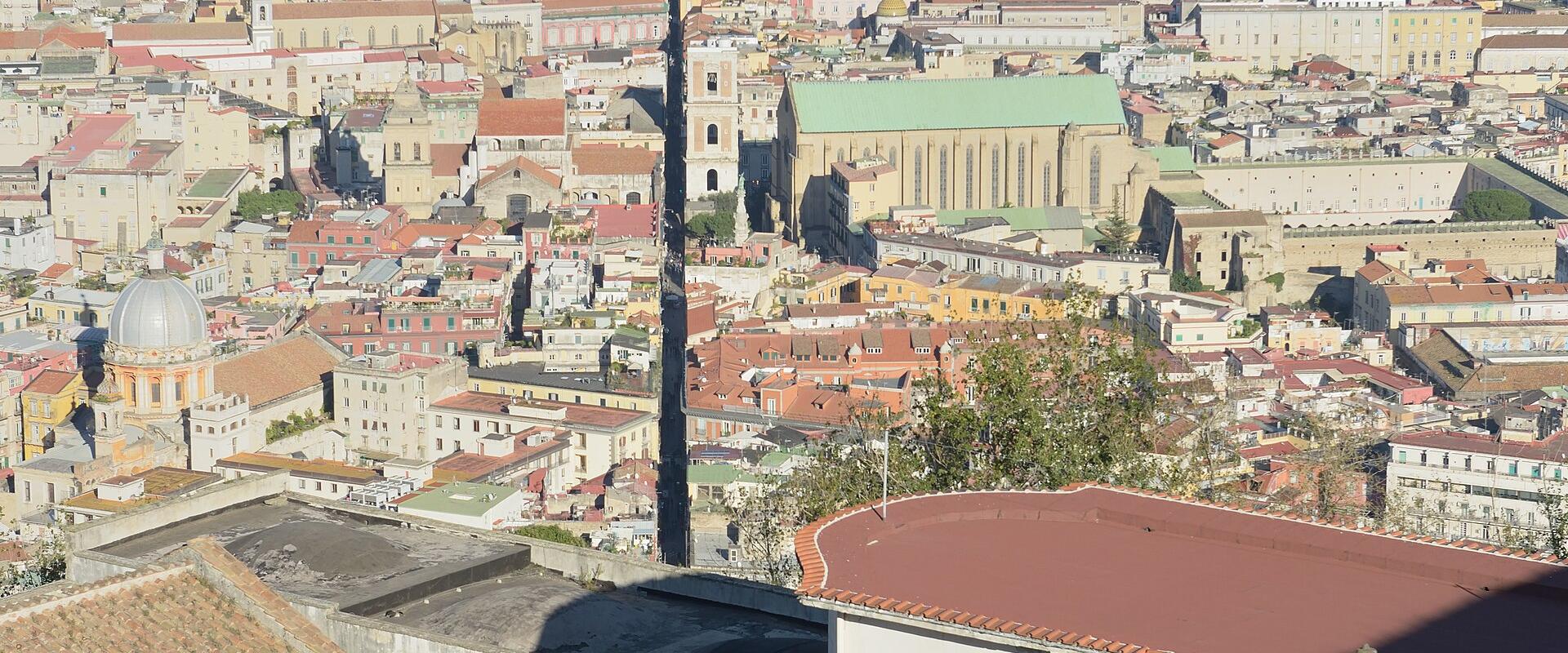
Spaccanapoli is the historic main street traversing the old center of Naples, Italy. Literally translating to "Naples splitter," the name reflects its appearance from above as a long, straight line that seemingly divides the city. It serves as the southernmost of the three original Greco-Roman decumani (east-west streets) of the ancient city of Neapolis. The street runs for approximately 2 km through the historic center, intersected by north-south cross-streets known as cardini.
Although often treated as a single street, it is not an official name on maps but rather a continuous path comprising multiple specific streets, such as Via Pasquale Scura and Via Tupputi. The route originally connected Piazza San Domenico Maggiore and Via Duomo, later widening in Roman times to include Piazza Gesú Nuovo. The street officially begins at Piazza Gesù Nuovo as Via Benedetto Croce, then changes names to Via S. Biagio dei Librai as it moves east, crossing Via Duomo.
Dating back to the Greco-Roman era and reaching its architectural splendor during the Renaissance, Spaccanapoli offers a glimpse into the city's past through its intact historic buildings. It is the primary promenade for tourists, providing access to major sights such as the Cappella Sansevero, Santa Chiara, Santa Marta, San Gregorio Armeno, San Biagio Maggiore, and Santi Filippo e Giacomo. As an open public thoroughfare, Spaccanapoli has no opening hours or admission fees. Exploring this vibrant artery offers a profound insight into the social and historical layers of Naples. For travelers, it serves as an essential stop to appreciate the city’s dense urban fabric and cultural heritage. The combination of ancient origins and lively street life makes it a memorable destination.
Categories
More photos coming soon
Nearby Attractions
Other places to visit in Naples
Frequently Asked Questions
Quick Facts
Best Time to Visit
Visit between April and June or September and October for mild temperatures and fewer crowds.