







- Where
- Gallipoli, Apulia
- Directions
- Directions
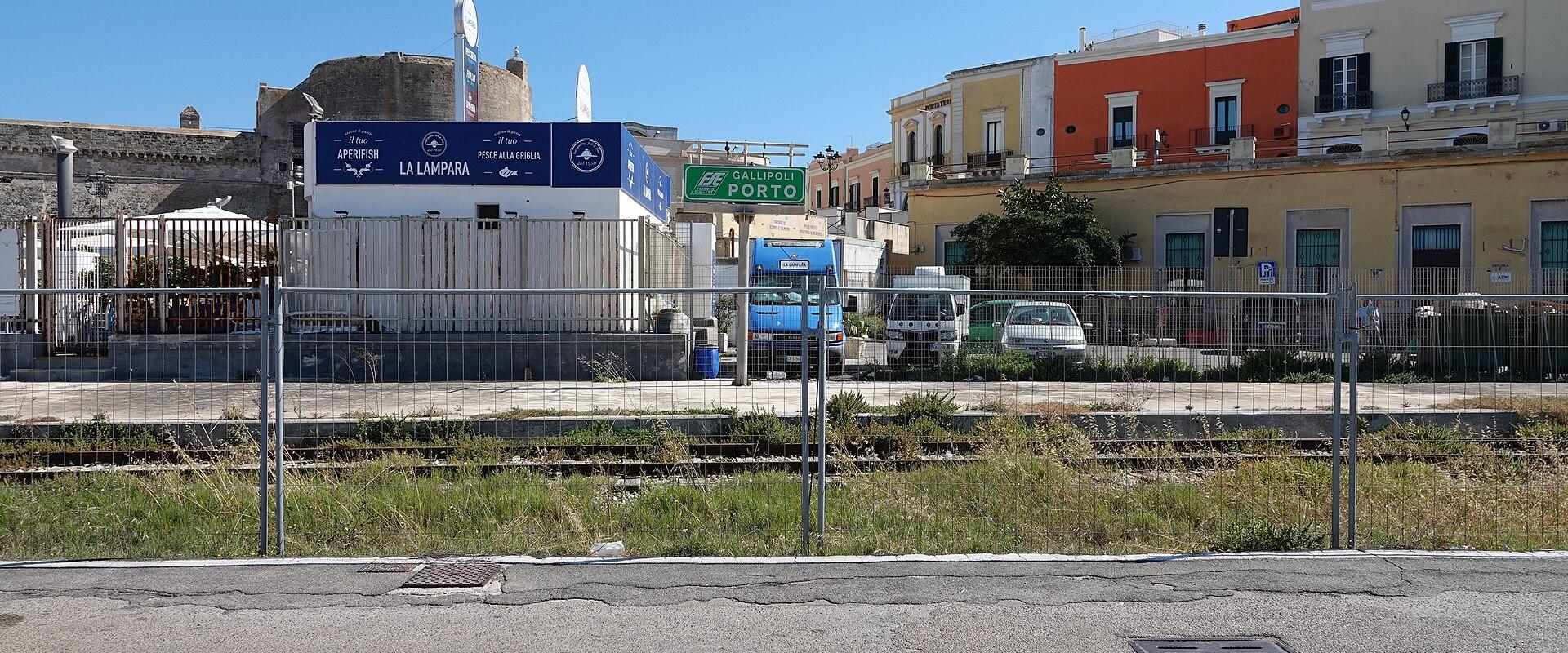
Gallipoli's old town sits on a small limestone island off the Ionian coast of Salento, joined to the mainland by a bridge from the sixteenth century, and the port is where its life has always been centred. Boats come and go along the walls on the north side of the island, and the harbour area is divided into an older fishing port and a commercial port along the fortifications. The old fishing quarter lies near the Fontana Greca and the Rivellino, the bastion at the entrance to the old town.
The town's seafaring history goes back a very long way. The Venetians, who held it briefly in 1484 during a war in southern Italy, and the Aragonese, who ruled under the crown of Naples, knew the value of its anchorage, and the port later grew rich on a bulk trade in olive oil. Gallipoli oil, used for lamps and soap, was shipped to northern Europe in large quantities, and the vaulted underground oil presses beneath the old houses still hint at that business. Wine and other produce also left through here. Historically, then, the harbour was a working commercial centre, and it still is.
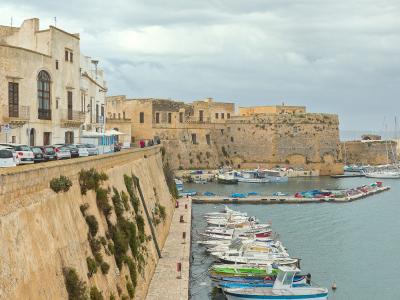
Today the Porto Peschereccio, the fishing port, is the most atmospheric part. Fishing boats, among them the local trawlers known as paranze, return in the afternoon and evening, and the catch goes straight to the fish market near the quay. Breakwaters, among them the Molo Foraneo and the Molo Tramontana, shelter the water, and walkers can stroll out along them for sea views. As the sun sets behind the mainland, the walls and the boats glow in warm light, making the evening the favourite time for photographs.
The Porto Mercantile, the commercial harbour, runs along the base of the city walls and the Castello di Gallipoli, an Angevin and Aragonese fortress. Beyond it, the lanes of the old town lead to the Duomo, a baroque cathedral with richly decorated interior, and to a string of small churches. The nearby beaches, particularly on the Ionian side of the mainland, draw crowds in summer.
Walking the quays is free and open at all hours, though the best moment is the end of the day. Try fresh seafood at a harbour-side restaurant and make time to watch the boats unload; it is an easy way to see Gallipoli as a living port rather than just a postcard. The port suits photographers, food lovers and anyone interested in the seafaring culture of southern Italy.
Categories
More photos coming soon

Questions people ask
Quick Facts
Best Time to Visit
Visit between May and June or September and October for warm weather and fewer crowds.