







- Where
- Cuneo, Piedmont and Aosta Valley
- Directions
- Directions
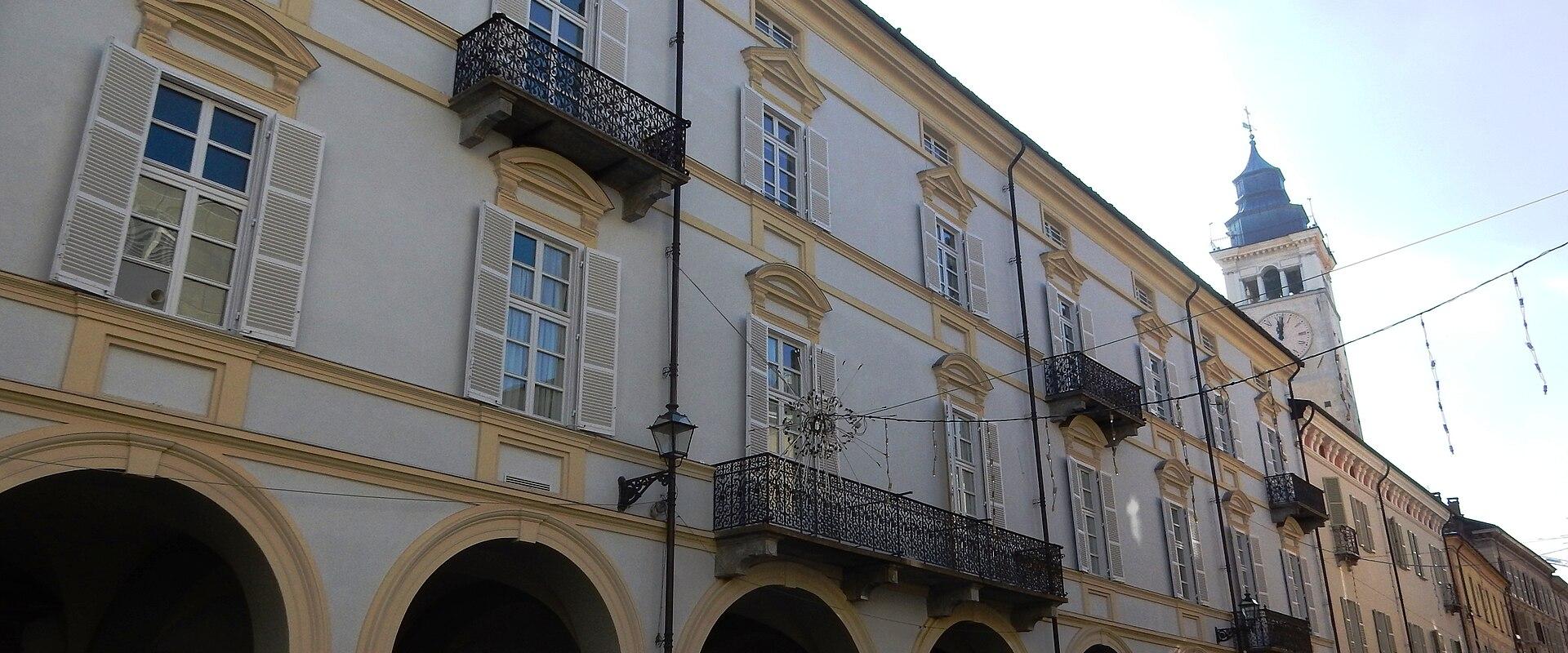
The Portici di Cuneo are the long arcades that line the main streets of the old centre of Cuneo, in Piedmont, and they are the feature that most clearly defines the character of the city. Cuneo stands at an altitude of 534 metres on a high, narrow plateau shaped like a wedge, hence its name, which means wedge, between two rivers, the Stura di Demonte to the north and the Gesso to the south, with the Alps rising behind it. The position gave it natural defences, and the city was founded in 1198, when the inhabitants of surrounding villages came together to form a free commune. Its early history was that of a frontier fortress, and it was besieged several times in the following centuries, notably by French and Spanish forces.
Over the centuries it passed through the hands of different powers, among them the Angevins, who held it in the 13th and 14th centuries, the Visconti of Milan, and finally the House of Savoy, which took control in 1382 and held it, with interruptions, until the unification of Italy. The city’s position at the foot of the Alpine passes made it an important place in trade, particularly in the trade of salt and goods between Piedmont and the Ligurian coast, and its markets became famous. The town was laid out on a rational grid plan, with long straight streets, a layout that was refined in the 17th and 18th centuries and gives the centre a clear, orderly structure.
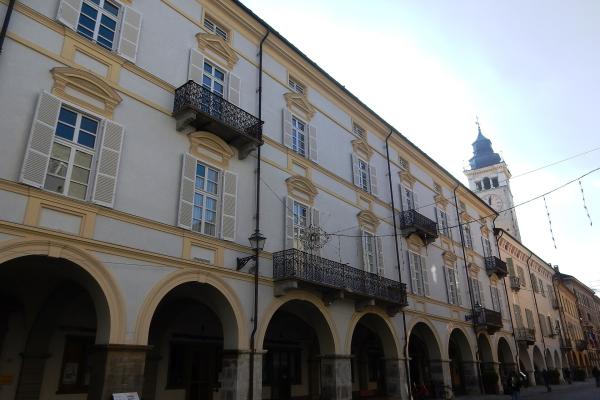
The arcades are the most striking part of this plan. Along the principal street, Via Roma, and others in the centre, continuous colonnaded walkways run for hundreds of metres, sheltering pedestrians from rain, snow and sun, and giving the streets a harmonious, uniform appearance. Behind the arches are shops, cafes, pastry shops and restaurants, so that the portici work as an indoor shopping street, and in winter, when snow falls, they are a refuge. The architecture of the buildings above is varied, with facades in warm colours, balconies and decorative details of different periods, while the vaults of the arcades are often painted. The arcades lead to the vast Piazza Galimberti, one of the largest squares in Italy, which is the setting for a large weekly market.
The portici are public and free to walk through at any time, and they are best enjoyed at a leisurely pace, stopping for a coffee or the local speciality, the cuneesi al rum, chocolates filled with rum. A walk along the length of Via Roma takes about half an hour, and a longer time if you stop to browse. The arcades are close to the Museo della Resistenza, which tells the story of the partisan struggle in the area, and Piazza Galimberti, which is named after a local hero of the Resistance. The Alps are visible at the end of many of the streets, and the city is also a base for excursions into the mountains. Unlike other Italian towns, Cuneo owes its look to the long planning of the Renaissance and the medieval period. The portici suit those who like walking, shopping and the atmosphere of a Piedmontese provincial city.
More photos coming soon
Questions people ask
Quick Facts
Best Time to Visit
Visit between April and June or September and October for mild temperatures and fewer crowds.