







- Where
- Cuneo, Piedmont and Aosta Valley
- Directions
- Directions
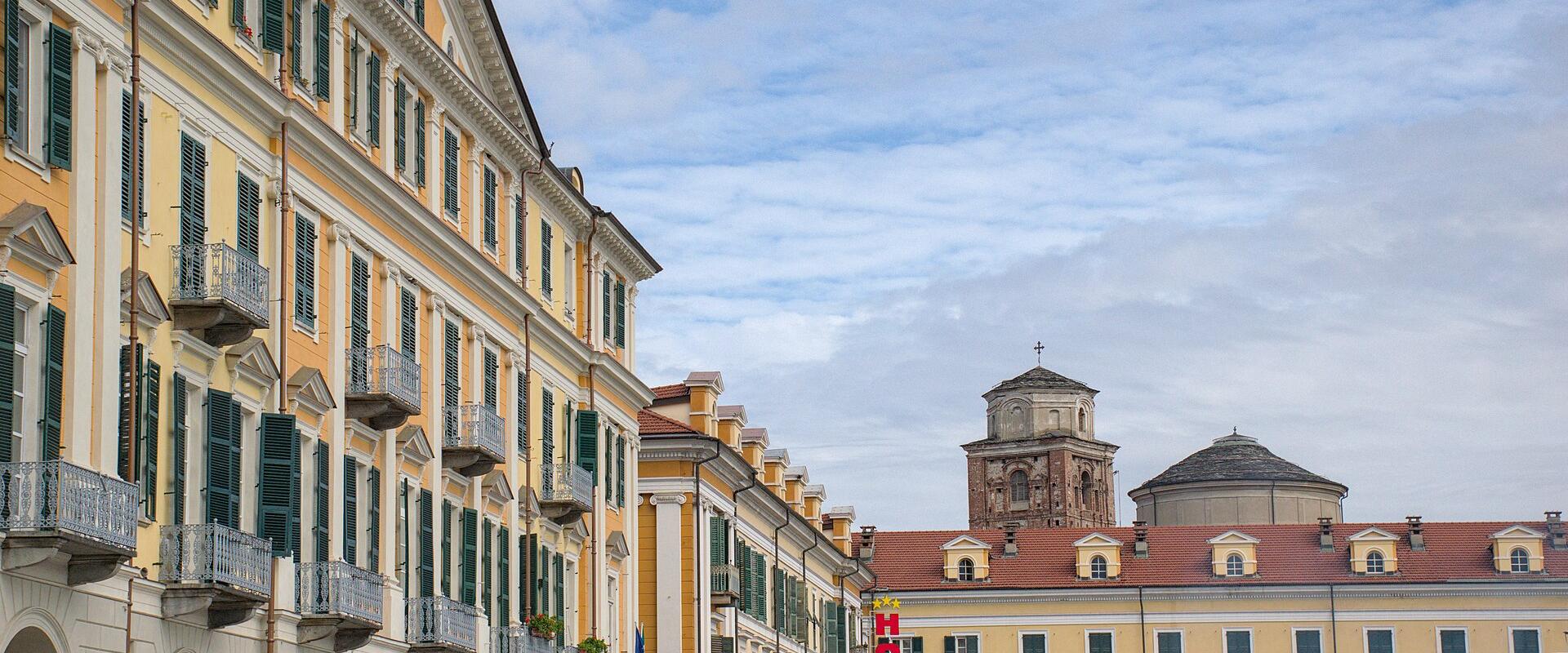
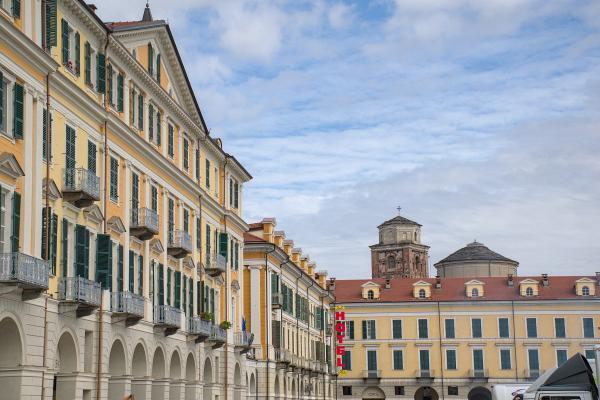
Piazza Galimberti, officially Piazza Tancredi Duccio Galimberti, is the central square of Cuneo, in southern Piedmont, and it is among the largest squares in Italy, covering about twenty-four thousand square metres. It is a vast, rectangular space, surrounded on all sides by uniform arcaded buildings of the 19th century, with the snow-capped Alps visible beyond the rooftops on clear days, and it has been described as the elegant drawing room of southern Piedmont, where the life of the city takes place. It is the starting point for Via Roma, the main street, and for the long porticoes, the Portici di Cuneo, that are the city’s trademark.
The square dates from the Napoleonic period. Cuneo had been a fortress town, a frontier stronghold of the House of Savoy, surrounded by bastions and walls, and it had withstood many sieges. In the early 1800s, the French occupying forces demolished the fortifications to the south of the old town, and the open ground that was left became the site for a new square, which was created around 1800. It marked the transformation of Cuneo from a fortress to an open city. Originally, the square was known as Piazza Nizza, after the road to Nice, and in 1860, after the Italian unification, it was dedicated to King Vittorio Emanuele II. The surrounding buildings, with their regular facades, arcades and balconies, were built in the course of the 19th century to a unified plan, which gives the square its harmony.
Its present name dates from 21 May 1945, shortly after the end of the Second World War, when the square was dedicated to Tancredi Galimberti, known as Duccio, a lawyer and a hero of the Resistance. Galimberti was born in Cuneo and was one of the leaders of the anti-fascist movement. On 26 July 1943, the day after the fall of Mussolini, he spoke to a crowd in this square from the balcony of his house, calling for the continuation of the struggle against Fascism and Nazi Germany. He later became a leader of the partisans in the mountains, and he was captured and killed by the Fascists in December 1944. The balcony of the Galimberti house on the square is a place of memory, and the Museo della Resistenza, a short walk away, tells the story of the partisan struggle.
The square comes alive on market days. Cuneo’s weekly market, held on Tuesday, is one of the largest in the region, and it fills the square and the surrounding streets with hundreds of stalls selling food, clothing, flowers and household goods, a tradition that dates back centuries. At other times, the square is a pleasant place to sit at a cafe under the arcades and enjoy the view of the mountains. It is open at all hours and free to enter. The city is a two-and-a-half-hour drive from Genoa via the A10 and A6 motorways, so it is possible to make it a day trip, though it is better to stay overnight. The square suits those who like architecture, history and the atmosphere of a Piedmontese provincial city, and a walk along the Portici di Cuneo is the natural continuation.
Categories
More photos coming soon
Questions people ask
Quick Facts
Best Time to Visit
Visit between April and June or September and October for mild temperatures and fewer crowds.