







- Where
- Noto, Sicily
- Directions
- Directions
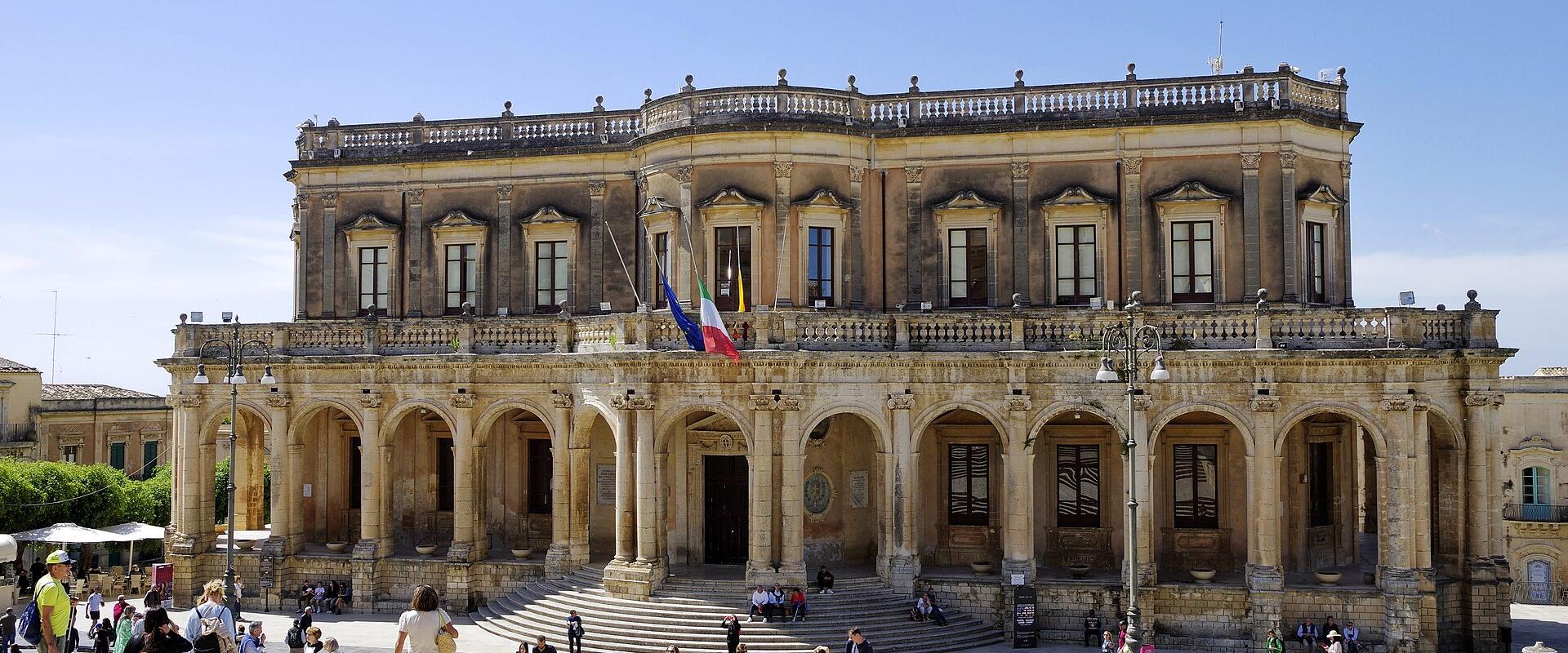
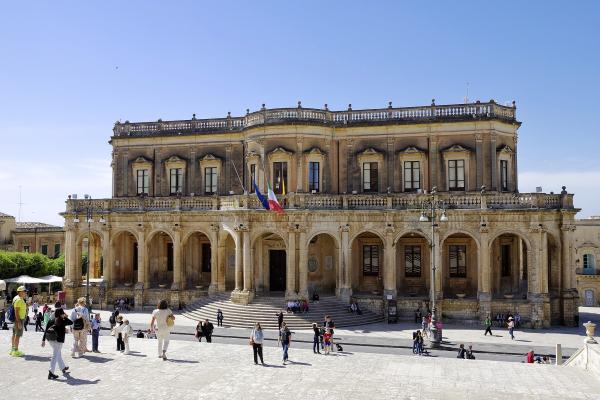
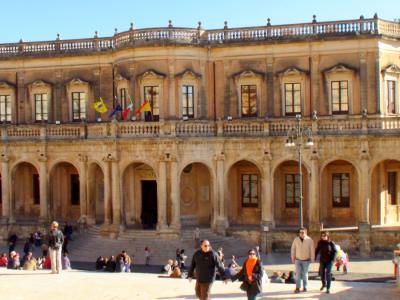
Palazzo Ducezio is the town hall of Noto, in south-eastern Sicily, and one of the key buildings of this Baroque town. It stands in Piazza Municipio, also known as Piazza XVI Maggio, on the main street, directly opposite the Cathedral, and its long, low front, with an open arcade at ground level, forms one side of the town's main stage set. The palace was designed by the architect Vincenzo Sinatra in the middle of the eighteenth century, and work continued over several decades, with the upper floor added later.
The name comes from Ducezio, in Italian, or Ducetius, the leader of the Siculi, the ancient native people of eastern Sicily, who in the fifth century BC united the Sicilian cities against the Greeks and founded a settlement in this region. By naming the building after him, the people of Noto linked their new town to a heroic local past. Today the palace is the seat of Noto’s Town Hall and also houses the Museo Civico di Noto.
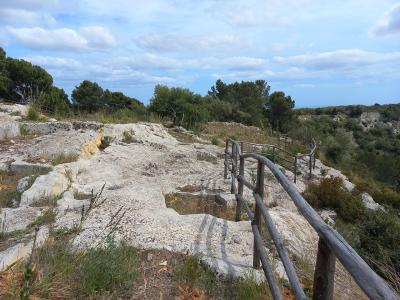
Noto itself has an unusual history. It was destroyed by the earthquake of 1693, like much of the Val di Noto, and the survivors decided to rebuild it on a new site a few kilometres away, leaving the ruins as Noto Antica, which can still be visited. The new town was laid out on a grid, with wide streets and terraces, and it was built almost entirely in the late Baroque style in a golden-hued limestone that glows at sunset. It was inscribed with other towns of the Val di Noto as a UNESCO World Heritage Site in 2002.
Palazzo Ducezio is a Baroque masterpiece with a golden-hued stone facade and some Neoclassical influences, particularly in the upper level and the clean lines of the arcade. The interior is equally impressive, with a Hall of Mirrors adorned with stucco work and frescoes, a room used for ceremonies and still a popular place for weddings. Visitors can also admire a collection of art and period objects. Decoration includes stone statues and stucco work, reflecting the architectural style that defines the city.
It is advisable to check the opening times locally, since access to the interior can depend on municipal use. The exterior can be admired at any time. The palace is within a few steps of other sights, including the Cattedrale di San Nicolò, the Chiesa di San Francesco all'Immacolata, and the Palazzo Nicolaci di Villadorata, famous for its balconies supported by carved figures, which is located along the same street. A visit takes about thirty minutes. The best time is the late afternoon, when the stone turns honey-coloured, and in May, the flower festival, the Infiorata, fills a street with carpets of petals.
Categories
More photos coming soon
Nearby Attractions
Other places to visit in Noto
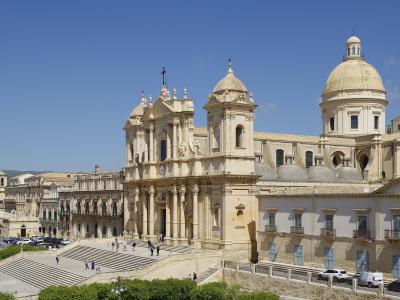
Cattedrale di San Nicolò
Sicilian Baroque cathedral on a monumental staircase
Free Architectural Monuments · Historic Churches
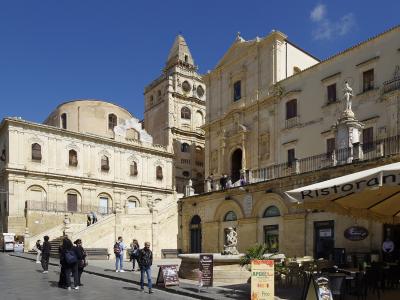
Chiesa di San Francesco all'Immacolata
18th-century Baroque church atop Noto's grand staircase
Architectural Monuments · Historic Churches
Museo Civico di Noto
Medieval monastery housing pre-1693 artifacts and a Helle...
From €3 Archaeological Museums
Noto Antica
Archaeological park of ancient Noto, destroyed in 1693
History & Heritage · Museums & Culture
Questions people ask
Quick Facts
Best Time to Visit
Visit between April and June or September and October for mild temperatures and fewer crowds.