







- Where
- Ostuni, Apulia
- Directions
- Directions
Perched atop the highest point in the historic centre, the Cathedral of Ostuni, locally known as the Duomo, is the spiritual and visual anchor of the White City, the hill town in Puglia whose whitewashed houses make it one of the most striking sights of the region. It stands at the top of a steep street from Piazza della Libertà, the main square, and it is reached through the maze of narrow lanes. Located on the summit of one of the three hills on which the town is built, the cathedral occupies a position that makes it visible from far across the olive groves of the plain, and an arched bridge between buildings leads to its square.
This late Gothic cathedral was built in the second half of the fifteenth century, and it is a notable example of Puglian ecclesiastical architecture. Its facade, in pale stone, is divided into three parts by pilasters, with three portals, one for each nave, and above the central one, there is a large rose window with twenty-four rays, set with a delicate carved frame, which is the most beautiful part of the building and offers a striking contrast to the whitewashed buildings that surround it. The facade is crowned by a pediment with a Gothic arcade, and a grand staircase leads visitors up to the main entrance, reinforcing the city's unique topography built on three hills. The bell tower rises beside the church and is linked to the bishop's palace by a high arch over the street.
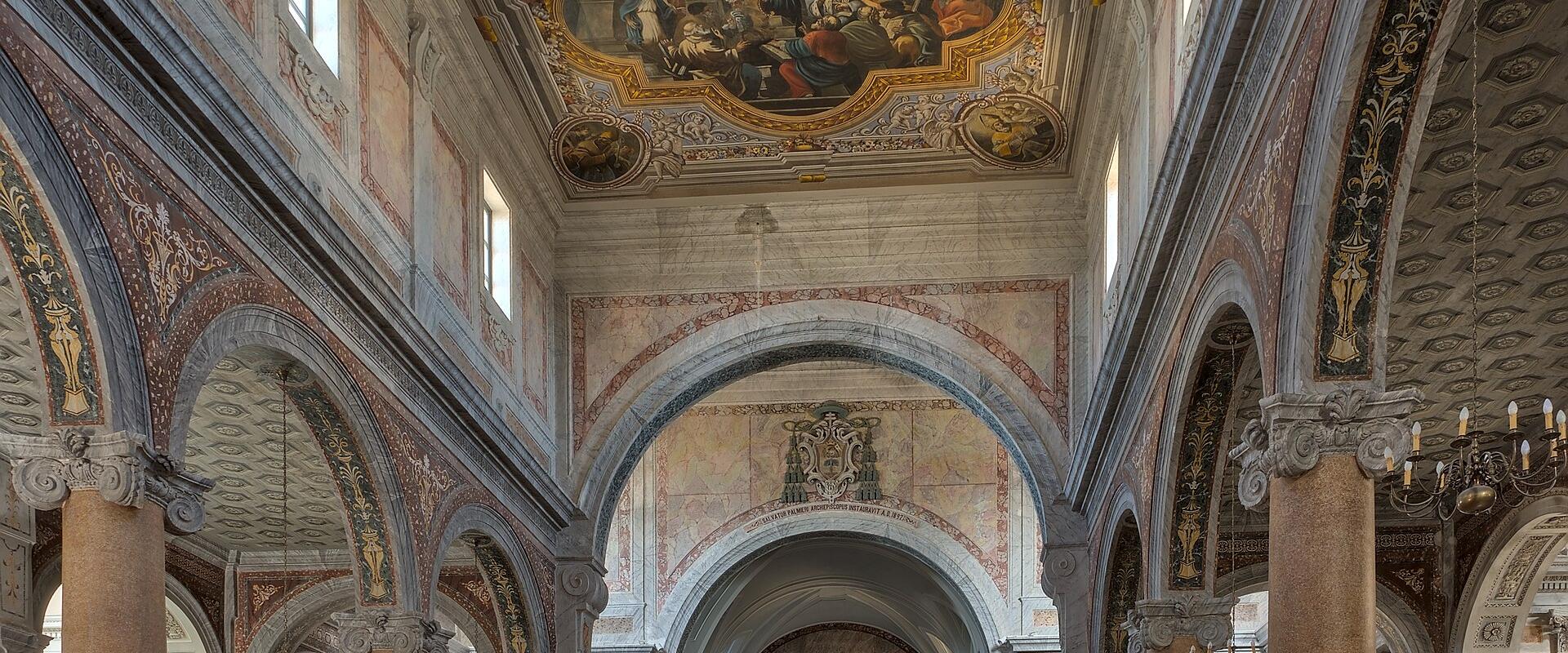
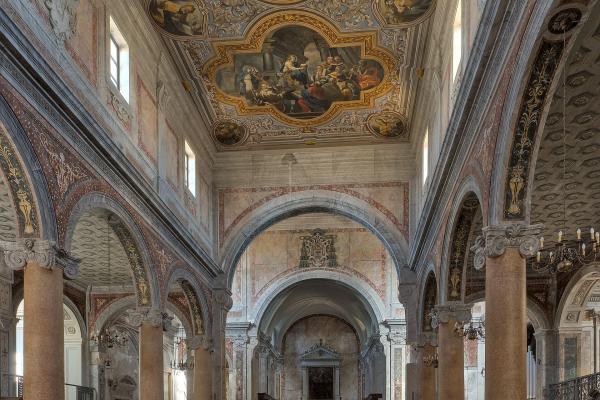
Inside, the cathedral is renowned for its rich interior, which includes significant artistic works and religious artefacts that reflect the region's deep Catholic heritage. The interior, remodelled in the eighteenth century, has a Baroque character, with a wide nave and aisles, stucco decoration, altars and paintings. In the nave, a wooden ceiling is painted with decorations, and some of the chapels house sculptures and canvases from the sixteenth to the eighteenth centuries. The effect is of a serene and contemplative atmosphere, which stands in quiet contrast to the bustling streets below.
The cathedral is an active place of worship, so visitors should dress modestly, and avoid visiting during Mass. Opening hours are typically in the morning and late afternoon, with a break at midday, and they can change, so check locally. The visit takes about twenty minutes. The cathedral is the highest point of the historic centre, and the view from the square in front of it takes in the roofs of the White City, the plain of olive groves and the Adriatic Sea in the distance.
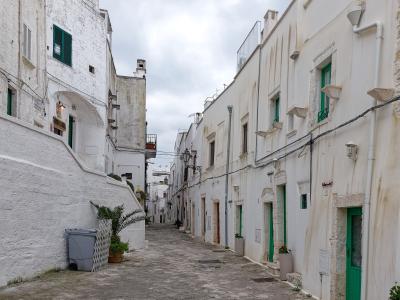
Ostuni is a pleasure to explore on foot. The old town is a maze of white alleys, steps, arches and small squares, with craft shops and restaurants, and it is best seen in the early morning or at sunset, when the walls glow. Cars are limited in the old centre. Wear comfortable shoes for the steep climbs, and bring a hat in summer.
Categories
More photos coming soon
Nearby Attractions
Other places to visit in Ostuni
Questions people ask
Quick Facts
Best Time to Visit
Visit between April and June or September and October for mild temperatures and fewer crowds.