







- Admission
- Free first Sunday of month Apr-Oct
- Where
- Cortona, Tuscany
- Directions
- Directions
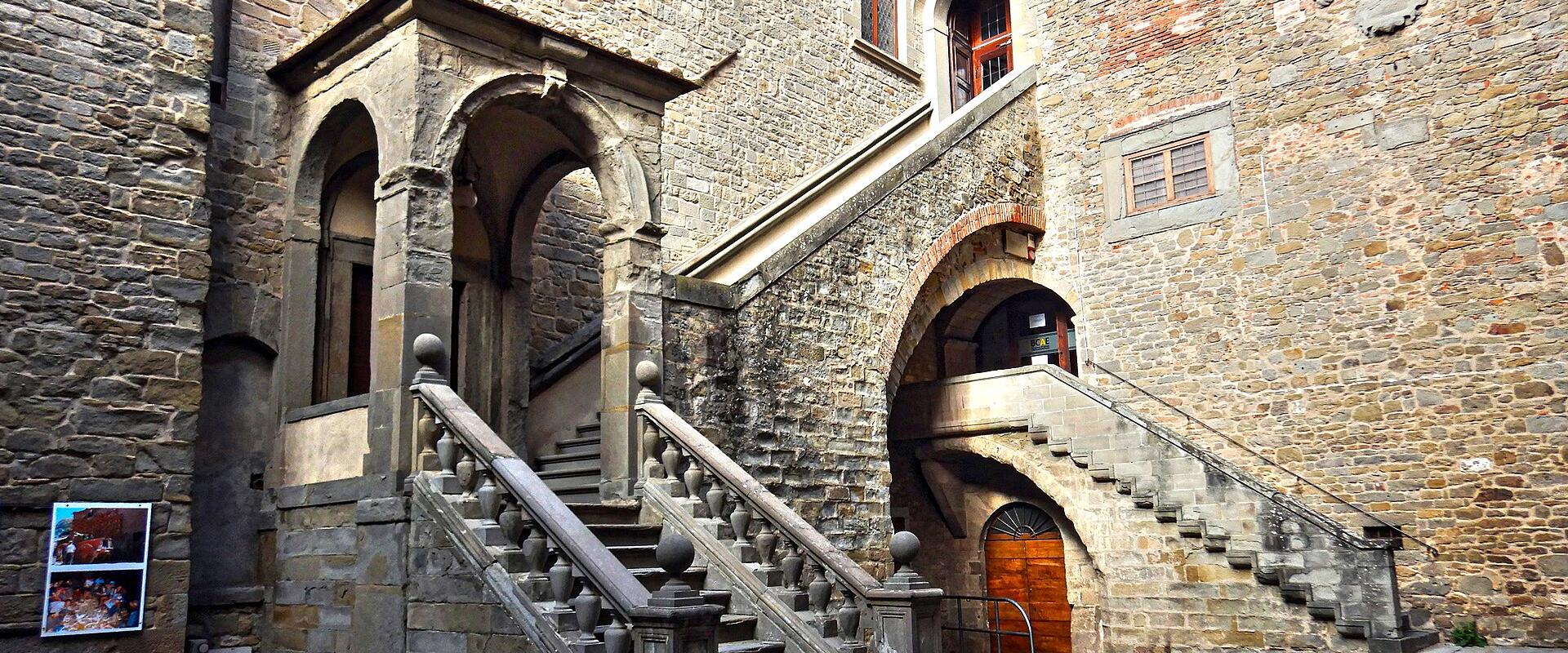
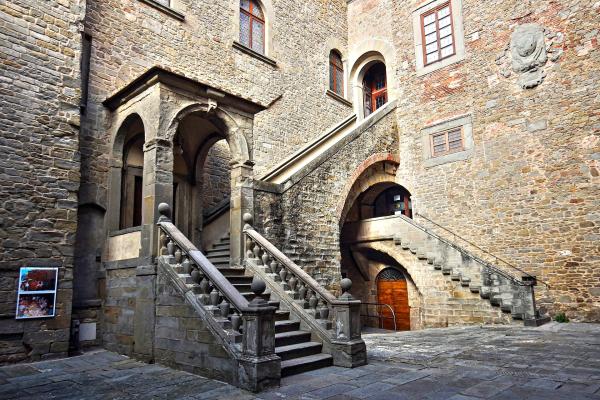
The Museo dell’Accademia Etrusca e della Città di Cortona, known as MAEC, is housed within Palazzo Casali, one of the oldest and most notable buildings in Cortona, the hilltop town in Tuscany near the border with Umbria. The palace stands on the town’s main square, Piazza Signorelli, a short walk from Piazza della Repubblica, and it was the residence of the Casali family, who ruled Cortona in the 14th century, before it passed to the Medici of Florence. The museum preserves collections from various historical periods that shaped this ancient Etruscan city, and it takes its name from the Accademia Etrusca, a learned society founded in 1727 by local scholars and nobles to study the Etruscan past, which still exists and has run the museum since the 18th century.
The museum displays works reflecting the artistic and cultural richness of the Etruscan civilization, as well as subsequent artistic movements. The most famous object is the great Etruscan bronze lamp, a large hanging lamp with sixteen flames, probably made in the 5th century BC, decorated with figures including a grotesque head of a Gorgon, found near Cortona in the 19th century. Another treasure is the Tabula Cortonensis, a bronze tablet inscribed in the Etruscan language, found in 1992, which records a property transaction and is one of the longest Etruscan texts known. Alongside these are Etruscan bronzes, jewelry, ceramics and funerary objects, Roman finds and an Egyptian collection of artifacts acquired in the 19th century.
Key features include the Severini Collection and the Signorelli Itineraries, offering visitors a comprehensive view of the region’s artistic heritage. Gino Severini, the Futurist painter, was born in Cortona in 1883, and the museum has a section devoted to his work, with paintings and drawings from his career in Paris and Rome. The Signorelli Itineraries refer to Luca Signorelli, the Renaissance painter born in Cortona around 1450, whose frescoes in Orvieto Cathedral are among the masterpieces of the period, and a route links works by him in churches and museums in the town. The museum also has a painted Roman panel showing the muse Polyhymnia, one of the rarest surviving Roman paintings on a panel.
The museum also encompasses the Archaeological Area of Sodo, located at the foot of Cortona, a short drive from the town. This area features two imposing Archaic period Etruscan tombs, Tumulo I and Tumulo II, dating from the late 7th to 6th century BC. These burial mounds, locally known as meloni, melons, because of their rounded shape, were commissioned by aristocratic families to celebrate their prestige and power. The tombs have stone walls, corridors and chambers that can be visited. The MAEC operates as a Distributed Cultural Park across the territory of Cortona, integrating various sites.
It is advisable to check the official website for current ticket prices and schedules for the main museum, since admission is free on certain days in the warmer months, and combined tickets are offered. The visit takes about an hour and a half. Exploring the MAEC offers insight into the Etruscan legacy of Tuscany, and it is an essential stop to appreciate the region’s ancient history. The combination of archaeological artifacts and artistic masterpieces makes it a meaningful destination. It complements visits to other landmarks in Cortona, such as the Piazza della Repubblica and the Diocesan Museum, which holds paintings by Fra Angelico and Signorelli, providing a view of the town’s identity.
Categories
More photos coming soon
Admission Fees
- Admission
- Free first Sunday of month Apr-Oct
Hours and prices change, especially out of season. Check with the venue before you go.
Nearby Attractions
Other places to visit in Cortona
Questions people ask
Quick Facts
Best Time to Visit
Visit between April and June or September and October for mild temperatures and fewer crowds.