







- Admission
- €6 full, €4 reduced.
- Hours
- July 15 - Sept 3: 10am to 8pm; Sept 4 - Oct 1: 10am to 7pm
- Where
- Cortona, Tuscany
- Directions
- Directions
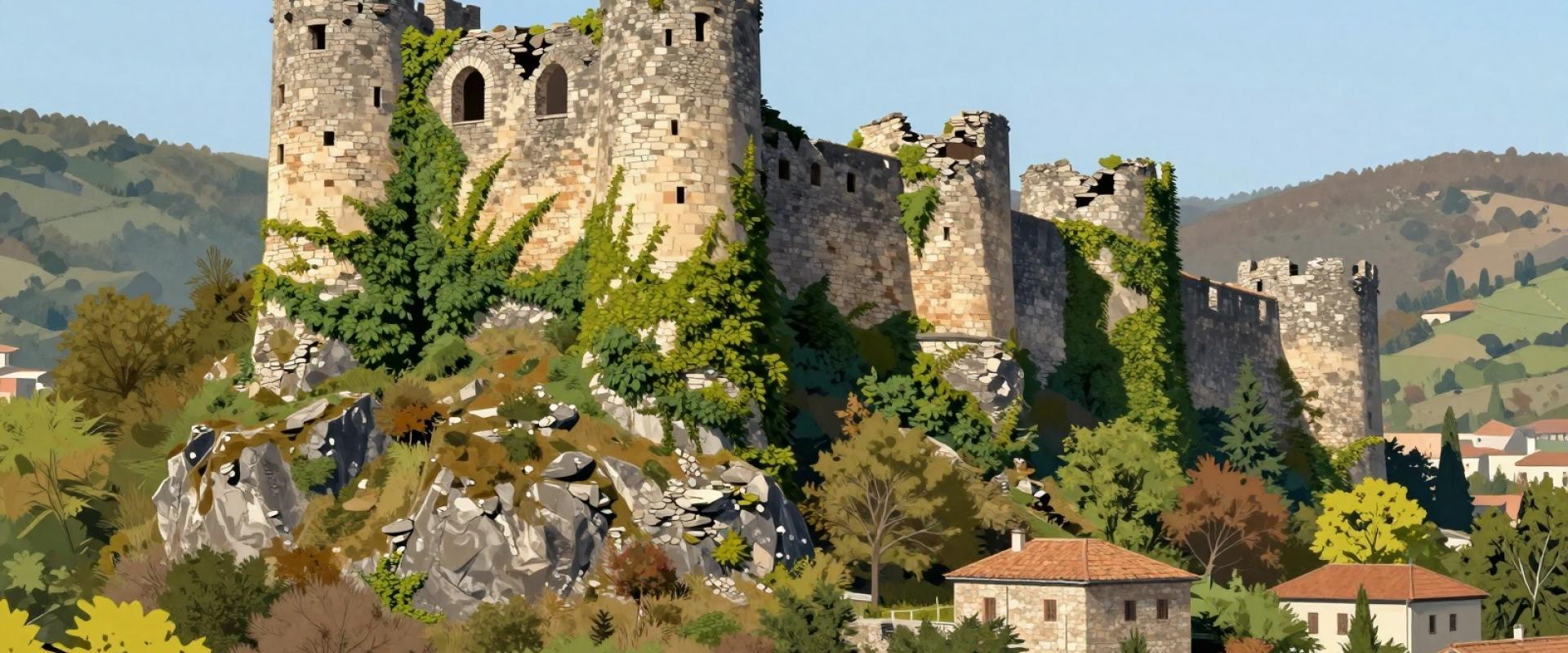
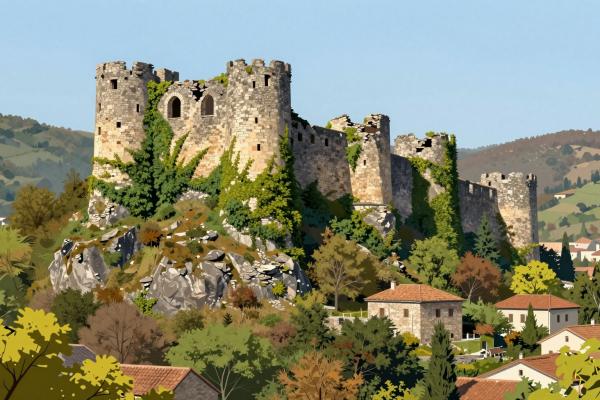
The Fortress of Cortona, known as the Fortezza del Girifalco, stands on a hilltop above the town of Cortona, in Tuscany, in the Arezzo area, and it offers panoramic views of the Tuscan countryside. At about 650 metres, it is the highest point of Cortona, which is built on a steep slope, and it commands the Val di Chiana to the south and, on clear days, the shining surface of Lake Trasimeno to the east. The name Girifalco means gyrfalcon, the great falcon, a bird that was prized by medieval nobles for hunting.
The site has likely hosted a fortress since ancient times, perhaps the fifth or sixth century BC, when Cortona was a powerful Etruscan city with a ring of massive walls that still survive in parts, and there are historical records of a strong and beautiful fortress dating back to 1258. After being sacked during conflicts with Arezzo, Cortona and the fortress were sold to the Florentine Republic in 1411, when the last Neapolitan ruler of the area sold his rights, and the town became part of the Florentine state. Under Florentine rule, the fortress was rebuilt. The current structure reflects reconstruction efforts that began in 1527 and continued under the Medici dukes, in the Renaissance, when military architecture was adapting to cannon, resulting in a pentagonal internal courtyard and an irregular layout with four asymmetrical bastions designed to fit the uneven terrain and to utilise the existing town walls.
Today, the fortress is open to the public and is also a cultural centre, so a visit is more than a military history tour. It features a bistrot where visitors can enjoy wine, food and cultural events, in a setting of old stone walls with a view that is worth the climb. The site also hosts Art exhibitions and restoration projects, often supported by public funds and private patrons, and the changing displays are a reason to visit more than once. Specific opening dates and times vary through the year, with a longer season in the warm months, so check locally before going.
The walk to the fortress is a climb, either by the road from the town or by steep paths past the Sanctuary of Santa Margherita, the church of the patron saint of the city, which stands slightly lower on the same hill. The walk takes about thirty to forty minutes from the central square, and it is steep, so wear sturdy shoes. Alternatively, the fortress can be reached by car on the road, which has limited parking. Visitors should bring water in summer.
The town below is a pleasure in itself. Cortona’s medieval streets, the Piazza della Repubblica with the town hall, and the Museo dell'Accademia Etrusca, which holds an important Etruscan collection, among them a famous bronze lamp, are within walking distance, and the film Under the Tuscan Sun made the town famous. Plan about an hour at the fortress, and visit in late afternoon for the sunset, when the colour of the stone changes and the valley turns pink.
Categories
More photos coming soon
Hours & Fees
- Open
- July 15 - Sept 3: 10am to 8pm; Sept 4 - Oct 1: 10am to 7pm
- Admission
- €6 full, €4 reduced.
Hours and prices change, especially out of season. Check with the venue before you go.
Nearby Attractions
Other places to visit in Cortona
Questions people ask
Quick Facts
Best Time to Visit
Visit between April and June or September and October for mild temperatures and fewer crowds.