







- Hours
- Daily 09:00 to 19:00 (last entry); closed December 24th and 25th
- Where
- Alghero, Sardinia
- Directions
- Directions
The Grotta di Nettuno, or Neptune’s Grotto, is a large sea cave at the foot of the cliffs of Capo Caccia, the headland that closes the bay to the west of Alghero in north-western Sardinia. It is a karst cave, carved by water into limestone, and it opens at sea level, so that the Mediterranean Sea enters it and fills its lower chambers. The name comes from the sea god, a natural choice for a cave that the tide is always entering. Local fishermen knew the cave for centuries, and its fame as a sight dates mainly from the nineteenth century, when visitors began to arrive by boat.
There are two ways to reach it. One is by boat from the harbour of Alghero, a trip of about forty-five minutes along the coast under the white cliffs, with views of the headland and the lighthouse. The other is by the Escala del Cabirol, the Goat's Stair, a flight of 654 steps cut into the cliff face above the sea, which runs down from the top of the headland and gives an extraordinary view of the coast on the way down. The steps are steep and can be tiring on the way back up, and the descent is not suitable for anyone with heart or knee problems. Boats are reliable only when the sea is calm, and trips are cancelled in rough weather, so check conditions before planning a visit.
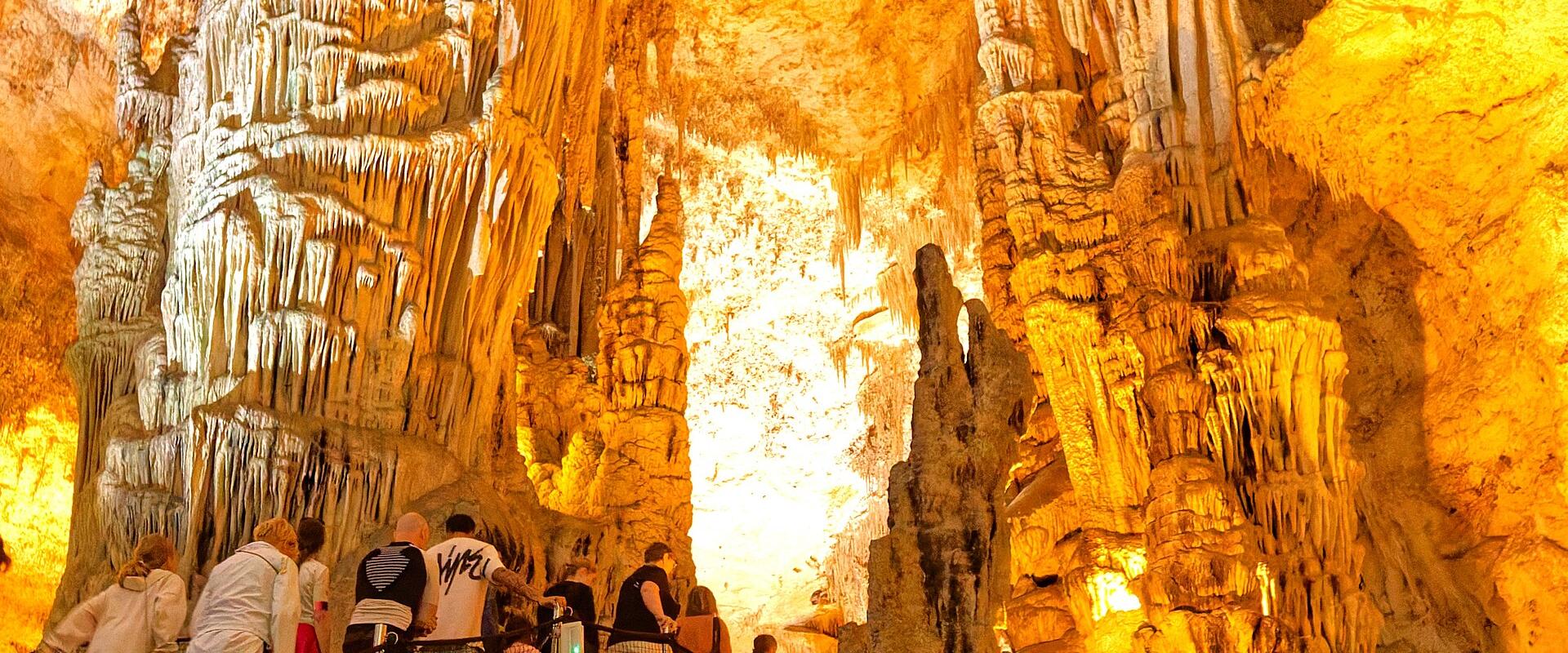
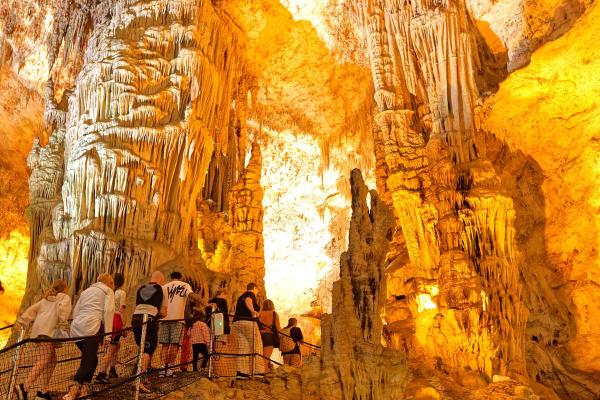
Inside, a path of walkways leads through a succession of chambers of stalactites and stalagmites, columns and flowstone curtains, lit so that the colours show clearly. The tour is guided and lasts about thirty minutes, with groups starting every hour. In some rooms natural light filters through openings in the ceiling, and the acoustics are remarkable, with every sound echoing through the large halls. In the lower part of the cave there is a salt lake, Lake Lamarmora, which is said to be among the largest of its kind in a European cave. The names of the chambers, such as the Hall of Ruins and the Organ, reflect the shapes of the rock formations.
The area around the cave belongs to the Porto Conte Natural Park, a protected landscape of cliffs, scrub and Mediterranean woodland, home to griffon vultures and wild goats. Capo Caccia offers some of the best views in Sardinia, and the sunset from the headland is especially fine.
Alghero itself is a good base. The old town, with its sea walls and Catalan heritage, dates from the period when Catalan settlers colonised the town in the fourteenth century, and Catalan is still spoken by many residents. The streets are lined with coral jewellery shops, and the town is known for its seafood. Visitors should check opening times and tickets locally, since the cave is open daily but depends on weather and sea conditions, and it has closures on certain holidays, including late in December. Wear shoes with good grip, and take a light jacket, since the temperature inside is cool.
More photos coming soon
Opening Hours
- Open
- Daily 09:00 to 19:00 (last entry); closed December 24th and 25th
Hours and prices change, especially out of season. Check with the venue before you go.
Nearby Attractions
Other places to visit in Alghero
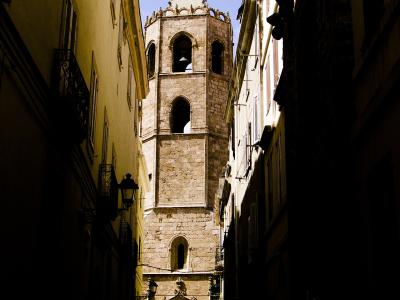
Cathedral of St. Mary of the Immaculate
Catalan-Gothic and Renaissance cathedral in Alghero
Architectural Monuments · Historic Churches
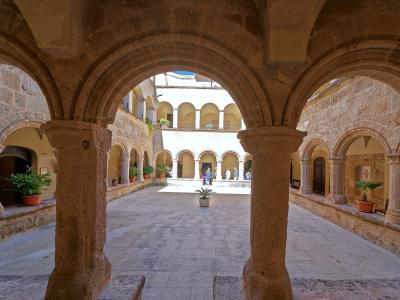
Church of San Francesco
15th-century Gothic complex with hexagonal bell tower
Architectural Monuments · Historic Churches
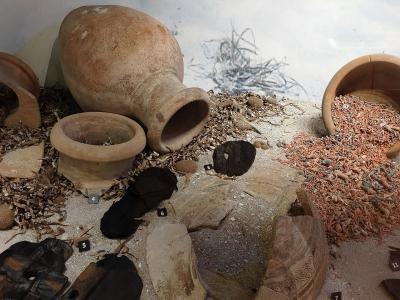
Museo Archeologico Nazionale
Neolithic to Medieval artifacts in historic building
History & Heritage · Archaeological Museums
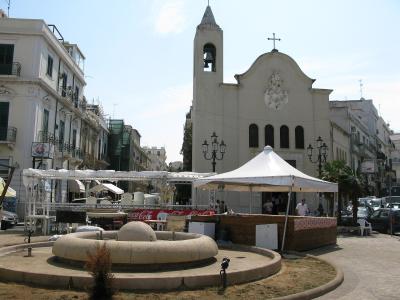
Piazza del Carmine
Historic square with Carmelite church
Historic Churches · Historic Districts
Questions people ask
Quick Facts
Best Time to Visit
Visit between May and June or September and October for warm weather and fewer crowds.