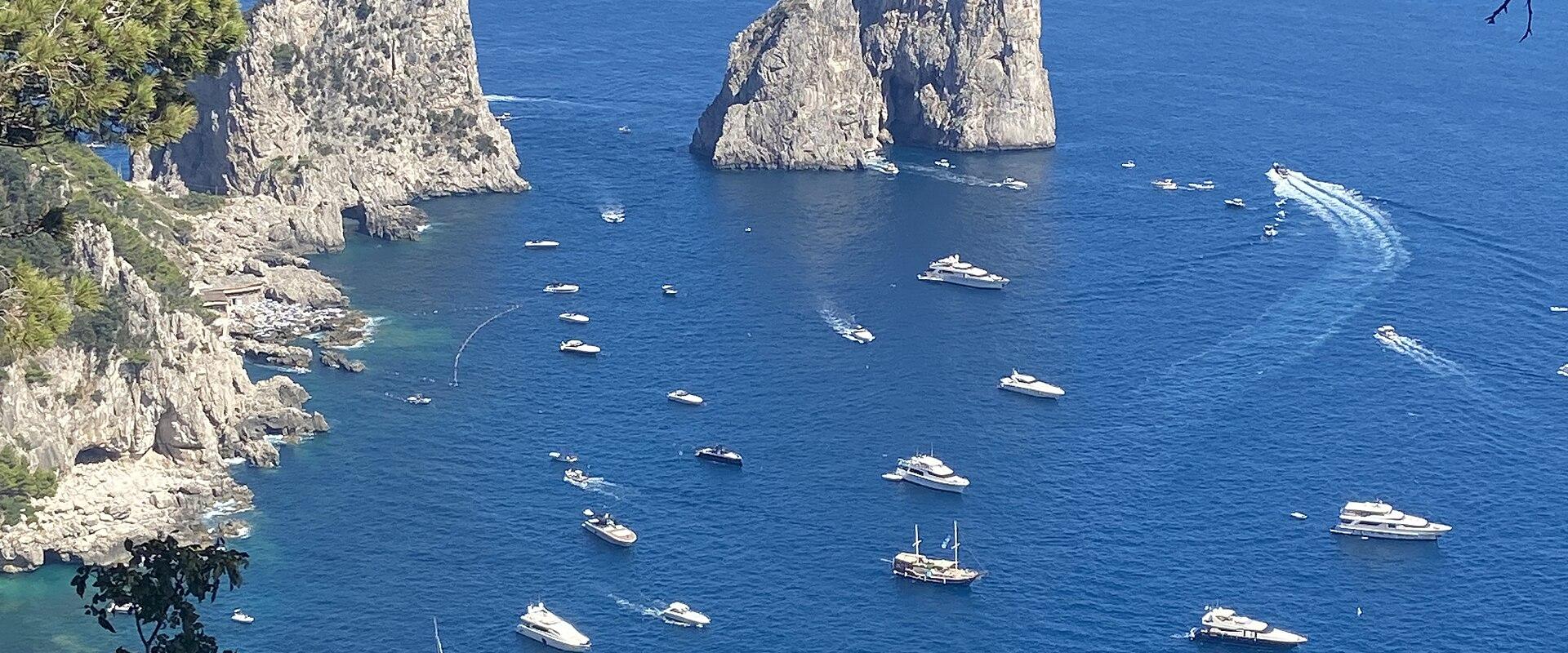
Faraglioni di Capri
Three iconic sea stacks rising 100m from the Mediterranean
The Faraglioni di Capri are three iconic rocky islets located in the Gulf of Naples, off the coast of Capri. Formed by erosion from wind, rain, and sea waves, they consist of Stella (109 m, connected to the island), Mezzo (82 m, featuring a characteristic arch-like hole), and Scopolo (106 m, home to the endemic blue lizard). These dramatic sea stacks rise approximately 100 meters above the Mediterranean Sea and are the most iconic symbols of Capri.
Historically significant as a favorite spot for ancient Romans who built villas along the shore, the area also attracted artists and intellectuals in the 1900s. The formations have been immortalized in paintings by artists like Josef Rebell and Albert Bierstadt, recorded in early chronophotography by Étienne-Jules Marey, and featured in films such as The Emperor of Capri (1949).
The best views are from the sea via boat tours, though popular land-based photo spots include the Punta Tragara Belvedere, Augustus Gardens, and Marina Piccola. Visitors can reach nearby rocky beaches (La Fontelina and da Luigi) via a footpath from the Tragara overlook, with ferry services available to Marina Piccola. A fourth sea stack, the Monacone, is located nearby.
While specific admission fees or operating hours do not apply to viewing these natural monuments from public viewpoints, boat tours have their own schedules and costs. Exploring the Faraglioni offers a profound insight into the geological and cultural history of Capri. For travelers, it serves as an essential stop to appreciate the island’s natural beauty. The combination of dramatic scenery and historical significance makes it a memorable destination. It complements visits to other landmarks in Capri, such as the Gardens of Augustus and the Blue Grotto, providing a comprehensive view of the island’s identity.
More photos coming soon
Nearby Attractions
Other places to visit in Capri
Frequently Asked Questions
Quick Facts
Best Time to Visit
Visit between April and June or September and October for mild temperatures and fewer crowds.