







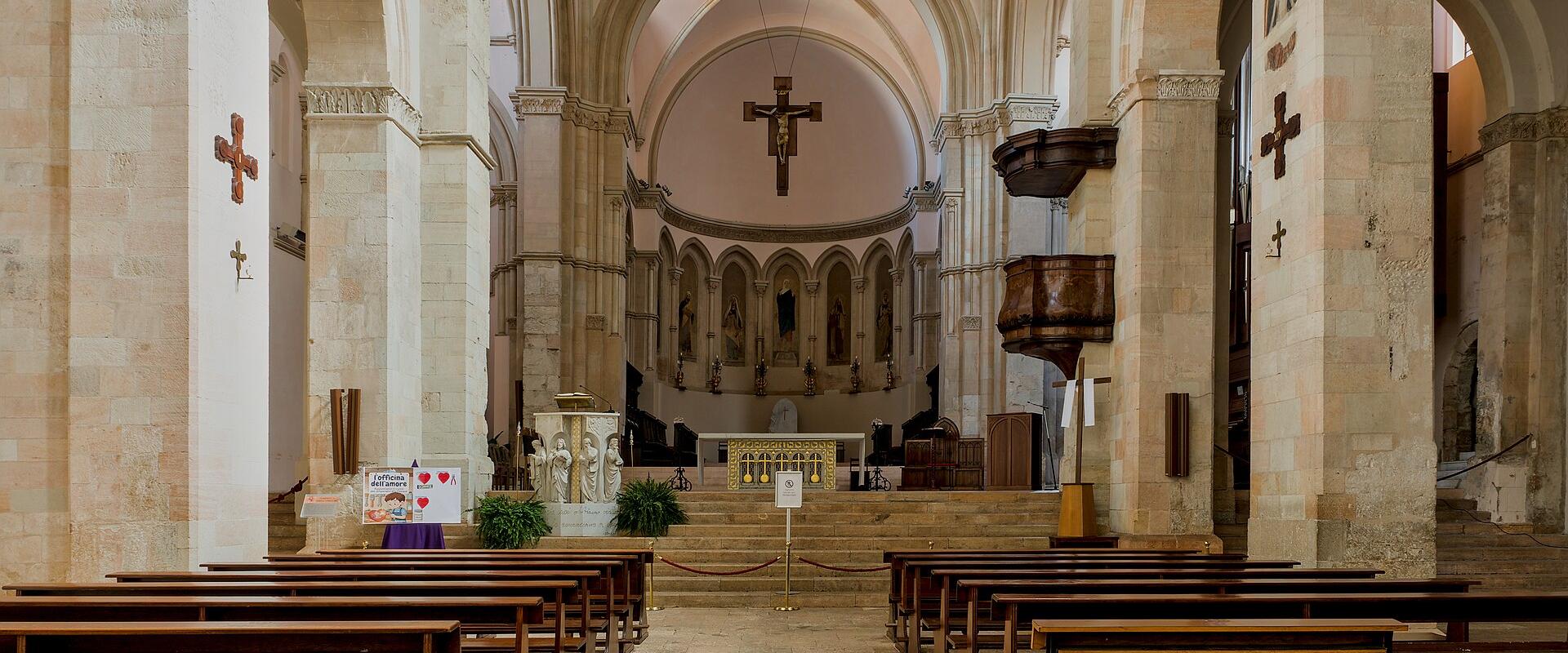
Duomo di Cosenza (Cathedral of Santa Maria Assunta)
13th-century cathedral blending Romanesque, Gothic, and B...
- Where
- Cosenza, Calabria
- Directions
- Directions
The Duomo di Cosenza, officially the Cathedral of Santa Maria Assunta, is the principal Catholic place of worship in Cosenza and the seat of the Archdiocese of Cosenza-Bisignano. Located in the historic center at Piazza Duomo, on the hill above the confluence of the Crati and Busento rivers, the cathedral is a significant example of architectural evolution in Calabria. Cosenza is an ancient city, once the capital of the Bruttii people, and the old town, a maze of steep lanes, small squares and medieval and Baroque buildings, climbs the slope of the Pancrazio hill toward the castle, with the cathedral at its center.
Originally built in the 11th century, the structure was largely destroyed by an earthquake in 1184. Reconstruction began shortly after and was completed in 1222 under Archbishop Luca Campano, with the church consecrated on January 30, 1222, in the presence of the emperor Frederick II, the Holy Roman Emperor who ruled southern Italy and Sicily. The new building was built in the Gothic style that the Cistercian monks had brought to Calabria, with pointed arches, ribbed vaults and a plan in the form of a Latin cross, a very early example of Gothic architecture in the south of Italy. The facade and the interior have been altered many times since, including a Baroque phase in the 18th century and restorations in the 19th and 20th centuries that sought to bring back the medieval character of the building.
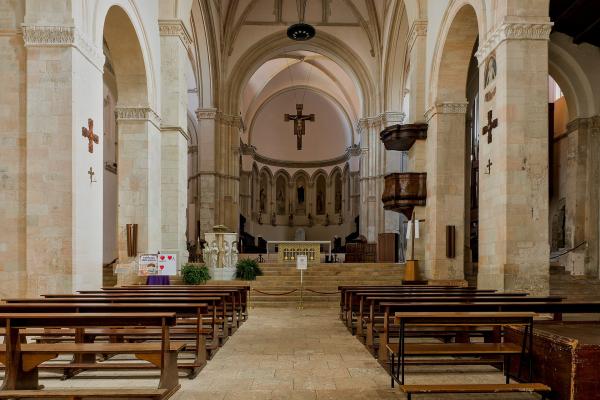
The architecture reflects a blend of Romanesque, Gothic and Baroque styles, showcasing the artistic changes over centuries. Notably, on October 12, 2011, it was recognized by UNESCO as a witness heritage of a culture of peace, highlighting its role in promoting dialogue and understanding. Visitors entering the cathedral encounter a space that combines historical grandeur with spiritual significance. The interior features altars and artworks that reflect the region’s religious devotion, and a treasure of great value, the Stauroteca, a small Byzantine reliquary cross decorated with gold and enamel, which tradition says was donated by Frederick II at the time of the consecration, is displayed in the diocesan museum nearby. The cathedral also holds the tomb of Isabella of Aragon, queen of France, who died at Cosenza in 1271 on the return from a crusade, and an icon of the Madonna del Pilerio, the protector of the city, venerated since the Middle Ages.
It is advisable to check local information for mass times, as access may be restricted during religious services. The experience of visiting the Duomo offers a deep appreciation of Cosenza’s religious and cultural heritage. For visitors, the cathedral is a central landmark in the city, complementing visits to other nearby attractions such as the Museo Nazionale di Cosenza, and the old town’s lanes, with their craft shops and small restaurants. The Corso Mazzini, the pedestrian shopping street of the lower town, and the open-air museum of sculpture, the MAB, are across the river.
The blend of historical styles and UNESCO recognition makes it a meaningful stop for those interested in the history of Southern Italy, and the climb through the old town, with the castle above, is part of the pleasure. Visit in the morning, when the lanes are quiet.
More photos coming soon
Questions people ask
Quick Facts
Best Time to Visit
Visit between April and June or September and October for mild temperatures and fewer crowds.