







- Where
- Portofino, Liguria
- Directions
- Directions
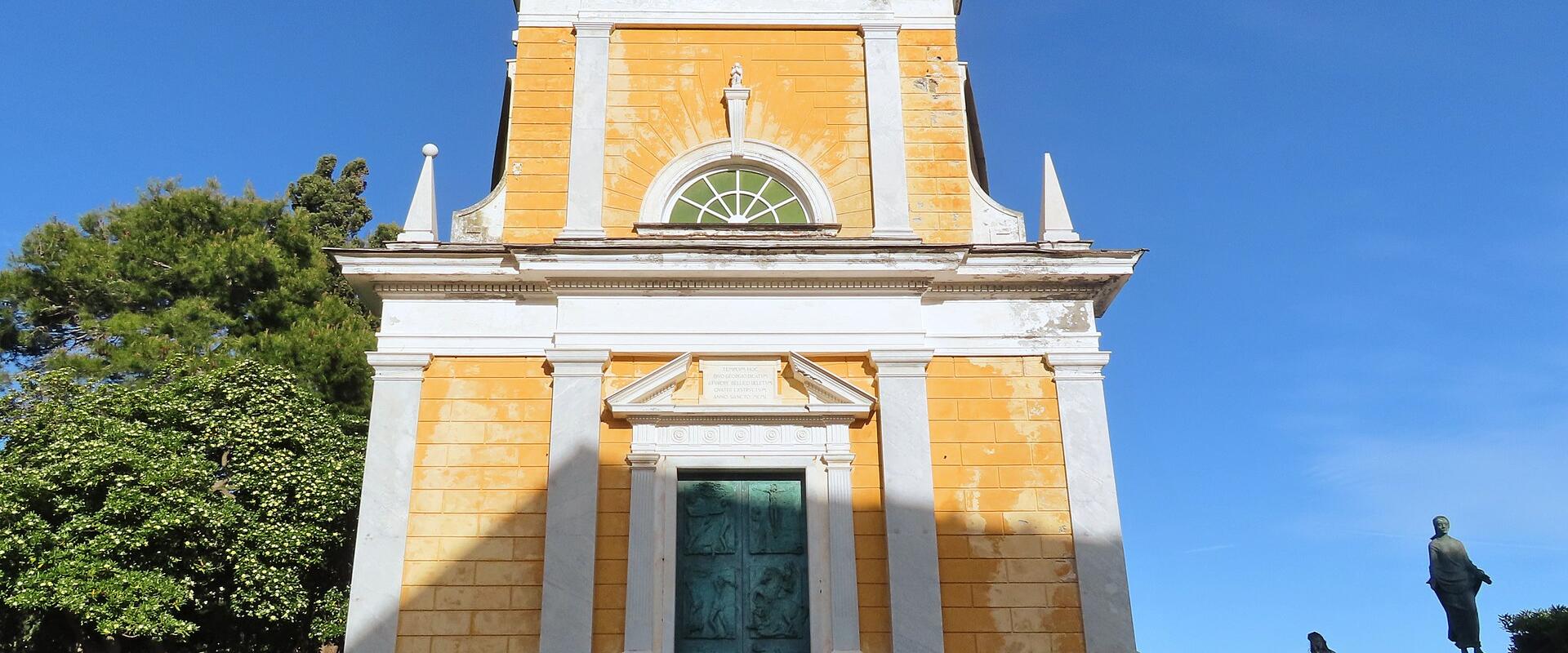
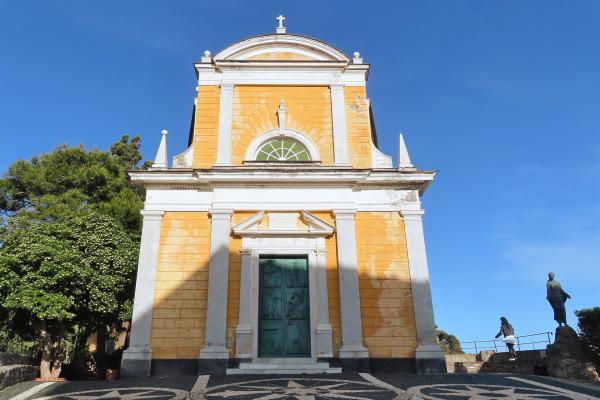
The Church of San Giorgio is a Romanesque-style church in Portofino, standing on the promontory that divides the harbor from the open Ligurian Sea, at the highest point of the village. It is dedicated to Saint George, the knight and martyr who is the patron saint of Genoa and of many seafaring communities along the coast, and its simple yellow facade is one of the landmarks of the small, colorful port. Originally built in 1154, according to the traditional date, the distinctive yellow church was completely destroyed during World War II, in bombing in the final stages of the conflict, and it was subsequently rebuilt in its former style. Archaeological excavations during the reconstruction revealed that the site’s religious significance predates the current structure, which suggests that earlier buildings stood here before the Romanesque church.
The church is a historic beacon for sailors and fishermen, since its position above the sea made it a landmark for boats approaching the harbor, and it offers panoramic views of the harbor and the sea. The Ligurian communities along this coast have long associated their churches with the protection of seafarers, and Saint George, who is depicted slaying the dragon, is a protector of those at sea. Tradition holds that relics of the saint were brought to the village by Genoese crusaders returning from the Holy Land, although the details are a matter of legend.
The church is located at the highest point of the village, accessible via a steep climb from the main square, the Piazzetta, by a cobbled path with steps that rises past gardens and villas. The walk takes about ten to fifteen minutes at a leisurely pace and has views opening up at every turn. Its elevated position provides visitors with sweeping vistas of the Gulf of Portofino and the surrounding coastline, with the colored houses of the harbor below like a stage set, and the green headlands of the natural park beyond. The exterior features a simple yet elegant facade, while the interior, though rebuilt, retains its spiritual atmosphere. A historical plaque commemorates the church’s past and its role in the community’s history.
It is advisable to check local information for mass times, as access may be restricted during services. Modest dress is expected inside, and the building is small and quiet. Exploring the Church of San Giorgio offers insight into Portofino’s maritime heritage and architectural resilience, since the story of its destruction and rebuilding is part of the village’s modern history. It is an essential stop to appreciate the village’s scenic beauty and historical depth.
The path continues to Castello Brown, a fortress on the headland that was turned into a private residence in the 19th century and now houses exhibitions and a garden, and further along the headland to the lighthouse of Portofino, at the tip of the promontory, which stands within the Parco Naturale di Portofino. The combination of religious significance and views makes it a memorable destination. Come in the morning, when the village is quiet, or toward evening, when the light is warm, and combine the climb with a walk around the harbor and a coffee in the Piazzetta.
Categories
More photos coming soon
Nearby Attractions
Other places to visit in Portofino
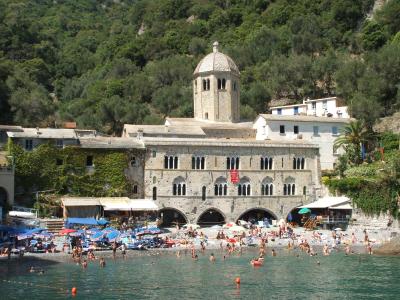
Abbazia di San Fruttuoso
Medieval abbey in a cove reachable only on foot or by sea
Beaches · Hiking Trails
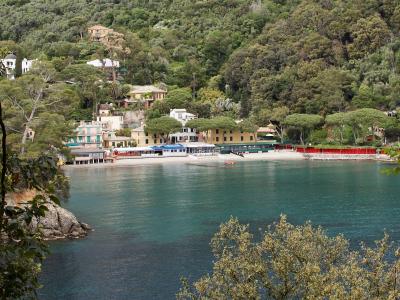
Baia di Paraggi
Sheltered bay and former millers' hamlet on the Portofino road
Beaches · Castles & Fortresses
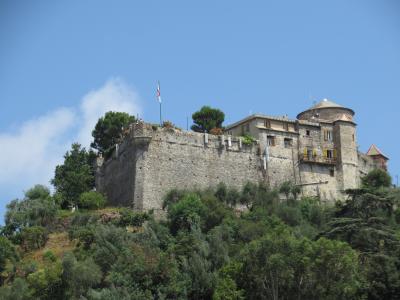
Castello Brown
Medieval Genoese fortress with panoramic bay views
Castles & Fortresses · Coastal Walks
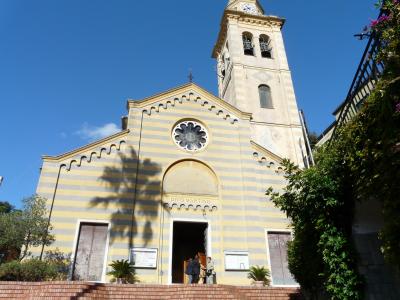
Chiesa del Divo Martino
Portofino's parish church, rooted in the 12th century
Historic Churches · Historic Towns
Questions people ask
Quick Facts
Best Time to Visit
Visit between May and June or September and October for mild temperatures and fewer crowds.