







Cathedral of Otranto (Duomo di Otranto)
Romanesque cathedral with ancient mosaic floor
- Where
- Otranto, Apulia
- Directions
- Directions
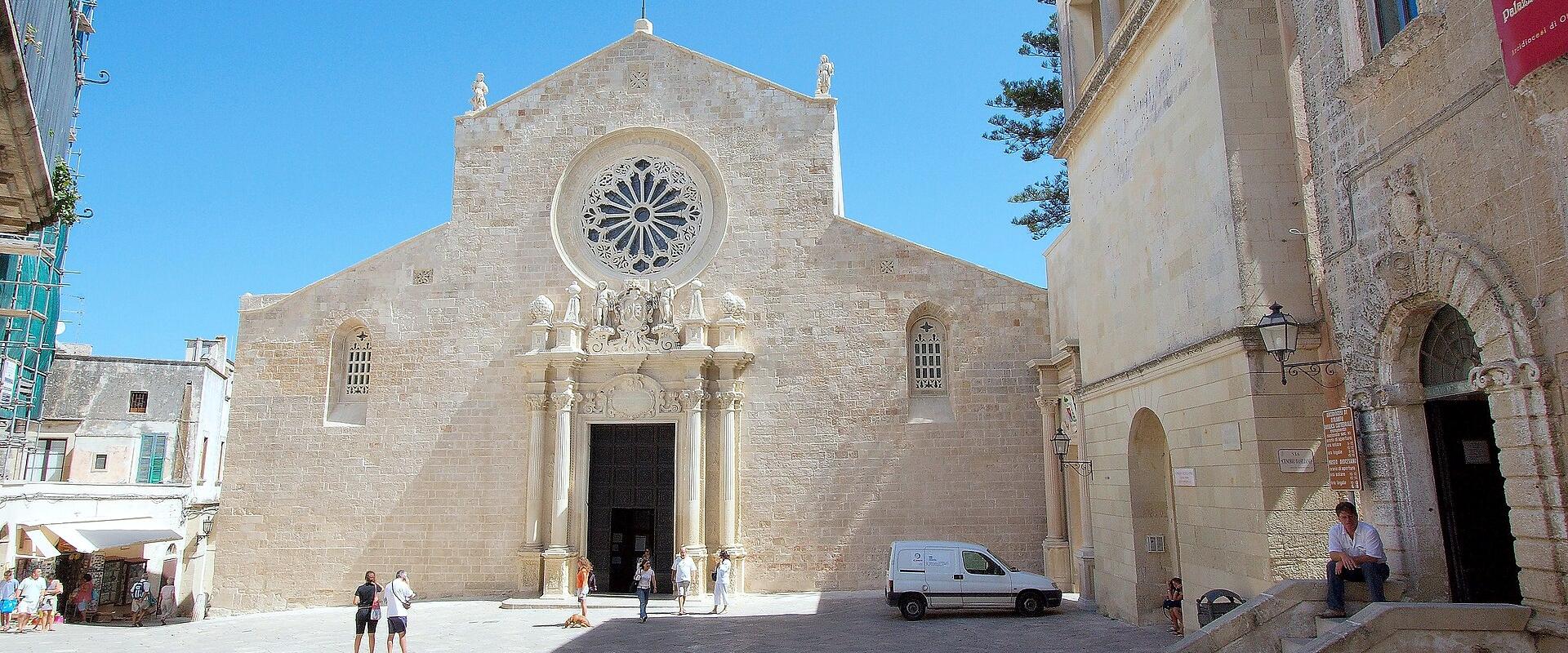
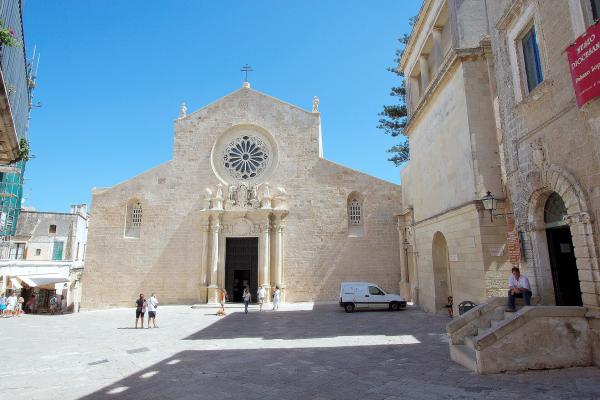
The Cathedral of Otranto (Duomo di Otranto), officially the Basilica Cattedrale di Santa Maria Annunziata, is a Roman Catholic cathedral in Otranto, the easternmost town of Italy, on the Adriatic coast of the Salento peninsula in Puglia, at the end of the Italian peninsula’s heel. It is dedicated to the Annunciation of the Virgin Mary and was built in the Romanesque style in the second half of the 11th century, then consecrated in 1088. The plain stone facade, with a large rose window added in the 15th century above the main portal, gives little warning of what lies inside. The interior is a wide basilica with a nave and aisles divided by columns of different stones, many of which were reused from earlier buildings, and above them the ceiling is a later wooden one.
The great treasure is the mosaic floor, which covers the whole of the nave, the aisles and the apse. It was made between 1163 and 1165 under the direction of a monk named Pantaleone, and it is among the largest medieval mosaics anywhere. The central motif is an enormous Tree of Life, rising from the entrance to the apse, with branches that frame scenes from the Old Testament, such as Adam and Eve, Cain and Abel and Noah’s ark, together with the months of the year, signs of the zodiac, fantastic animals and figures from legend. Among the stranger sights are images of Alexander the Great and of King Arthur, who appears on a goat or other beast in a small scene, a reminder of how widely the medieval stories travelled. Walking through the church while looking down at the floor is a very unusual experience, and a platform in places helps the visitor to see.
The cathedral is also a place of memory for a dramatic event. In 1480 an Ottoman fleet captured Otranto after a siege, and according to tradition, around eight hundred inhabitants who refused to renounce their Christian faith were killed on a hill outside the town. Their bones and skulls are kept in the Chapel of the Martyrs, behind glass in the cathedral, and the Martyrs of Otranto were declared saints by the Catholic Church in 2013. The chapel is an unforgettable and sobering sight. Below the church, a crypt with many columns, with capitals of various ages, dates from the early building and gives the cathedral an additional layer of antiquity. Some accounts say the crypt holds the relics of Saint Thomas Becket, but this is not supported, and visitors should not expect to find them.
The cathedral museum displays religious objects and vestments. The building is a working church, and modest dress is expected. It stands in the old town, which is a short walk from the Castle of Otranto (Castello Aragonese), and the sea promenade is a short distance away, while the Torre di Roca Vecchia lies further up the coast. A visit takes about an hour, and early morning or the end of the afternoon gives the best light and fewest visitors. The cathedral suits anyone interested in medieval art, history and religion.
Categories
More photos coming soon
Nearby Attractions
Other places to visit in Otranto
Castle of Otranto (Castello Aragonese)
15th-century Aragonese fortress with an archaeological mu...
Castles & Fortresses · Historic Towns
Lido di Otranto
Sandy beach near Otranto's historic cathedral
Beaches · Water Sports
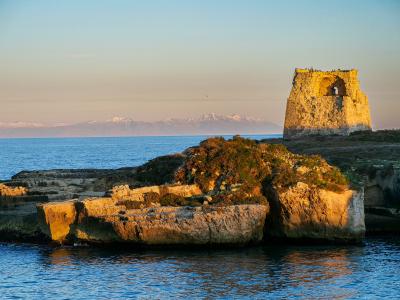
Torre di Roca Vecchia
Ancient Messapian archaeological site near Otranto
Castles & Fortresses · Coastal Walks
Questions people ask
Quick Facts
Best Time to Visit
Visit between April and June or September and October for mild temperatures and fewer crowds.