







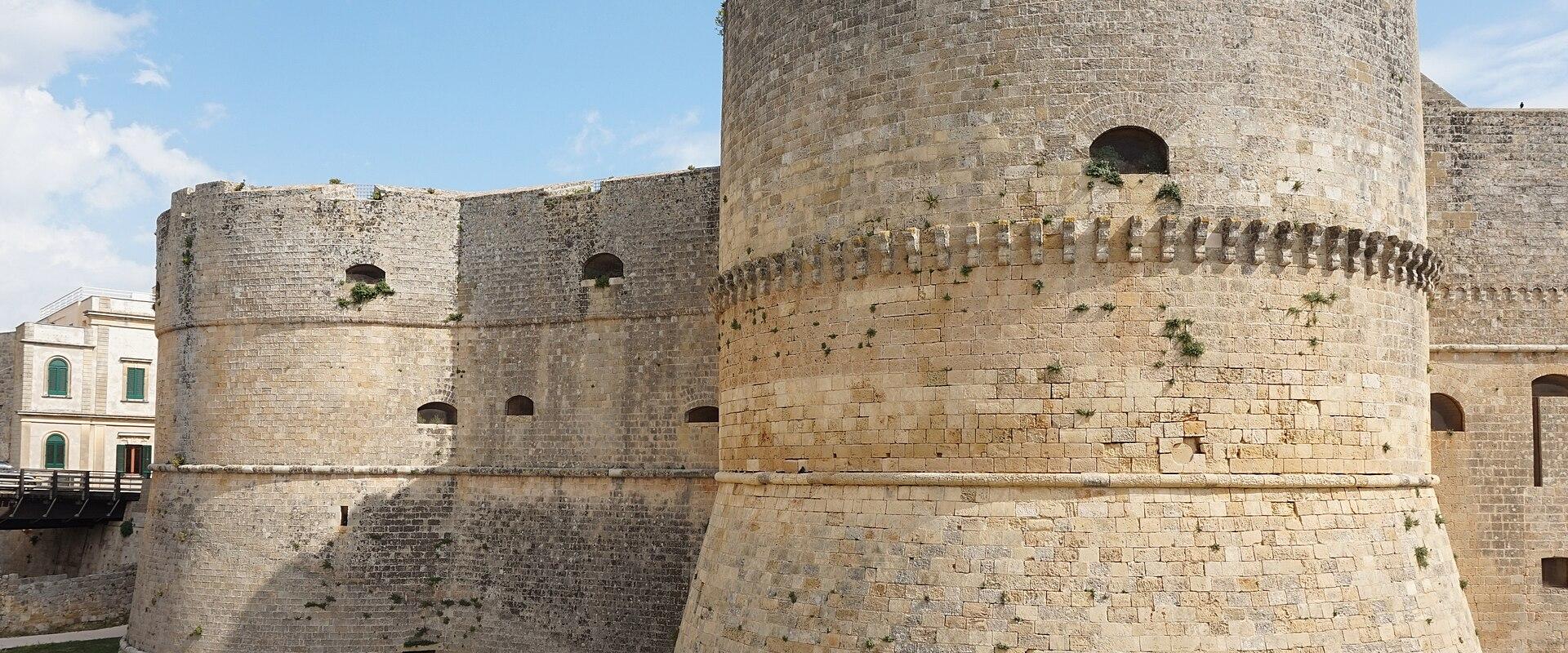
Castle of Otranto (Castello Aragonese)
15th-century Aragonese fortress with an archaeological mu...
- Where
- Otranto, Apulia
- Directions
- Directions
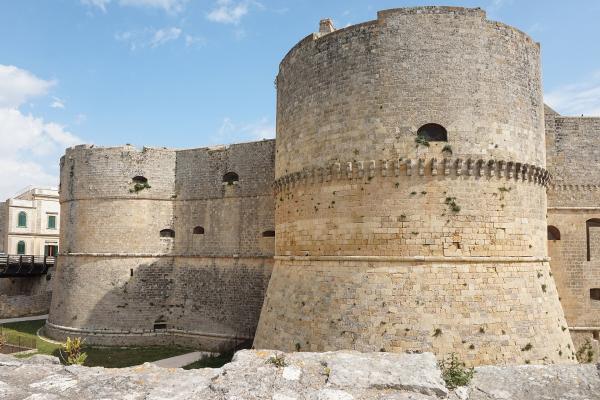
The Castle of Otranto (Castello Aragonese) dominates the seafront of the old town of Otranto, on the Adriatic coast of Puglia, and it is the symbol of the town. The site was fortified from an early date, and the origins of the castle go back to the Norman period in the 11th century, but the structure that visitors see today is chiefly the work of the Aragonese kings of Naples. In 1480 an Ottoman fleet attacked and captured Otranto, killing much of its population, and the city was retaken the following year. The ruler of the kingdom, Ferdinand I of Aragon, then ordered the defences to be rebuilt, and the new fortress was built in the last years of the 15th century, with Renaissance changes to follow in the 16th, when Spanish rulers adapted it to the age of cannon.
The design shows the changes in military technology. Round towers with thick, sloping walls were meant to deflect cannon balls, and a wide, deep moat surrounds the walls, crossed by a bridge that was once a drawbridge. Inside, the ground floor includes the De Azevedo Chapel, and vaulted halls, some using the local Carparo stone, and passages lead to an open courtyard, and among the rooms is the Triangular Room, which was created during the expansion of the 16th century and has an unusual shape that follows the line of a bastion. From the walls, the walkways give long views over the harbour, the old town and the Adriatic, and on a clear day it is said that the mountains of Albania can be seen across the water.
The castle also has a place in literature. When the English writer Horace Walpole wrote The Castle of Otranto in 1764, the first Gothic novel, he took the name of the town for his tale of ghosts and family curses, though he had never been there and the story has nothing to do with the real castle. The link has made Otranto familiar to readers of Gothic fiction, and the castle sometimes plays on the association.
Today the castle is used for cultural events and exhibitions, and houses a small archaeological museum. Opening times and ticket arrangements change, so check before going. A visit takes about an hour, and the walk around the walls at sunset is especially pleasant. The castle is a short walk from the Cathedral of Otranto (Duomo di Otranto), with its mosaic floor, and the Torre di Roca Vecchia lies farther up the coast. It suits those who like fortifications, history and sea views, and families who enjoy walking along the ramparts. Wear comfortable shoes, as the stone paving can be uneven and slippery.
Categories
More photos coming soon
Nearby Attractions
Other places to visit in Otranto
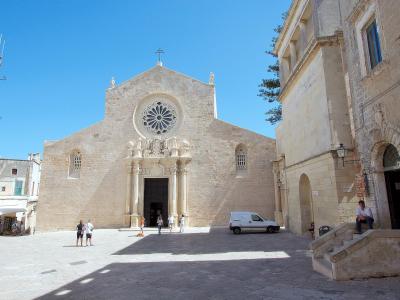
Cathedral of Otranto (Duomo di Otranto)
Romanesque cathedral with ancient mosaic floor
Architectural Monuments · Historic Churches
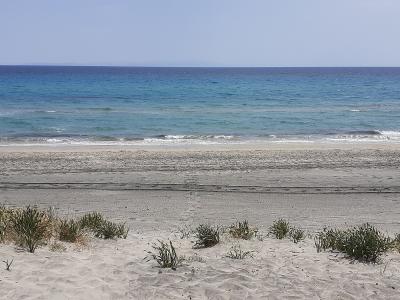
Lido di Otranto
Sandy beach near Otranto's historic cathedral
Beaches · Water Sports
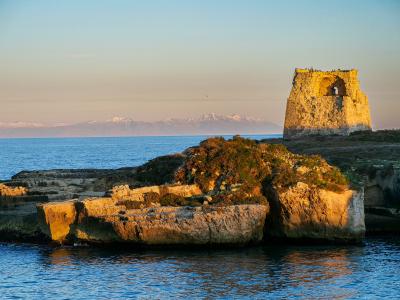
Torre di Roca Vecchia
Ancient Messapian archaeological site near Otranto
Castles & Fortresses · Coastal Walks
Questions people ask
Quick Facts
Best Time to Visit
Visit between April and June or September and October for mild temperatures and fewer crowds.