







- Admission
- Paid ticket required
- Hours
- Timetables vary throughout the year (check official website)
- Where
- Lucca, Tuscany
- Directions
- Directions
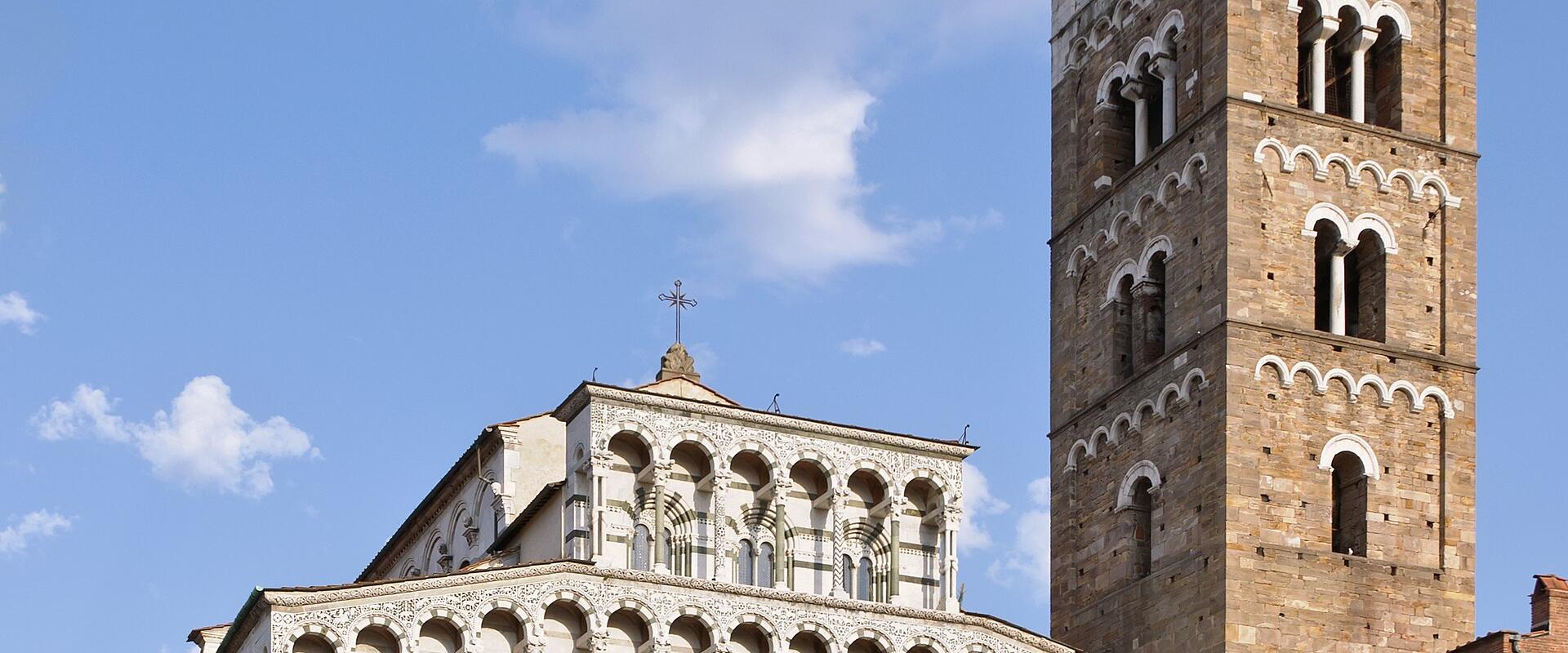
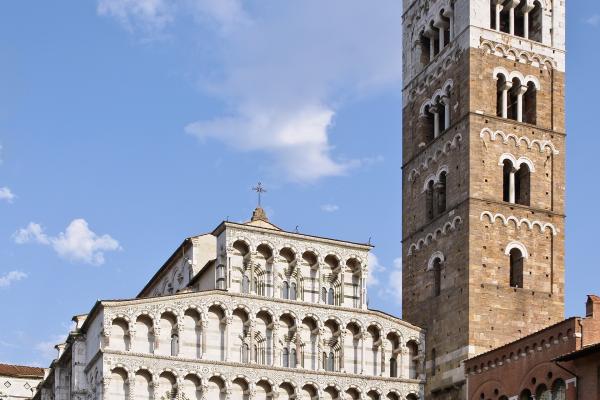
The Basilica of San Martino, also known as Lucca Cathedral, stands on the small Antelminelli Square, the Piazza Antelminelli, in the old centre of Lucca, and it is among the most original of the great Romanesque cathedrals of Tuscany. A church of Saint Martin of Tours was founded on the site in the 6th century, and the present building was begun in the 11th century by Bishop Anselmo da Baggio, who later became Pope Alexander II, and consecrated in 1070. Over the following centuries it was extended and rebuilt, with major work in the 13th and 14th centuries and the final touches to the exterior in the 17th, so that it shows several periods, and it served as the main religious centre of a rich and independent republic.
The most striking feature is the asymmetrical facade. The front is a screen of three tiers of arches, with a large portico of three arches, and each of the columns above is carved differently, some with spirals, some with zigzags, some with intertwined figures and animals, in a riot of invention that is typical of the Pisan-Lucchese Romanesque. The three arches of the lower portico are of unequal width, because the bell tower on the right side, which was already standing when the facade was built, took up space and forced the builders to make the right arch narrower. The sculptured details include scenes from the life of Saint Martin, and the legend of the saint sharing his cloak with a beggar is carved over the porch.
Inside, the cathedral has a Gothic nave added in the 14th and 15th centuries, with a high, light interior, and it holds two outstanding treasures. The first is the tomb of Ilaria del Carretto, the young wife of the lord of Lucca, Paolo Guinigi, who died in 1405. The marble sculpture of her lying with a small dog at her feet, carved by the Sienese master Jacopo della Quercia around 1406 to 1408, is one of the most moving funerary monuments of the early Renaissance, with a calm face and a delicately carved dress. The second is the Volto Santo, the Holy Face, a wooden crucifix of the Byzantine type, said by tradition to have been carved by Nicodemus and miraculously brought to Lucca. It is kept in a small marble shrine, a tempietto, designed by Matteo Civitali in the 15th century, and each September it is carried in a candlelit procession through the city.
There are other works of art, among them a Last Supper by Tintoretto and paintings by other Venetian and Tuscan masters, and a separate museum next to the church displays the cathedral treasure. The basilica is an active church, so visitors should dress modestly and respect services, and tickets are needed for some parts, such as the sarcophagus, so check locally; some local cards or passes may cover entry. A visit takes about an hour. The cathedral is a short walk from San Michele in Foro, the Piazza Napoleone, Piazza dell’Anfiteatro and the Guinigi Tower, and the Lucca City Walls are a few minutes farther. It suits anyone who likes Romanesque architecture, sculpture and the history of Tuscany.
More photos coming soon
Hours & Fees
- Open
- Timetables vary throughout the year (check official website)
- Admission
- Paid ticket required
Hours and prices change, especially out of season. Check with the venue before you go.
Nearby Attractions
Other places to visit in Lucca
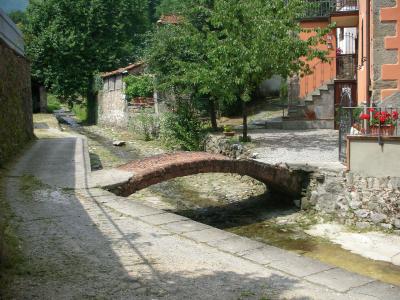
Borgo a Mozzano
Medieval Devil's Bridge with asymmetrical arches
History & Heritage · Natural Wonders
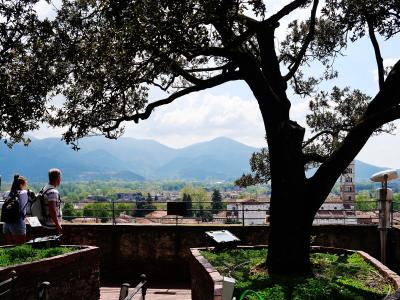
Guinigi Tower
14th-century tower with rooftop holm oak garden
Architectural Monuments · Historic Towns
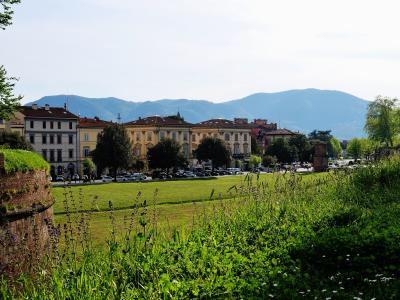
Lucca City Walls
Preserved Renaissance walls with a tree-lined promenade
History & Heritage · Natural Wonders

Lucca Comics & Games
Europe's premier comic and gaming festival in Lucca
Cultural Centers · Cultural Festivals
Questions people ask
Quick Facts
Best Time to Visit
Visit between April and June or September and October for mild temperatures and fewer crowds.