







- Where
- Siena, Tuscany
- Directions
- Directions
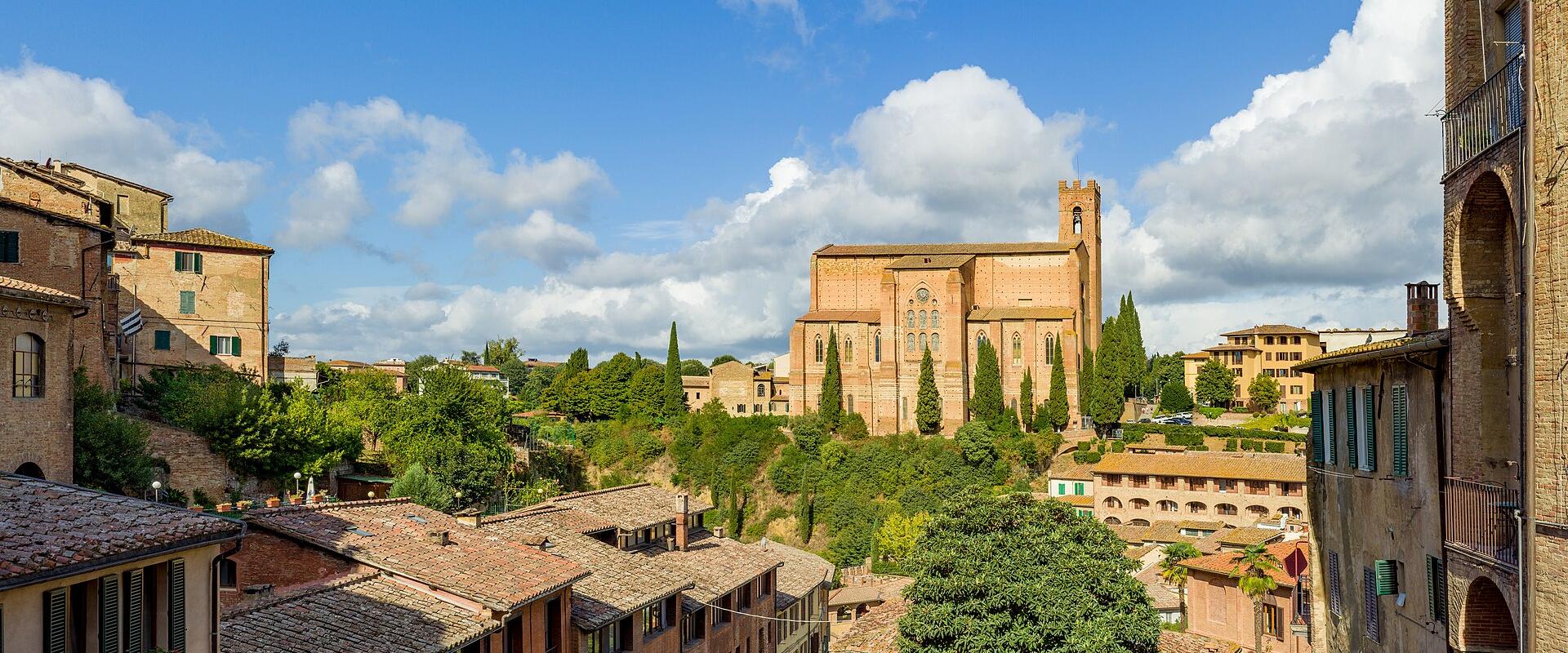
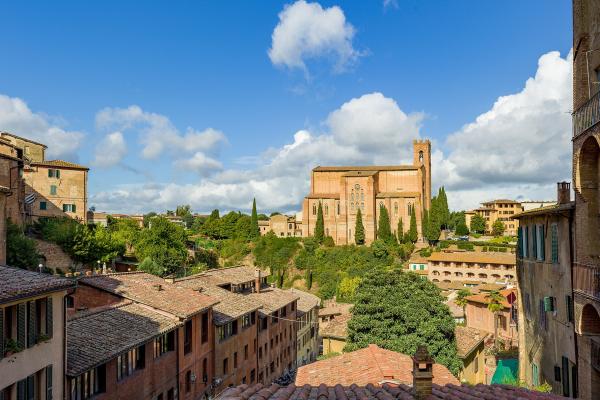
The Basilica of San Domenico in Siena is a significant Gothic place of worship dedicated to Saint Dominic, and it is the great church of the Dominican order in the city. Located on a hillock at the foot of the historic center, near the Fortezza Medicea and St. Catherine’s house-museum, it is one of the city’s most important churches. Construction began in 1226 and concluded in 1465, following several fires that necessitated major renovations, so the building reflects centuries of work. It is built of brick, in the plain, severe style favored by the mendicant orders, and its austere exterior, topped by a tall bell tower and a heavy stepped brick flank, rises above the street and gives a view over the Fontebranda valley and across the ravine toward the cathedral on the opposite hill.
The imposing structure has a single nave with an Egyptian cross plan, the tau shape in which a wide transept crosses at the head of the nave, with a gabled roof of exposed timber beams. The space is wide and plain, intended for preaching to large crowds, and the stark brick interior contrasts with the richly decorated Gothic churches of the Franciscan order and with the cathedral across the valley. Its main attraction is its association with Saint Catherine of Siena, the 14th-century mystic and diplomat who was a Dominican tertiary, a lay member of the order, and who is a patron saint of Italy and of Europe. She prayed here as a young woman and is said to have had some of her visions in this church.
The Chapel of Saint Catherine, in the right aisle, houses the saint’s head-relic, kept in a reliquary on the altar. Catherine died in Rome in 1380, and her body was buried there in the church of Santa Maria sopra Minerva, but her head was brought to Siena a few years afterward and has been venerated here since. The chapel is decorated with frescoes by Sodoma, the painter Giovanni Antonio Bazzi, who worked in Siena in the early 16th century, showing the saint swooning in ecstasy and receiving the stigmata, rendered with great tenderness and movement. Nearby, a portrait of Catherine painted by a contemporary, Andrea Vanni, is the oldest known likeness of her and is preserved in a nearby chapel. Visitors can also see the saint’s portrait, her thumb, and other relics displayed in a small room beside the chapel.
It is advisable to check local tourism resources for current schedules, particularly if planning to visit during Mass times, as the basilica is an active church and a place of pilgrimage. Modest dress is expected, with shoulders and knees covered. A visit usually takes about thirty minutes, and the quiet interior is a contrast to the crowds in the Campo. Exploring the Basilica of San Domenico offers insight into Siena’s religious and artistic heritage.
From the church, a short downhill walk leads to the Sanctuary of Saint Catherine, her family home, and to the old fountain of Fontebranda, one of the oldest in the city, where wool dyers worked in the Middle Ages. Uphill, the Medici fortress, now a park and wine shop, offers views. The basilica complements visits to other landmarks in Siena, such as the Duomo and Piazza del Campo, providing a view of the city’s identity, and it is an essential stop for those interested in the Gothic legacy of the region and the life of its most famous woman.
Categories
More photos coming soon
Nearby Attractions
Other places to visit in Siena
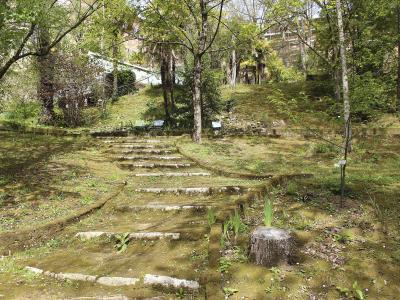
Orto Botanico dell'Università di Siena
University botanical garden on a hillside above Siena
Botanical Gardens · Educational Sites
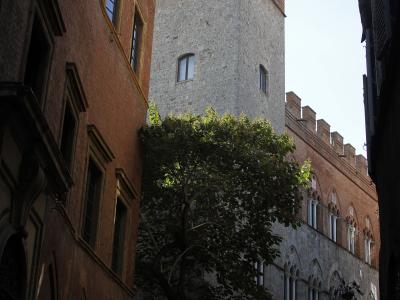
Palazzo Chigi Saracini
Gothic palace and music academy in Siena
Art Museums · Cultural Centers
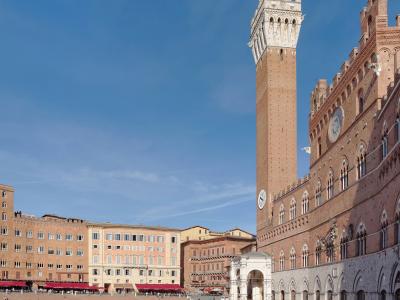
Palazzo Pubblico
Gothic palace housing Lorenzetti's frescoes
History & Heritage · Museums & Culture
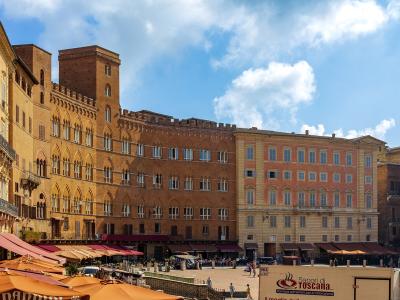
Piazza del Campo
Europe's greatest medieval scallop-shaped square
Free Historic Fountains · Historic Palaces
Questions people ask
Quick Facts
Best Time to Visit
Visit between April and June or September and October for mild temperatures and fewer crowds.