







- Where
- Ancona, Umbria and Marche
- Directions
- Directions
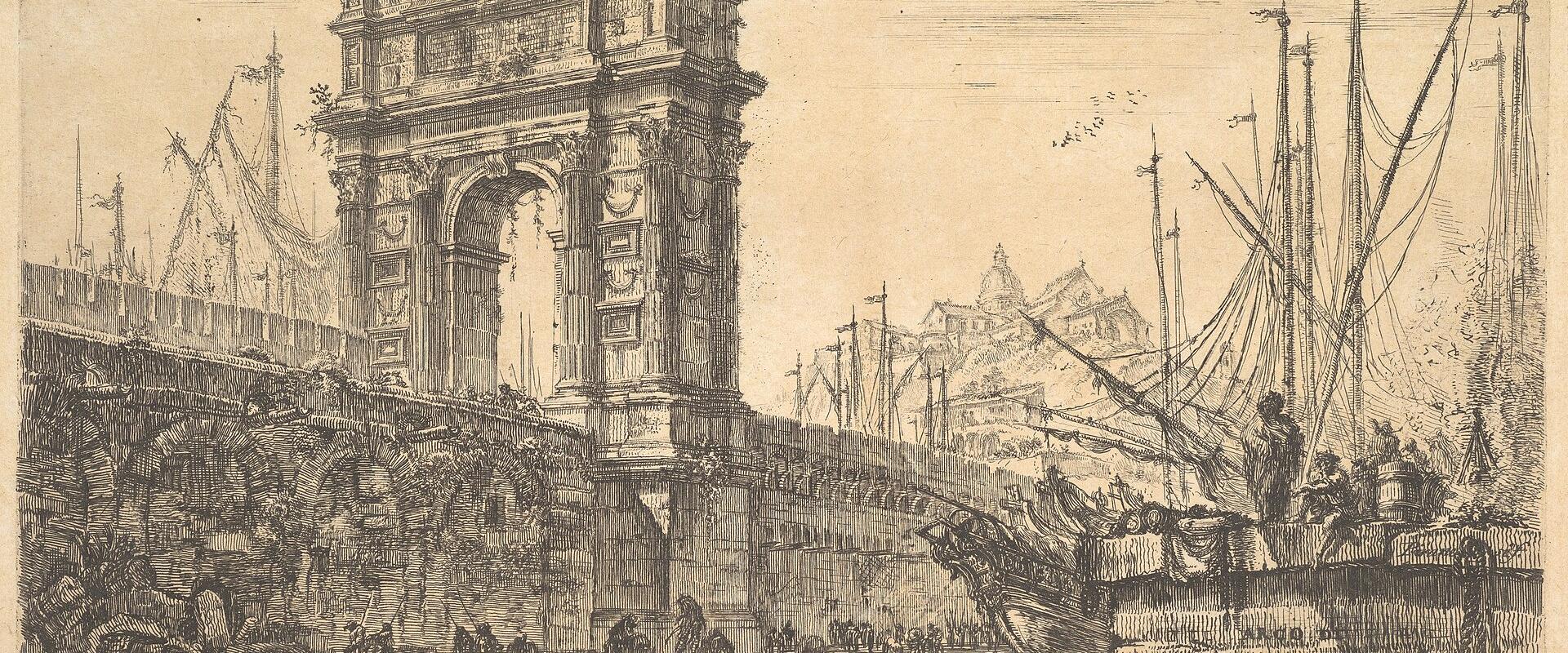
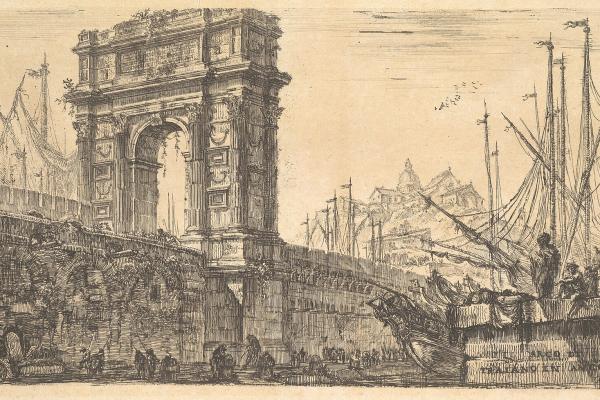
The Arch of Trajan in Ancona is one of the city’s main landmarks and symbols, standing between the sea and the urban center, at the end of the ancient mole of the port, where the road from the harbor meets the waterfront. Attributed to the architect Apollodorus of Damascus, it was built in 115 AD. Unlike typical triumphal arches that serve as city gates, this structure was intended as a monument in honor of Emperor Trajan, who contributed personally to the improvement of Ancona’s port. This enhancement was strategically vital for the Roman Empire, as Ancona served as a key departure point for legions, particularly for campaigns against the Dacians, in what is now Romania, and the port gave the empire a safe harbor on the central Adriatic.
The arch was erected by the Roman Senate and the people of Rome, and an inscription on the attic, the upper part, records the dedication to Trajan, to his wife Plotina and to his sister Marciana, naming the emperor’s generosity in paying for the harbor works. Apollodorus of Damascus, Trajan’s court architect, who also designed Trajan’s Forum and Column in Rome and a great bridge over the Danube, is credited with the design, although this attribution cannot be proved. The monument stands about 18 meters high and is built of white marble from the island of Proconnesus in the Sea of Marmara, a luxurious material that gave it a special brilliance against the blue of the sea.
The arch is a masterpiece of Roman architecture and engineering, reflecting the imperial ambition of the era. It has a single opening, flanked by pairs of Corinthian columns on high bases, with a simple, elegant design, and the structure is without the relief sculpture that decorates most triumphal arches, so its beauty lies in its proportions and the marble. Holes in the stone mark the places where gilded bronze decorations once were attached, including statues of the emperor and his family on top, and bronze ornaments, which were removed after antiquity. It is a tangible reminder of Ancona’s Roman foundations and its historical importance as a maritime hub, since the city itself was founded by Greeks from Syracuse in the 4th century BC, who named it Ankon, the elbow, after the shape of the headland.
Visitors can admire the detailed carvings and the imposing stone structure, which has withstood the test of time. As an open-air monument, the Arch of Trajan has no opening hours or admission fees, allowing visitors to view it at any time. It is located in the port area, easily accessible on foot, and from the arch the view extends over the water. The best time to see it is in the late afternoon, when the sun warms the marble.
Near it stands a second, much later arch, the Arco Clementino, built in the 18th century for Pope Clement XII, designed by the architect Luigi Vanvitelli, which marks the new quay of the port and which is often mistaken for the Roman one at a glance. Exploring the Arch of Trajan offers insight into the Roman history of the Marche region. It is an essential stop to appreciate the city’s ancient heritage. The combination of historical significance and architectural beauty makes it a memorable destination. It complements visits to other landmarks in Ancona, such as the Cathedral, high on its hill, and the lanes of the old town, providing a view of the city’s layered history.
Categories
More photos coming soon
Nearby Attractions
Other places to visit in Ancona
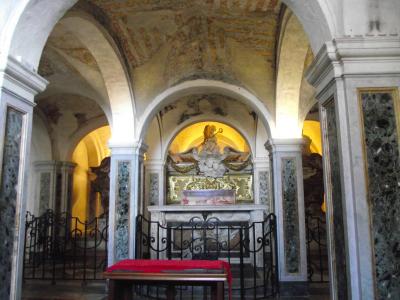
Ancona Cathedral (Duomo di San Ciriaco)
12th-century Byzantine-Gothic cathedral on Guasco Hill
Architectural Monuments · Historic Churches
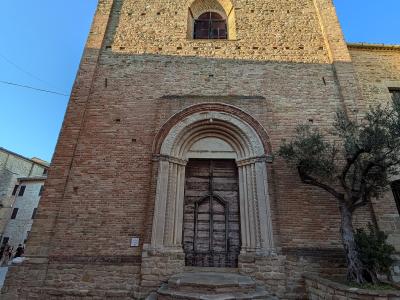
Chiesa di San Francesco
Gothic portal by Giorgio Orsini da Sebenico
Architectural Monuments · Historic Churches
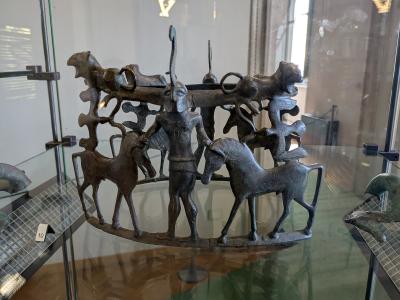
Museo Archeologico Nazionale delle Marche
World's largest Picene collection in Palazzo Ferretti
From €5 Archaeological Museums · Historic Palaces
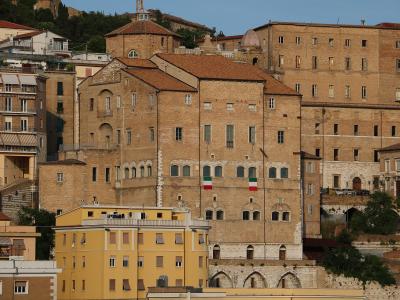
Palazzo degli Anziani
13th-century Gothic palace on Ancona's seafront
Architectural Monuments · Historic Palaces
Questions people ask
Quick Facts
Best Time to Visit
Visit between April and June or September and October for mild temperatures and fewer crowds.