







- Where
- Trani, Apulia
- Directions
- Directions
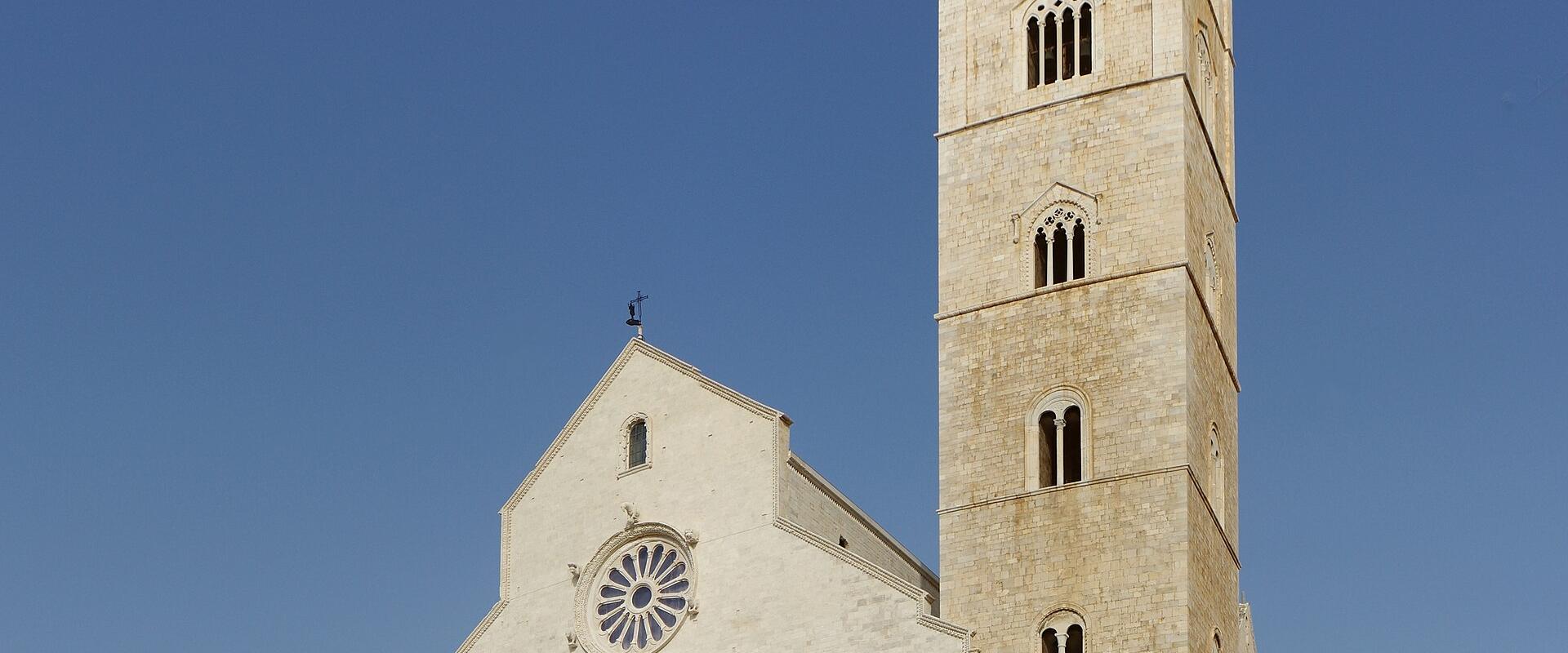
Trani Cathedral, the Duomo di Trani, is one of the finest examples of Apulian Romanesque architecture, and it stands on the edge of the sea in the port town of Trani, in Apulia, in southern Italy. It is dedicated to Saint Nicholas the Pilgrim, a young Greek pilgrim who died in Trani in 1094 and was soon venerated as a saint, and it is the seat of the archbishop of Trani-Barletta-Bisceglie. Construction began in 1099, over an earlier church of the fourth century and a crypt, to house the saint's relics. The main structure was completed around 1200, and significant work took place between 1159 and 1186 under Bishop Bertrando II, while the bell tower was finished in the fourteenth century.
What makes the cathedral so memorable is its setting. It stands on a flat open area next to the water, a few metres from the coast, with the Adriatic behind it, and its pale pink stone glows in the light, particularly at sunset. The stone is a local limestone, with a warm colour that gives the whole building a soft, rosy look. The main floor is raised about five metres above the exterior ground, so the church seems to rise over its surroundings.
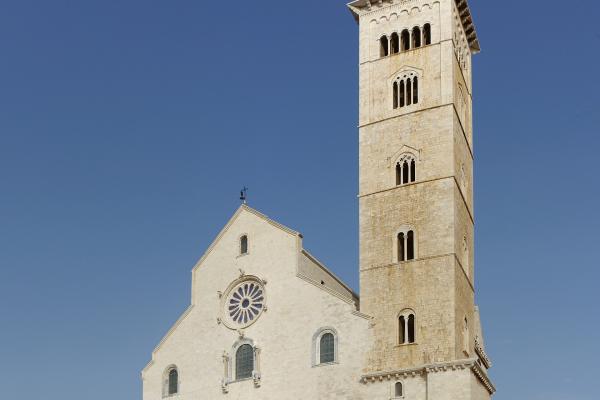
The facade is plain and elegant, with a broad portal reached by a double staircase, a rose window and slender arched windows, and the former bronze doors made by Barisano da Trani in the twelfth century, now kept inside. The cathedral is notable for its showy transept and the unusual use of tall pointed arches beneath the bell tower, which are atypical for Romanesque architecture and make a lofty gateway. The tower rises about 59 metres, a landmark visible from far along the coast. There are three levels of church: the upper church, the crypt of Saint Nicholas, and a lower church of earlier origin, with columns from ancient buildings.
Inside, the church is spacious and airy, with wide aisles and a simple, uncluttered interior, because later decoration was stripped away to reveal the medieval structure. The crypt is a forest of columns and holds the relics of the patron.
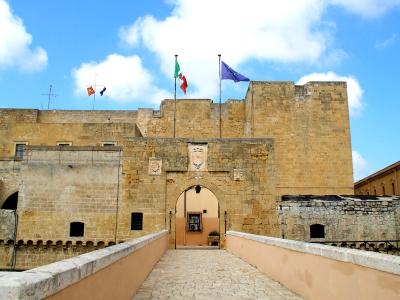
Close to the cathedral, the Castle, the Swabian castle built by Frederick II in the 1230s, stands on the shore, and the old port, with fishing boats and restaurants, is a short walk. The historic Jewish quarter, with its synagogue, lies behind. Trani is a relaxed place, known for its white wine and seafood. Visitors should dress modestly and check opening times, since services affect access. Allow thirty to forty minutes, and visit in the late afternoon for the best light.
Categories
More photos coming soon
Questions people ask
Quick Facts
Best Time to Visit
Visit between April and June or September and October for mild temperatures and fewer crowds.