







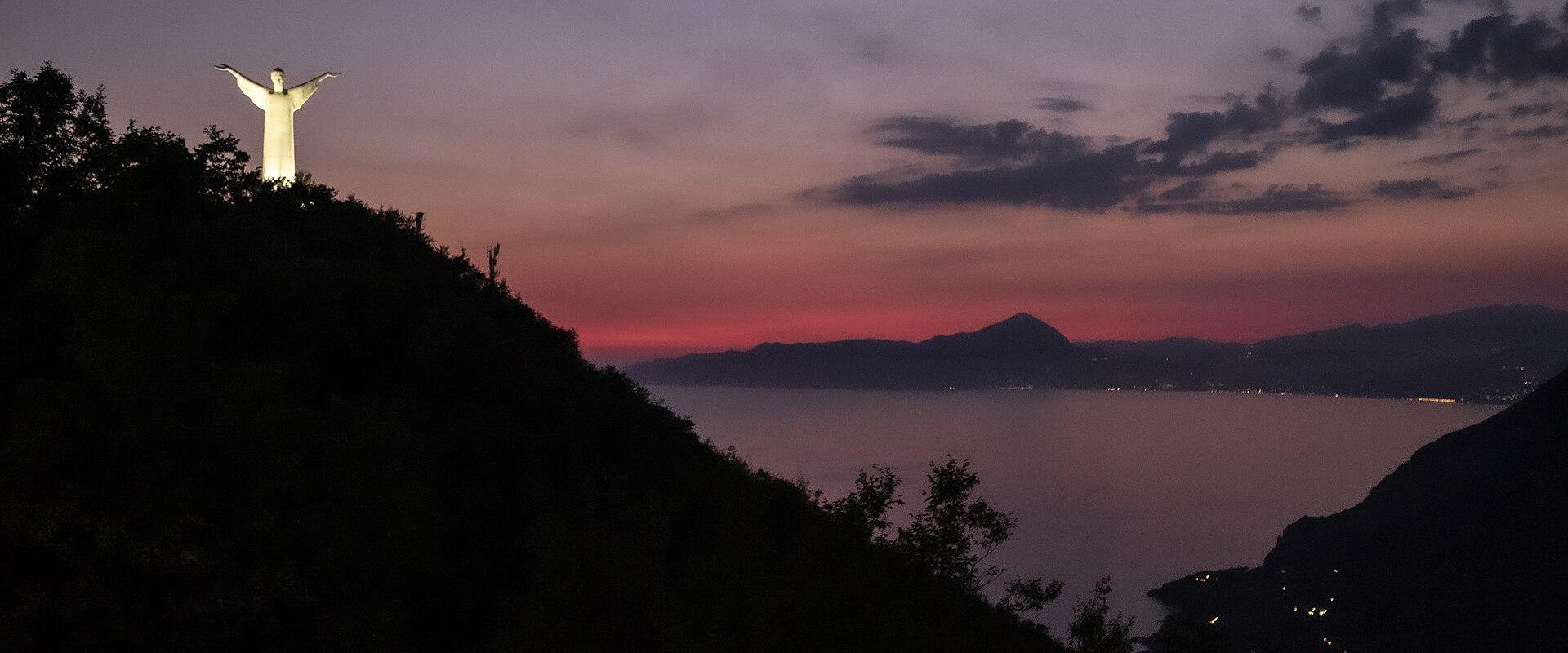
Statue of Christ the Redeemer (Cristo Redentore)
Carrara marble Christ statue on Mount San Biagio
- Where
- Maratea, Basilicata and Matera
- Directions
- Directions
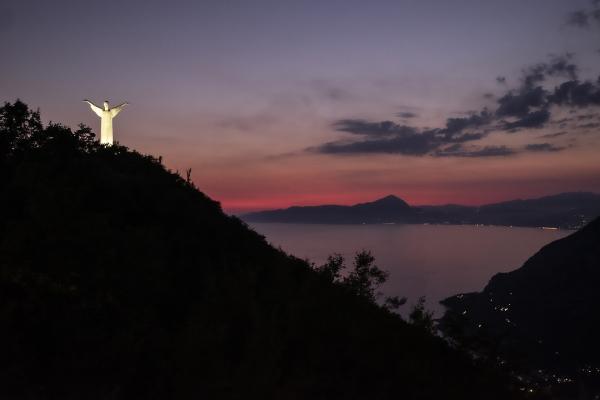
The Statue of Christ the Redeemer, the Cristo Redentore, in Maratea is a monumental sculpture of Jesus Christ standing on the summit of Mount San Biagio, above the town. Carved from Carrara marble, it is about 21 metres tall, and it overlooks the Gulf of Policastro and the Lucanian coast, offering spectacular views. It was made in 1965 by the sculptor Bruno Innocenti and is one of Basilicata’s most recognisable symbols, standing as a prominent landmark against the picturesque backdrop of sky and sea. It is among the largest statues of Christ in Europe, a white figure with outstretched arms, facing the town and the sea, and it is visible from many kilometres along the coast.
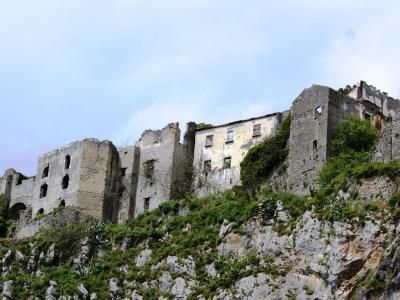
Maratea is a small town on the short stretch of coast that Basilicata has on the Tyrrhenian Sea, between Campania and Calabria. It is a place of steep cliffs, woods and coves, with a large number of small churches, and a historic old town, Maratea Superiore, which sits high on the mountain below the statue. The mountain, Monte San Biagio, takes its name from Saint Blaise, the patron of the town, whose relics are kept in the Basilica di San Biagio in the old centre, and the statue stands where the ruins of an old fortified village can still be seen. The Gulf of Policastro opens to the south, with its blue water, and in clear weather you can see far along the coast.
Visitors can reach the statue by road, which winds up from the old town, or by hiking up the mountain along paths through the maquis scrub, which takes about an hour from the old town. The journey provides opportunities to see other attractions along the way, such as the historic centre, the ruins of the old town and viewpoints over the coast. At the summit, the statue is a focal point for reflection and appreciation of the panoramic landscape, and a terrace around its base allows visitors to look at the figure from close up.
As an outdoor public monument, the site has no opening hours or admission fees, allowing visitors to access the viewpoint at any time. The view is best at sunrise or sunset, when the light is soft and the sea turns gold, and the air is cooler. Bring water, a hat and sun cream, and wear comfortable shoes.
Exploring Maratea takes a day. The town's other sights include the Basilica di Santa Maria del Popolo, the Grotte di Maratea, the sea caves reached by boat, and the harbour of Maratea Porto, with its restaurants and beaches. Maratea’s village has narrow lanes and small shops. Spring and autumn are quieter, with the coast covered with flowers or soft light.
Categories
More photos coming soon
Nearby Attractions
Other places to visit in Maratea
Questions people ask
Quick Facts
Best Time to Visit
Visit between June and September for warm weather and ideal beach conditions.