







- Admission
- Not documented
- No ticket office or specific fees
- Hours
- Not documented; not a museum with specific opening hours.
- Where
- Maratea, Basilicata and Matera
- Directions
- Directions
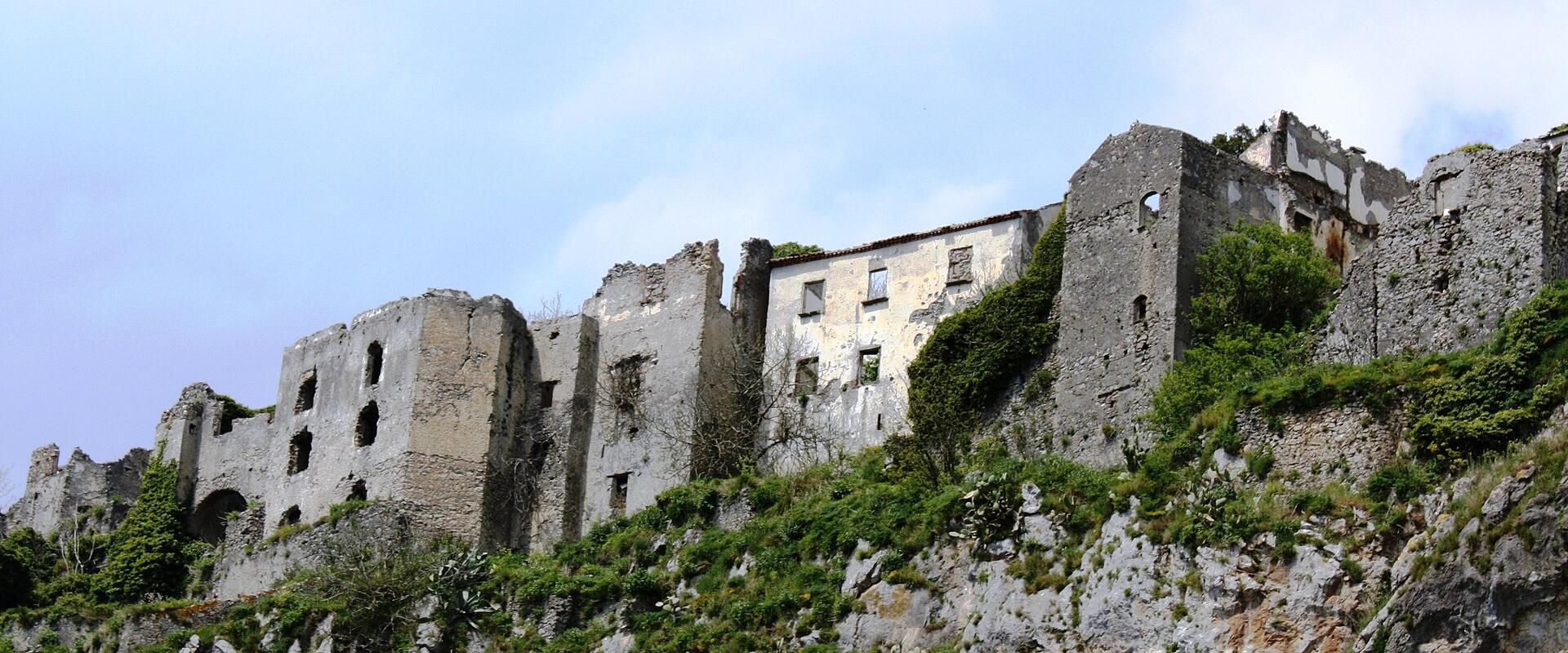
The Castello di Maratea is the name given to the ruins of the fortified upper town of Maratea, Maratea Superiore, which stands on Mount San Biagio, high above the modern town and the sea, on the short Tyrrhenian coast of Basilicata in southern Italy. The site was settled in the early Middle Ages, in the Lombard period, the age of the Lombards, and it was the original centre of Maratea, a refuge that was easy to defend, on a rocky summit with commanding views over the coast and the surrounding valleys. For centuries, the town lived within its walls, with a castle, churches and houses clustered on the slopes, and its people farmed the terraces and fished the nearby sea. Over time, the inhabitants gradually moved down to the lower and more convenient sites, and the upper town was abandoned, leaving the ruins that can be seen today.
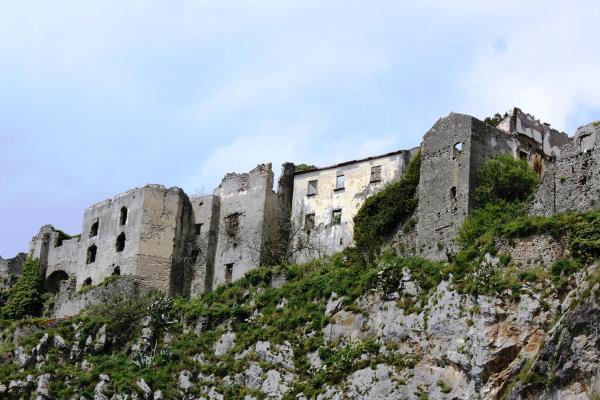
What remains is a picturesque collection of stone walls and foundations, with the outlines of houses, steps, alleys and the shells of churches, many of them overgrown with vegetation, so that the place has a romantic, wild feeling. The castle itself, at the highest point, is reduced to fragments, but its position can be appreciated, and the remains of the fortifications show how the hilltop was defended. It is not a museum, so there is no ticket office or formal visitor circuit, and the site is open to the public at all times, which means that visitors can wander freely among the ruins and discover them at their own pace. As the paths can be uneven, with loose stones and steep drops, care is needed, and sturdy shoes are recommended. Accessibility is limited, and visitors with specific needs should check with the local authorities.
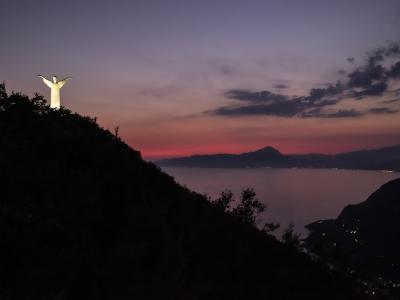
The reward is the view. From the top of Mount San Biagio, the panorama spreads over the coast, the town below, the deep blue of the Gulf of Policastro and the mountains of the interior, and on a clear day, it is one of the finest views in the region. Close to the ruins stands the huge statue of Christ the Redeemer (Cristo Redentore), a white figure with outstretched arms, some twenty-one metres high, built in the 1960s, which looks out over the sea and is another reason for the climb. The combination of ancient ruins and the great modern statue is unusual, and the area is also a nature spot, with wild flowers and herbs in spring.
The site can be reached by car, by bus with a shuttle to the Parking at Madonna degli Ulivi, or on foot along the paths from the town, which takes some time and is steep. The way leads directly to the castle point, and not to a separate visitor entrance. Plan to go in the morning or the late afternoon, since the exposed hilltop is hot in summer, and bring water. The ruins combine well with a visit to the old centre of Maratea, with its many churches including the Basilica di Santa Maria del Popolo, and to the Grotte di Maratea. The castle suits walkers, photographers and anyone who likes ruins and views.
Categories
More photos coming soon
Hours & Fees
- Open
- Not documented; not a museum with specific opening hours.
- Admission
- Not documented; no ticket office or specific fees.
Hours and prices change, especially out of season. Check with the venue before you go.
Questions people ask
Quick Facts
Not documented
No ticket office or specific fees.
Best Time to Visit
Visit between June and September for warm weather and ideal beach conditions.