







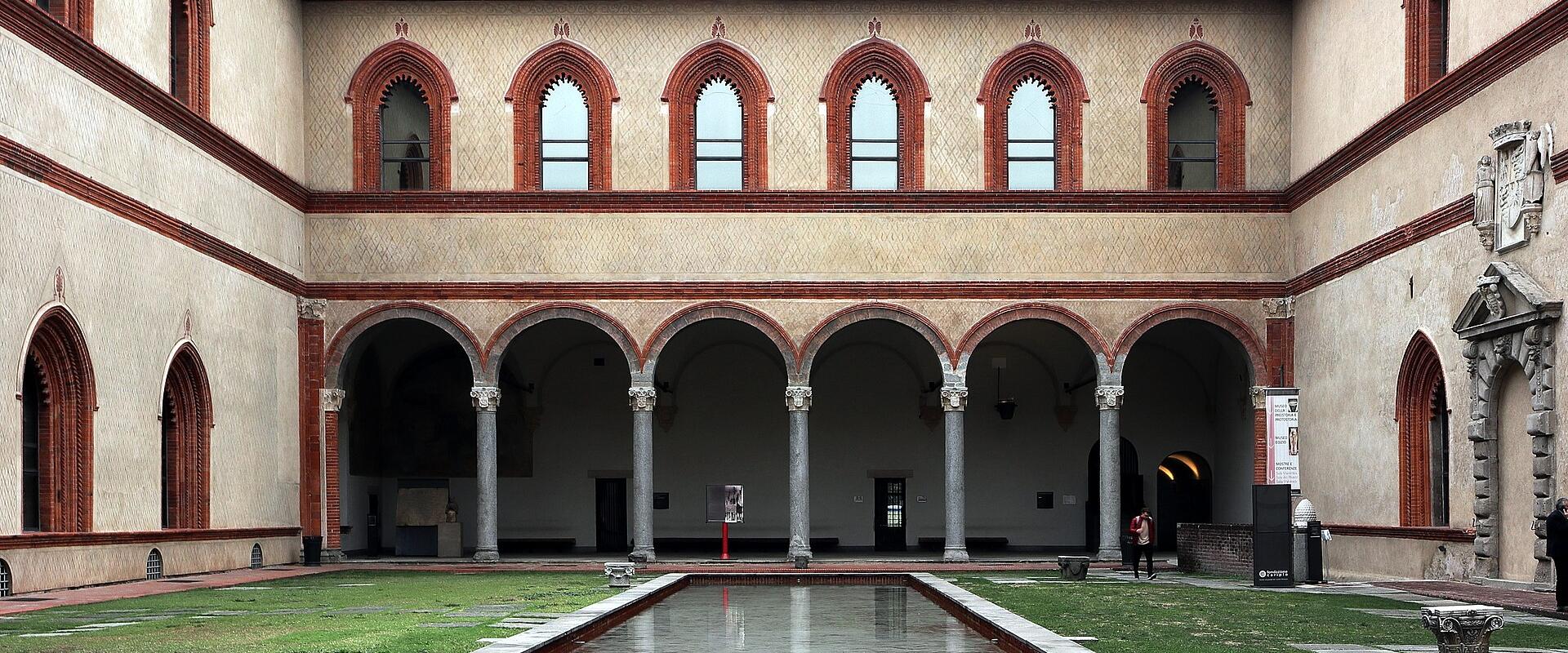
Sforza Castle (Castello Sforzesco)
Milan's historic fortress housing Michelangelo's Pietà Ro...
- Where
- Milan, Lombardy
- Directions
- Directions
The Sforza Castle, or Castello Sforzesco, is a large brick fortress at the edge of the old centre of Milan, on Piazza Castello, and it is now one of the city's main cultural complexes. It began in the fourteenth century as a Visconti stronghold, and it was rebuilt in the middle of the fifteenth century by Francesco Sforza, who became duke of Milan and made it the seat of his court. Later Sforza rulers added to it, and it passed through Spanish, French and Austrian hands, serving as a barracks for a long time. It was heavily restored at the end of the nineteenth century, when the architect Luca Beltrami rebuilt the central tower, the Torre del Filarete, and prepared the building to become a museum.
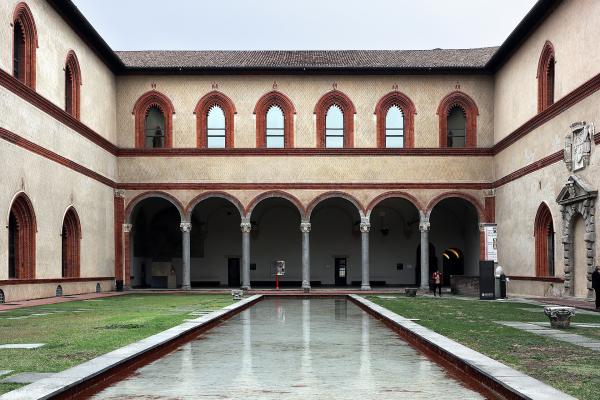
The castle is a large square, with corner towers, thick walls and a series of courtyards. Visitors enter through the Filarete Tower and into the great parade ground, the Piazza d'Armi, and from there to the Ducal Courtyard and the Rocchetta, the strongest, innermost part of the fortress. Leonardo da Vinci worked for Ludovico Sforza, called il Moro, and decorated the Sala delle Asse with a painted pattern of tree branches in the late 1490s, which is a remarkable survival of Renaissance decoration.
The museums inside the castle form the Civic Museums of Milan, and they cover a wide range of subjects: ancient art, with Egyptian and archaeological collections, medieval sculpture, a picture gallery, applied arts, furniture, and musical instruments. The picture gallery has works by Mantegna, Giovanni Bellini and Lombard painters. The most famous work is Michelangelo’s Pietà Rondanini, the last sculpture he worked on, left unfinished at his death in 1564. It is displayed in a former hospital building in the castle in a hall designed for it, and the roughly carved, elongated figures have a haunting intensity that shows his thought at the end of his life. Many see it as the high point of the visit and a powerful piece of Renaissance sculpture.
The castle grounds are open at no charge, and the courtyards and the exterior can be explored at any time during the open hours of the grounds. The museums have a ticket, and there are reduced prices and free admission on certain days, but arrangements change, so check the official website. Allow at least two hours, and more if you want to see the collections thoroughly.
Behind the castle begins Parco Sempione, a large public park with an arch and a tower, and the Brera District, with its picture gallery and artists' lanes, is a short walk away. The castle is easy to reach on Milan's Metro, with the Cairoli and Lanza stops close by, and it is near the Duomo and the Galleria. A visit is a good way to see Milan’s layers of history in one place.
More photos coming soon
Nearby Attractions
Other places to visit in Milan
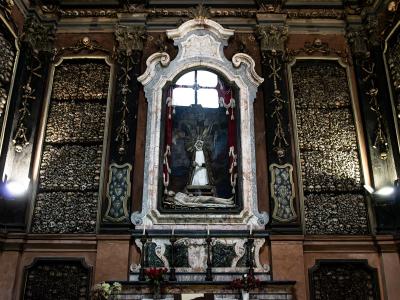
Bone Chapels (Catacombs Of The Ossuary)
13th-century ossuary with walls of human bones
Museums & Culture · Historic Cemeteries
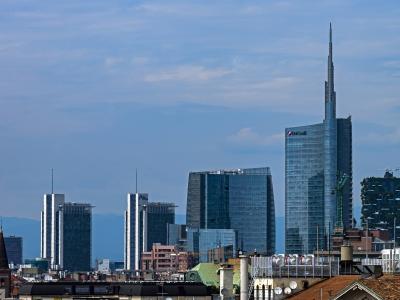
Bosco Verticale
Residential towers with 90+ plant species on facades
Free Architectural Monuments · Botanical Gardens
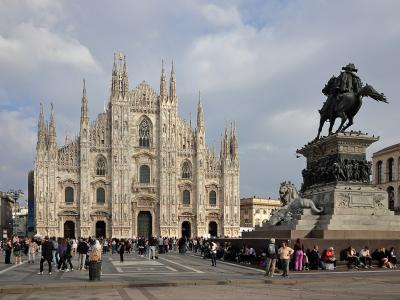
Duomo di Milano
Gothic cathedral with marble facade and rooftop terraces
Architectural Monuments · Cultural Tours
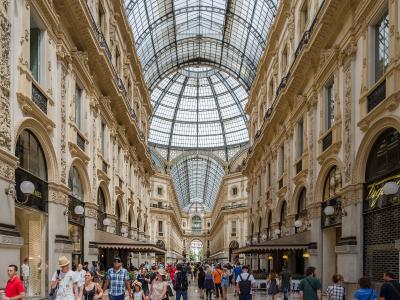
Galleria Vittorio Emanuele II
19th-century glass arcade with mosaic floors
Free Architectural Monuments · Shopping Streets
Questions people ask
Quick Facts
Best Time to Visit
Visit between April and June or September and October for mild temperatures and fewer crowds.