







- Where
- Milan, Lombardy
- Directions
- Directions
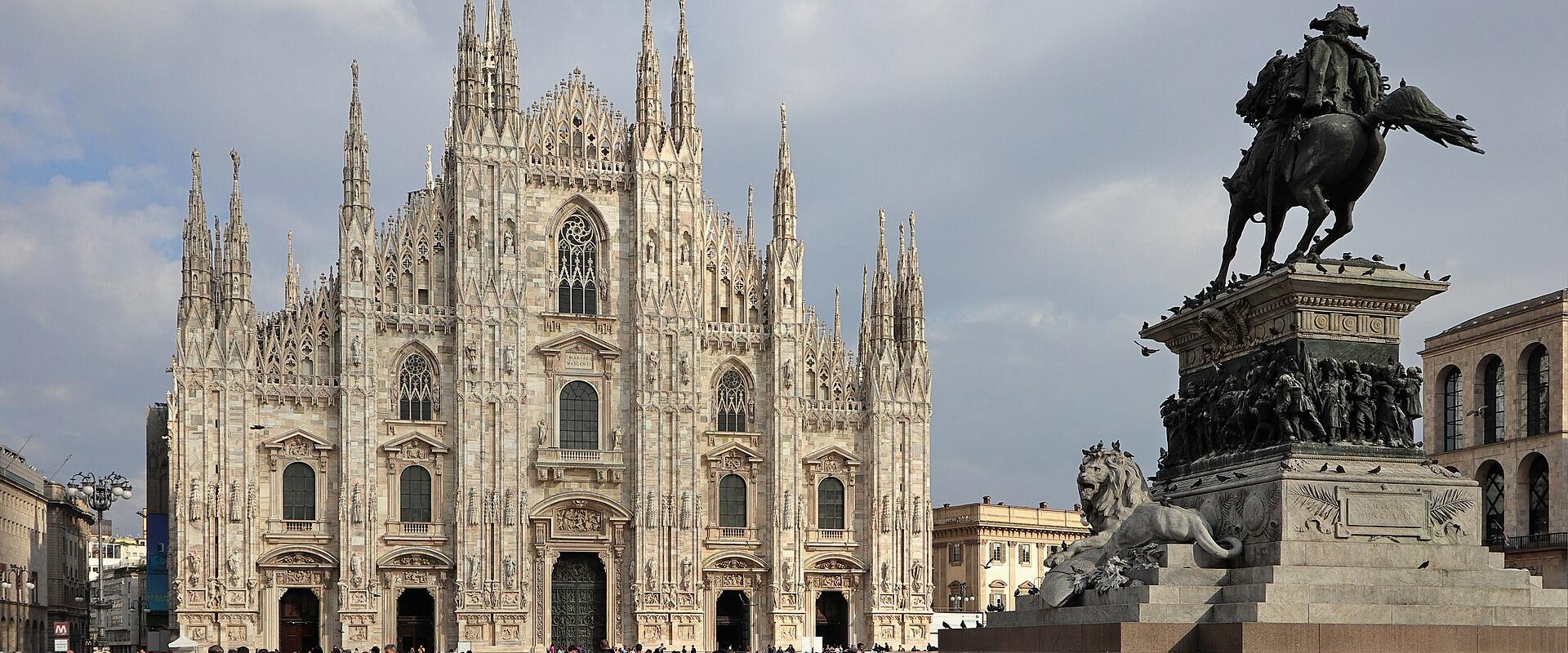
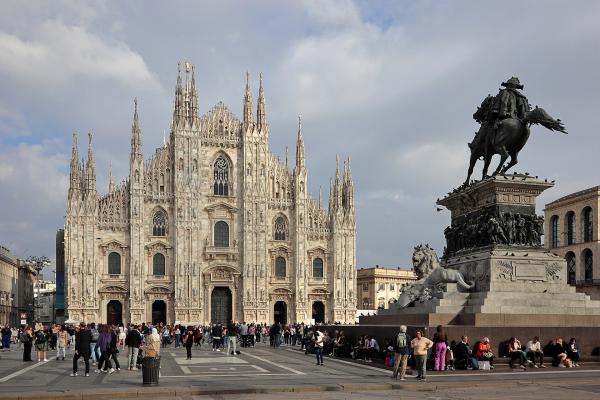
The Duomo di Milano is a monumental Gothic cathedral and one of the largest churches in the world, rising from the central square of Milan, in Lombardy. Its vast mass of pale marble, bristling with spires and statues, dominates the old centre. The foundation stone was laid in 1386 under Gian Galeazzo Visconti, the lord of Milan, who wanted a cathedral that would rival the great Gothic churches of northern Europe, and work then continued for almost six centuries, with the last of the bronze doors only added in the 1960s. The marble came from quarries at Candoglia, on Lake Maggiore, and it was carried to the city along canals.
The exterior is a forest of pinnacles and more than three thousand statues, saints, animals and grotesques, with the facade ending in a gable pierced with Gothic windows. The highest spire carries the Madonnina, a gilded copper statue of the Virgin placed in 1774 that is the symbol of the city, and tradition holds that no building in Milan should rise higher. Inside, the cathedral is a huge dim space, with five aisles, a forest of giant columns and stained glass of the fifteenth to twentieth centuries, and a small red light marks the place where, according to tradition, a nail of the Cross is kept high above the altar.
The complex includes the Cathedral itself, the Rooftop terraces, the Duomo Museum, the Crypt of Saint Charles and the Archaeological Area, and each section has distinct operating hours, which can be confusing for visitors. Generally, the cathedral, rooftop terraces and archaeological area open in the morning and close in the early evening, with last entry shortly before closing. The Duomo Museum, together with the nearby church of San Gottardo in Corte, with its tall octagonal bell tower, has slightly shorter hours and a weekly closing day, traditionally Wednesdays. The crypt of Saint Charles Borromeo, the great archbishop of the sixteenth century, has limited hours, often on Sundays. Check the official website before planning.
For many visitors the Rooftop is the highlight. Access involves either a stair ascent of 251 steps or a lift to the first level, and the walk among the spires and flying buttresses gives close views of the carved statues and a wide panorama of the city, the Alps in clear weather and the skyscrapers of the new districts. The archaeological area, beneath the cathedral square, displays the remains of the fourth-century baptistery and an earlier basilica, which shows the older church on which the Duomo was built.
Visitor access may be restricted or rerouted during liturgies, concerts, state visits or restoration work, and Mass is celebrated daily. Dress modestly, with shoulders and knees covered, and expect a security check at the door. Exploring the cathedral and the roof takes about two hours.
The cathedral stands beside Galleria Vittorio Emanuele II, the great glass-roofed arcade of shops and cafes, and a short walk from the Sforza Castle and the Teatro alla Scala. Milan’s cathedral square is a place where the whole city meets, and the late afternoon light on the marble is very beautiful.
More photos coming soon
Nearby Attractions
Other places to visit in Milan
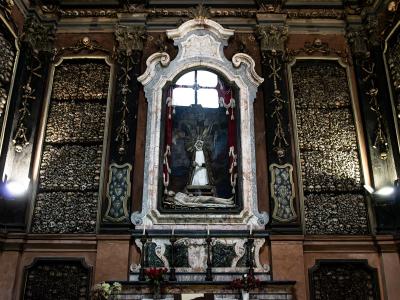
Bone Chapels (Catacombs Of The Ossuary)
13th-century ossuary with walls of human bones
Museums & Culture · Historic Cemeteries
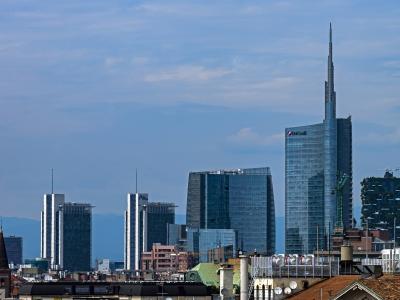
Bosco Verticale
Residential towers with 90+ plant species on facades
Free Architectural Monuments · Botanical Gardens
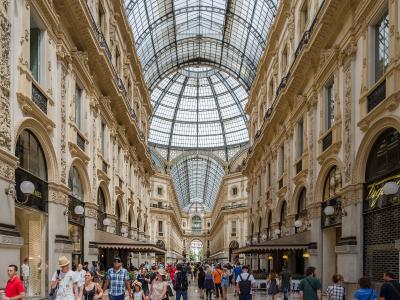
Galleria Vittorio Emanuele II
19th-century glass arcade with mosaic floors
Free Architectural Monuments · Shopping Streets
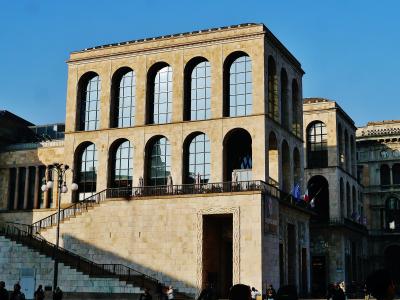
Museo del Novecento
Milan's museum of 20th-century Italian art
Museums & Culture
Questions people ask
Quick Facts
Best Time to Visit
Visit between April and June or September and October for mild temperatures and fewer crowds.