







- Where
- Milan, Lombardy
- Directions
- Directions
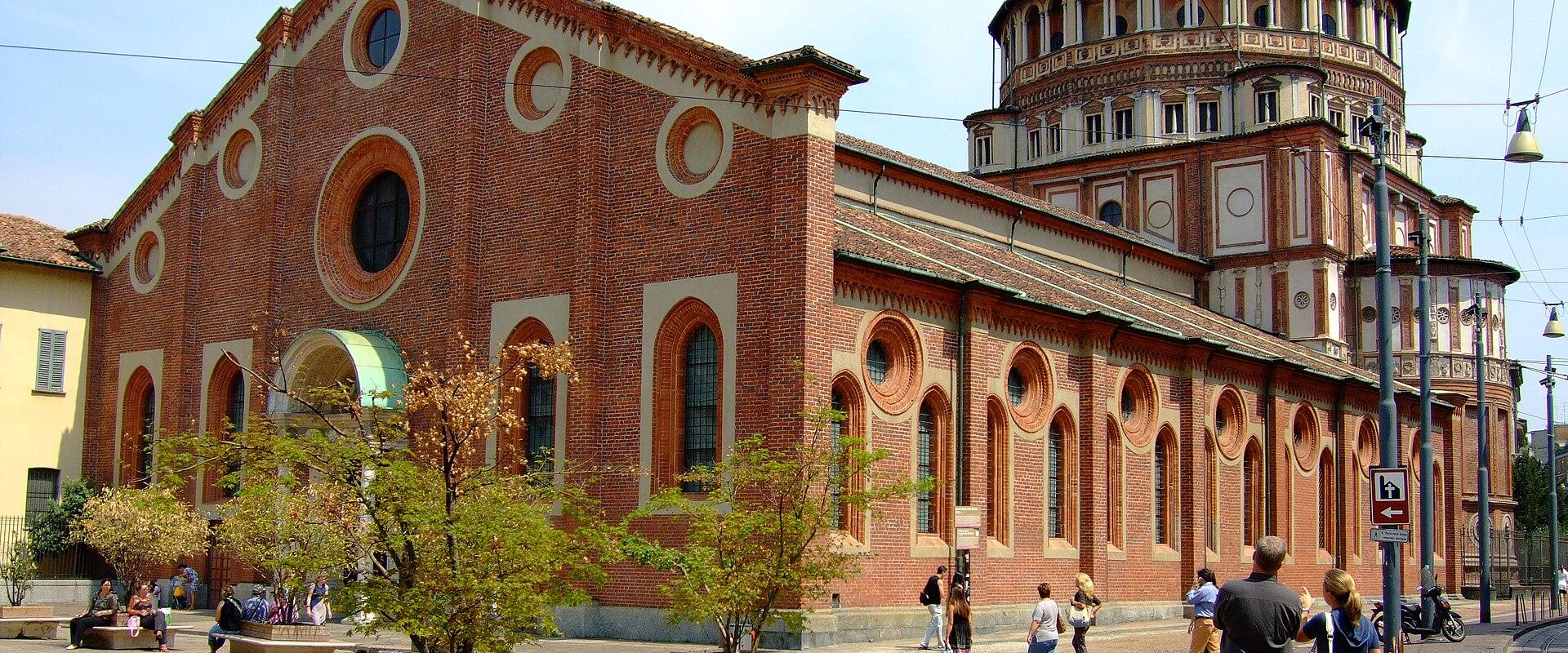
Santa Maria delle Grazie is a church and former Dominican convent in the western part of Milan, famous because its refectory holds Leonardo da Vinci’s The Last Supper, one of the most celebrated paintings in the world. The church and refectory together are a UNESCO World Heritage Site, listed in 1980. The complex lies a short walk from the Sforza Castle and the Duomo, on a quiet street away from the main shopping areas.
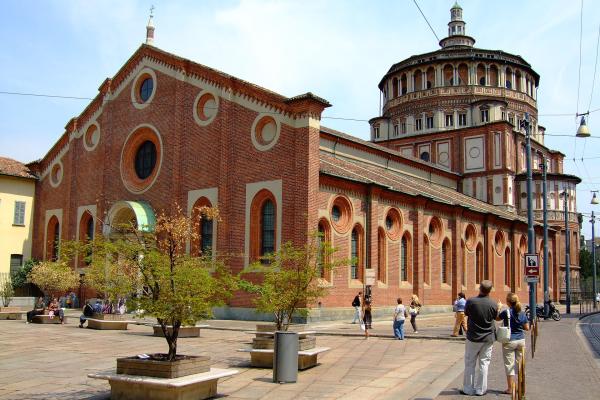
The church was begun in the 1460s by the architect Guiniforte Solari in the Gothic style, with a nave and aisles of brick, and it was then extended in the Renaissance manner. Ludovico Sforza, Duke of Milan, called il Moro, chose the church as the burial place for his family and brought in the architect Donato Bramante to build a new tribune and a cloister. Bramante's work, in the 1490s, is a High Renaissance achievement: a large, harmonious space under a distinctive dome, with a rich play of terracotta and light stone on the exterior. The building itself is a significant example of Renaissance architecture, with the simple, elegant brick facade of the older part contrasting with the refined tribune behind.
Visiting the church offers a profound insight into Milan’s artistic heritage, but the main attraction is the refectory, where Leonardo da Vinci painted The Last Supper between 1495 and 1498 for Ludovico. The mural, which covers the end wall of the dining hall of the friars, shows the moment when Jesus tells his apostles that one of them will betray him, and the figures react with a range of gestures and expressions. Leonardo experimented with oil and tempera on a dry wall instead of the traditional fresco technique, and the result began to deteriorate within his lifetime. The painting has survived neglect, damp, a door cut through its base and bombing in 1943, which destroyed much of the refectory while the mural, protected by sandbags, remained. A long restoration, completed in 1999, brought back much of its colour. On the opposite wall is a large fresco of the Crucifixion by Donato Montorfano, which is often overlooked.
Because of its fragility, access to the refectory is strictly controlled. Only small groups are admitted at set times, for a visit of about fifteen minutes, in a climate-controlled room. Visitors must obtain tickets in advance, often weeks or months ahead, depending on the season. Check the official website for current schedules and book online as early as possible. Do not rely on turning up on the day.
The church is free to enter and can be visited separately, but visitors should dress modestly. Allow time for the cloisters. The Sforza Castle is a good next stop, and the leafy Corso Magenta nearby has cafes. The timed slot is the fixed point of the day, so plan around it.
Categories
More photos coming soon
Nearby Attractions
Other places to visit in Milan
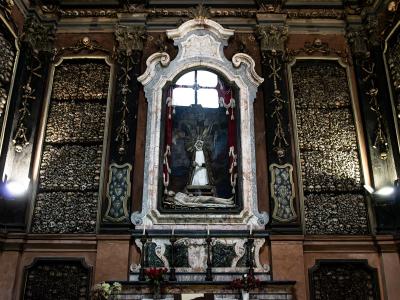
Bone Chapels (Catacombs Of The Ossuary)
13th-century ossuary with walls of human bones
Museums & Culture · Historic Cemeteries
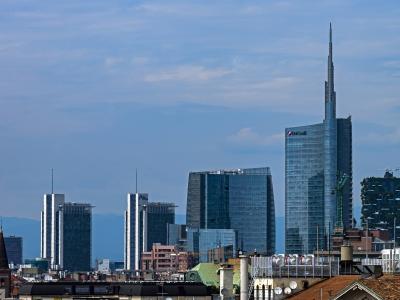
Bosco Verticale
Residential towers with 90+ plant species on facades
Free Architectural Monuments · Botanical Gardens
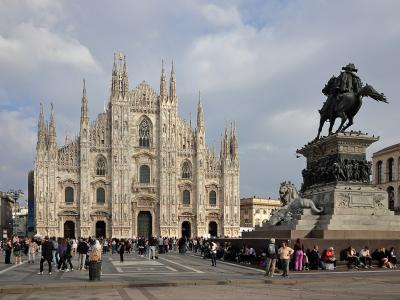
Duomo di Milano
Gothic cathedral with marble facade and rooftop terraces
Architectural Monuments · Cultural Tours
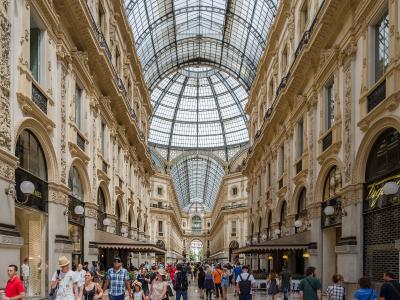
Galleria Vittorio Emanuele II
19th-century glass arcade with mosaic floors
Free Architectural Monuments · Shopping Streets
Questions people ask
Quick Facts
Best Time to Visit
Visit between April and June or September and October for mild temperatures and fewer crowds.