







- Where
- Vieste, Apulia
- Directions
- Directions
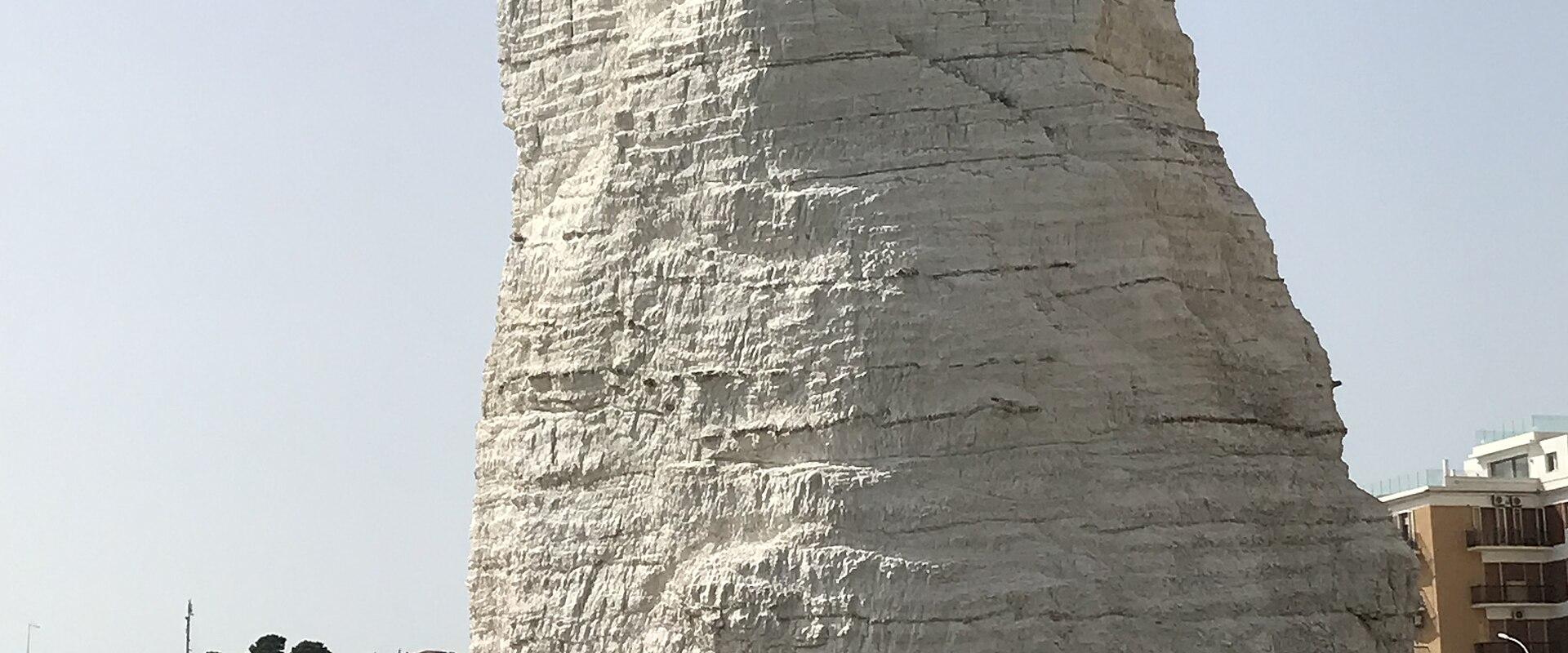
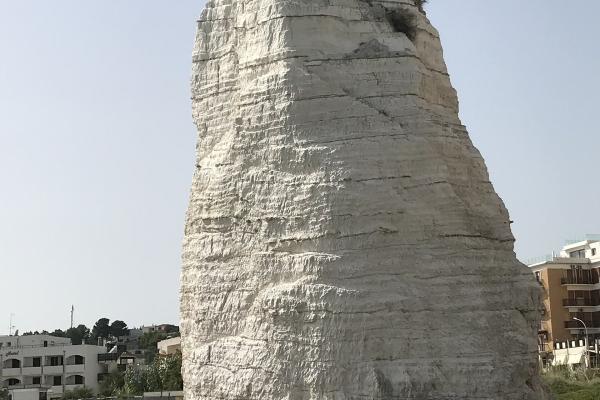
Pizzomunno is a striking white monolith, about 25 metres high, that rises from the beach on the southern outskirts of Vieste, a town at the eastern tip of the Gargano Peninsula, the spur of the Italian boot, in Puglia. It dominates the coastline of Castle Beach, the Spiaggia del Castello, which is known for its golden sands and crystalline waters, and the rock stands on the sand close to the edge of the sea, like a giant tooth or an obelisk. It is made of pale limestone, though it is sometimes described as tuff, and its smooth white surface contrasts with the blue of the Adriatic.
This massive rock is the enduring symbol of Vieste, deeply rooted in local mythology and legend, and its image appears on postcards, posters and the town's souvenirs. According to the legend, Pizzomunno was a handsome young fisherman, a giant, who fell in love with a local girl named Cristalda. Their love was forbidden or at least threatened, and the wicked sirens of the sea, jealous of Pizzomunno’s devotion, dragged Cristalda into the water. In his grief, Pizzomunno was transformed into the colossal white rock that stands guard over the beach today. The legend states that the lovers are granted a single night to reunite every hundred years, when Cristalda rises from the waves, before the sirens reclaim her. This tragic tale adds a layer of romantic mystique to the landscape, making the site culturally significant, and couples often come here to be photographed in front of the rock.
Castle Beach takes its name from the Castello Svevo, the Swabian castle built by Emperor Frederick II, which overlooks the old town on the headland to the north. The beach is long and curving, with fine sand and shallow, clear water that is good for children, and it is lined with bathing establishments that rent umbrellas and sunbeds, as well as a free section. The rock rises at the southern end, and in the evening, when the sun goes down behind the hills, it glows pink and gold. A sea wall and a promenade lead along the shore towards the town, and a path leads past the sea caves, the Grotte Marine, which can be visited by boat.
The monolith is a short walk from the town centre, along the seafront, and it is easy to reach by foot or by bicycle. The beach is crowded in July and August, so go early or late in the day. In the Gargano National Park nearby, forests of Aleppo pine and beech lead to hidden coves, and the Foresta Umbra is a cool retreat in summer.
Bring a hat, sun cream and water shoes, and take the opportunity to try the local seafood in a beachside restaurant. The Borgo Antico, the old town of Vieste, and its cathedral are close.
Categories
More photos coming soon
Nearby Attractions
Other places to visit in Vieste
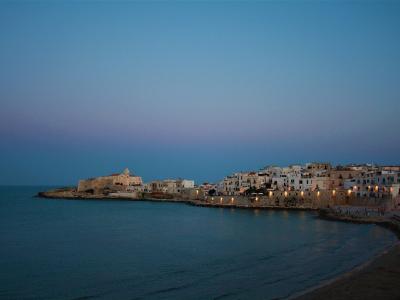
Borgo Antico (Old Town)
Narrow alleys and rustic stone buildings
Coastal Walks · Historic Districts
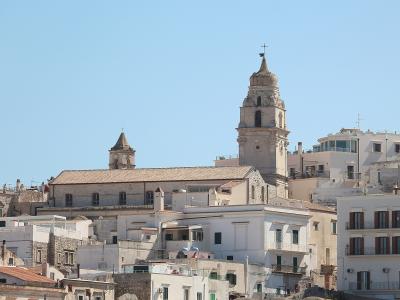
Cattedrale di Santa Maria Assunta
11th-century Romanesque basilica with carved capitals
Architectural Monuments · Historic Churches
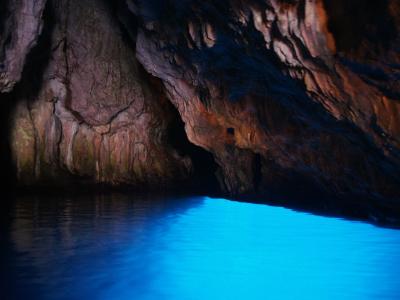
Grotte Marine (Sea Caves)
20 limestone caves eroded by waves on the Gargano coast
Activities & Wellness · Coastal & Maritime
Questions people ask
Quick Facts
Best Time to Visit
Visit between May and June or September and October for warm weather and fewer crowds.