







- Where
- Florence, Tuscany
- Directions
- Directions
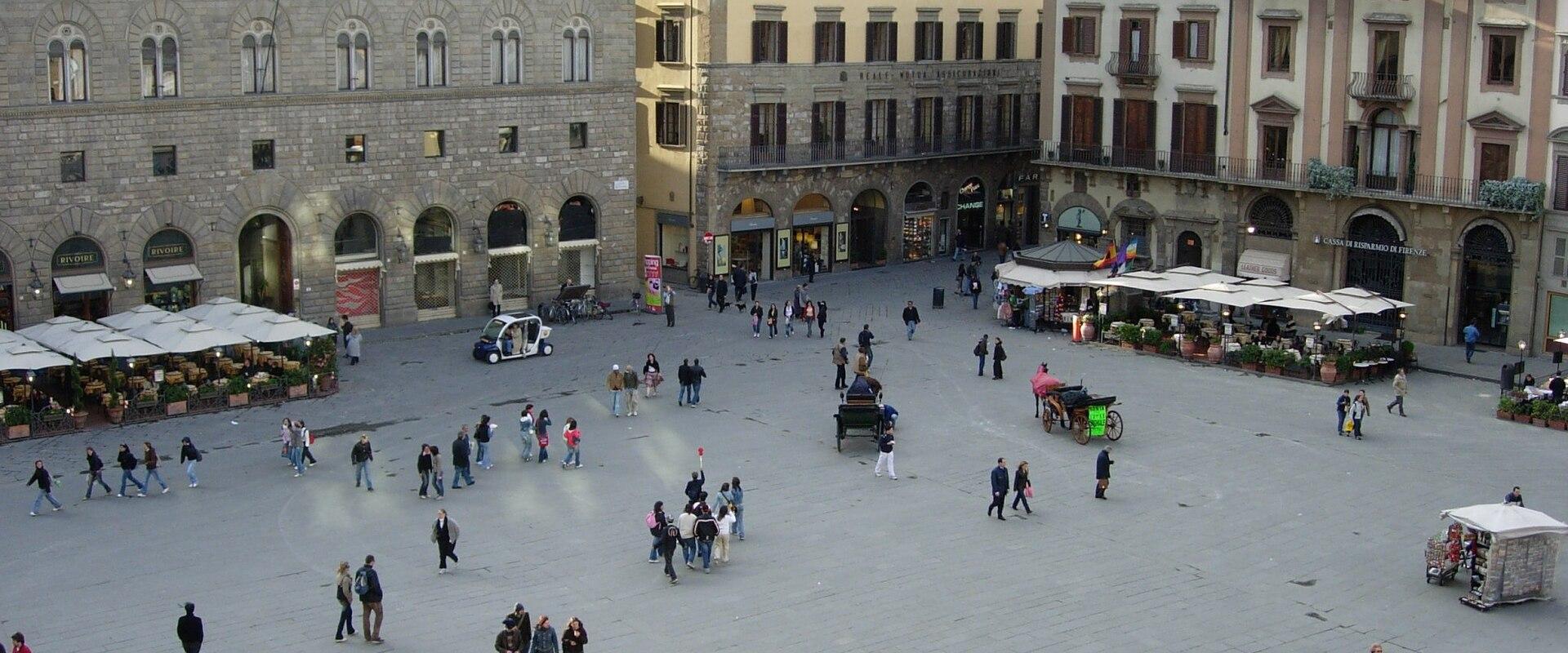
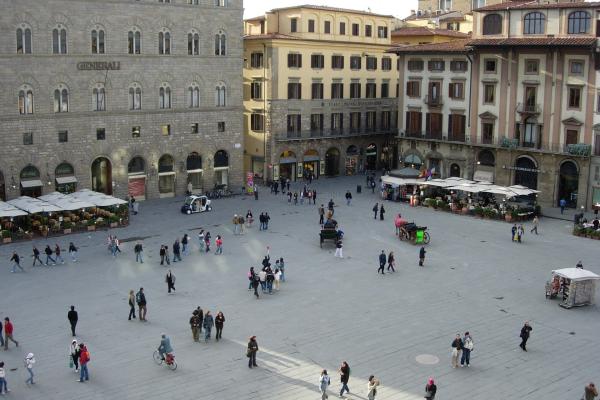
Italian cities have few squares as rich as Piazza della Signoria, which has been the civic centre of Florence since the Middle Ages, and it still works as an open-air gallery of sculpture. The L-shaped square is dominated by the Palazzo Vecchio, the fortress-like town hall begun around 1299, whose crenellated tower is visible from many parts of the city. The Florentine republic governed from here, and later the Medici dukes took over the building, which is why the square carries the marks of both traditions.
The most striking part of the sculpture is gathered in the Loggia dei Lanzi, the open arcade built in the late 14th century on the south side of the piazza. Beneath its arches stand Benvenuto Cellini’s Perseus with the Head of Medusa, Giambologna’s Rape of the Sabine Women and several ancient and Renaissance works, so you can walk around them and look from every angle. Outside the entrance of the Palazzo Vecchio, a copy of Michelangelo’s David occupies the spot where the original stood from 1504 until it was moved indoors in 1873; the original is now in the Galleria dell’Accademia. Nearby, the Fountain of Neptune by Bartolomeo Ammannati, finished in the 1560s, is nicknamed Il Biancone, the big white one, by Florentines who were never entirely convinced by it. In front of the Palazzo, an equestrian statue of Cosimo I by Giambologna looks over the open space.
The square also has a darker history. A round plaque set in the pavement near the fountain marks where the friar Girolamo Savonarola was burned in 1498, and this was the stage for public punishments and political drama in the republic’s volatile years. Knowing that makes the polished stone and the cafe terraces feel a little different.
A visit here is mostly done standing and looking, and it works at any hour, though early morning is easiest if you want to photograph the statues without crowds. Entering the Palazzo Vecchio, where the Salone dei Cinquecento and the tower climb are the highlights, takes extra time and a ticket. The Uffizi Gallery opens off the south-west corner of the square through its long courtyard, and the Cathedral is a short walk to the north, while the Ponte Vecchio and the Oltrarno are only a few minutes away. The piazza suits anyone in Italy who wants to understand the political and artistic life of Renaissance Florence in a single place, and it is worth coming back to in the evening, when the lit facades and the sculptures give it a different mood.
Categories
More photos coming soon
Nearby Attractions
Other places to visit in Florence
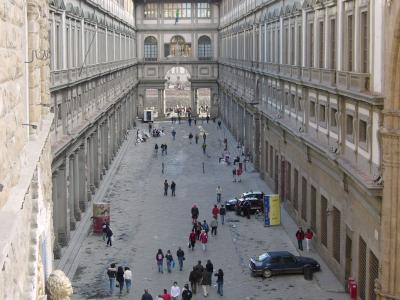
Uffizi Gallery
Renaissance art museum in Giorgio Vasari's building
History & Heritage · Museums & Culture
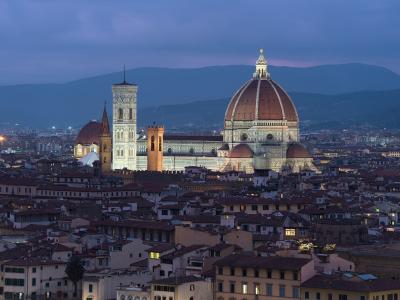
Florence Cathedral (Duomo)
Renaissance cathedral with Brunelleschi's dome
Architectural Monuments · Cultural Tours
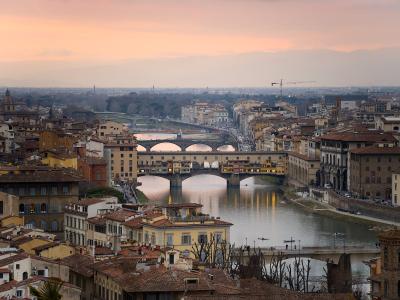
Ponte Vecchio
14th-century bridge lined with historic goldsmith shops
Historic Bridges · Scenic Viewpoints
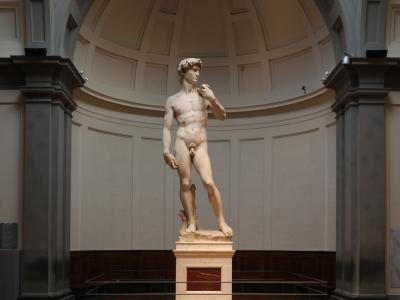
Galleria dell'Accademia
Home of Michelangelo's David
History & Heritage · Museums & Culture
Questions people ask
Quick Facts
Best Time to Visit
Visit in April to June or September to October for mild weather and fewer crowds.