







- Where
- Parma, Emilia-Romagna
- Directions
- Directions
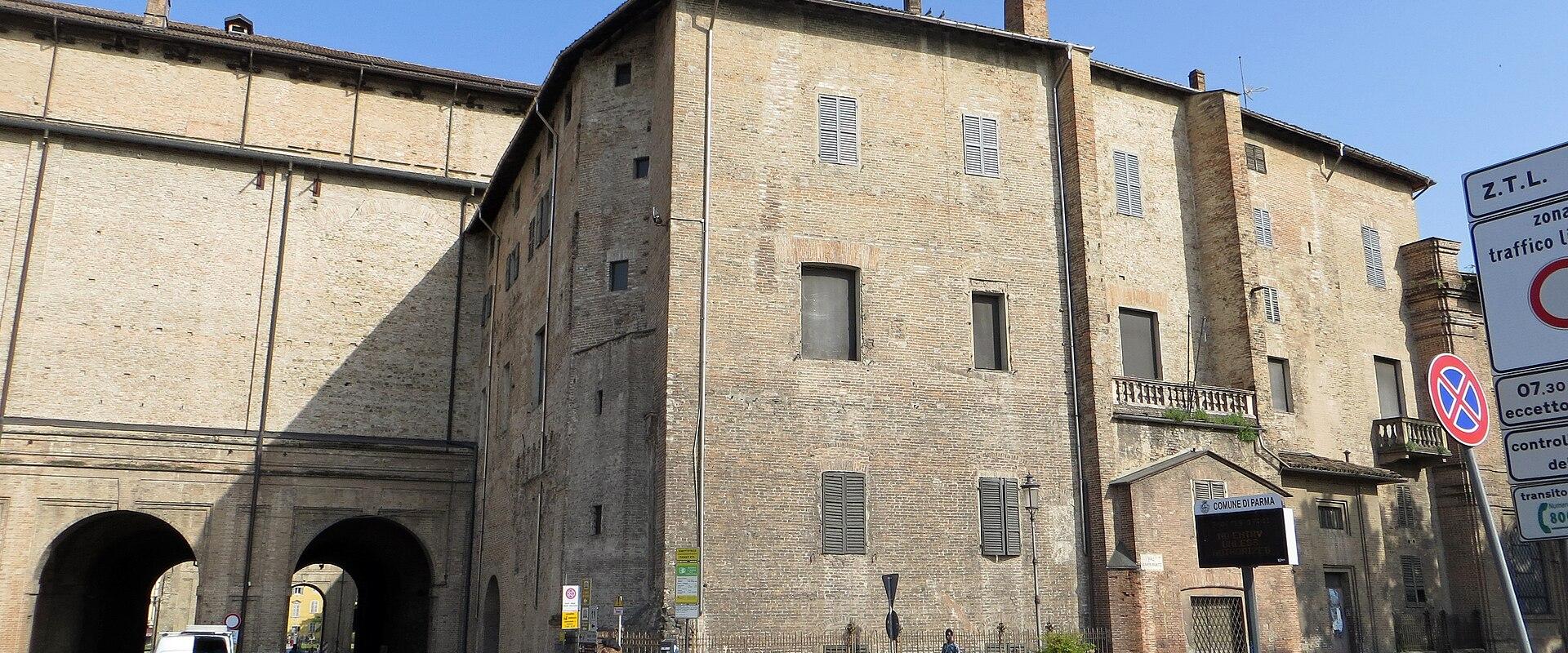
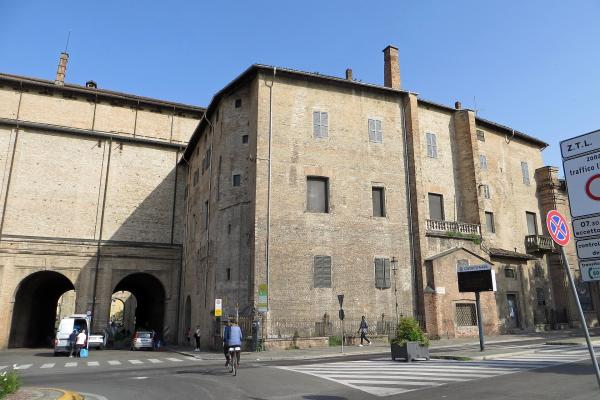
The Palazzo della Pilotta is the largest and most important complex of buildings in Parma, a long and rather austere brick structure that dominates the area beside the river, near Piazza della Pace. It was begun in the 1580s for the Farnese dukes, who ruled Parma and Piacenza, and it was intended to house the court’s offices, apartments, stables and entertainment spaces. The name comes from pilotta, a ball game of Spanish origin, related to pelota, that Spanish soldiers played in one of its courtyards, a reminder of the Farnese court’s links with Spain. The palace was never completed as planned, and parts of the brickwork were left without a finishing facade, which gives it an unfinished look.
Today the complex houses several of the city’s major cultural institutions. The most famous is the Teatro Farnese, a vast wooden theatre built in the 1610s and 1620s, with tiers of seats rising in a horseshoe around a great stage. It is one of the earliest surviving theatres with a proscenium arch, and it is still impressive, though it was severely damaged in the Second World War and later rebuilt, so much of what is seen is a careful restoration. Visitors enter a hall with the atmosphere of a Baroque spectacle, close to the Baptistery and the cathedral in the same quarter.
The Galleria Nazionale, usually called the National Gallery, has one of the finest collections of painting in Emilia, with works by Parma’s two great masters of the 16th century, Correggio and Parmigianino, as well as pieces by Renaissance painters from other regions and a famous small drawing, the Head of a Girl, known as La Scapigliata, attributed to Leonardo da Vinci. The Biblioteca Palatina, a library founded by the Bourbon dukes who followed the Farnese, holds precious books and manuscripts, and includes the Museo Bodoniano, devoted to the printer Giambattista Bodoni, who worked in Parma in the 18th century and designed elegant typefaces. The archaeological museum has Roman and earlier finds.
Because the complex contains several museums, it is best to decide beforehand what you most want to see, and to check current opening times and ticket arrangements, which are managed by the complex as a whole. A visit to the gallery and theatre takes two to three hours. The palace is a short walk from the Duomo di Parma and the Battistero di Parma, and it makes a natural centrepiece to a day in the city. It suits those interested in painting, books and theatre history, and gives a sense of how a small Italian court tried to rival the grander states.
Categories
More photos coming soon
Nearby Attractions
Other places to visit in Parma
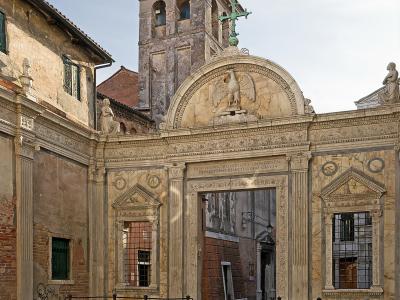
Basilica di San Giovanni Evangelista
Mannerist church with Correggio ceiling frescoes
Free Architectural Monuments · Cultural Tours
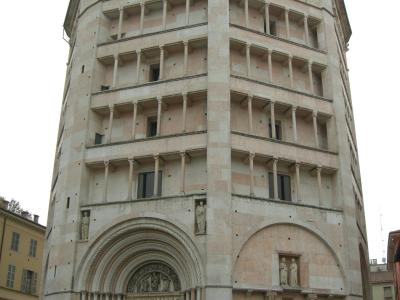
Battistero di Parma
12th-century Romanesque baptistery with Antelami sculptures
Architectural Monuments · Cultural Tours
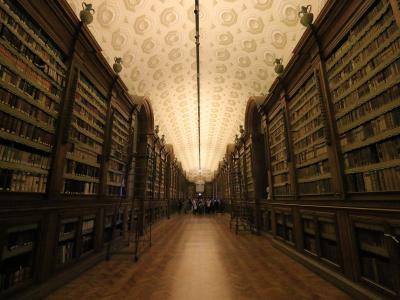
Biblioteca Palatina
Neoclassical library in Parma's Pilotta complex
History & Heritage · Museums & Culture
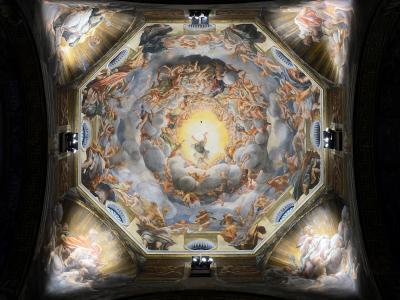
Duomo di Parma (Cathedral of Parma)
Romanesque cathedral featuring Correggio's dome fresco
From €10 Art Museums · Historic Churches
Questions people ask
Quick Facts
Best Time to Visit
Visit between April and June or September and October for mild temperatures and fewer crowds.