







National Archaeological Museum of Oristano
1938-founded museum in Palazzo Parpaglia
- Where
- Oristano, Sardinia
- Directions
- Directions
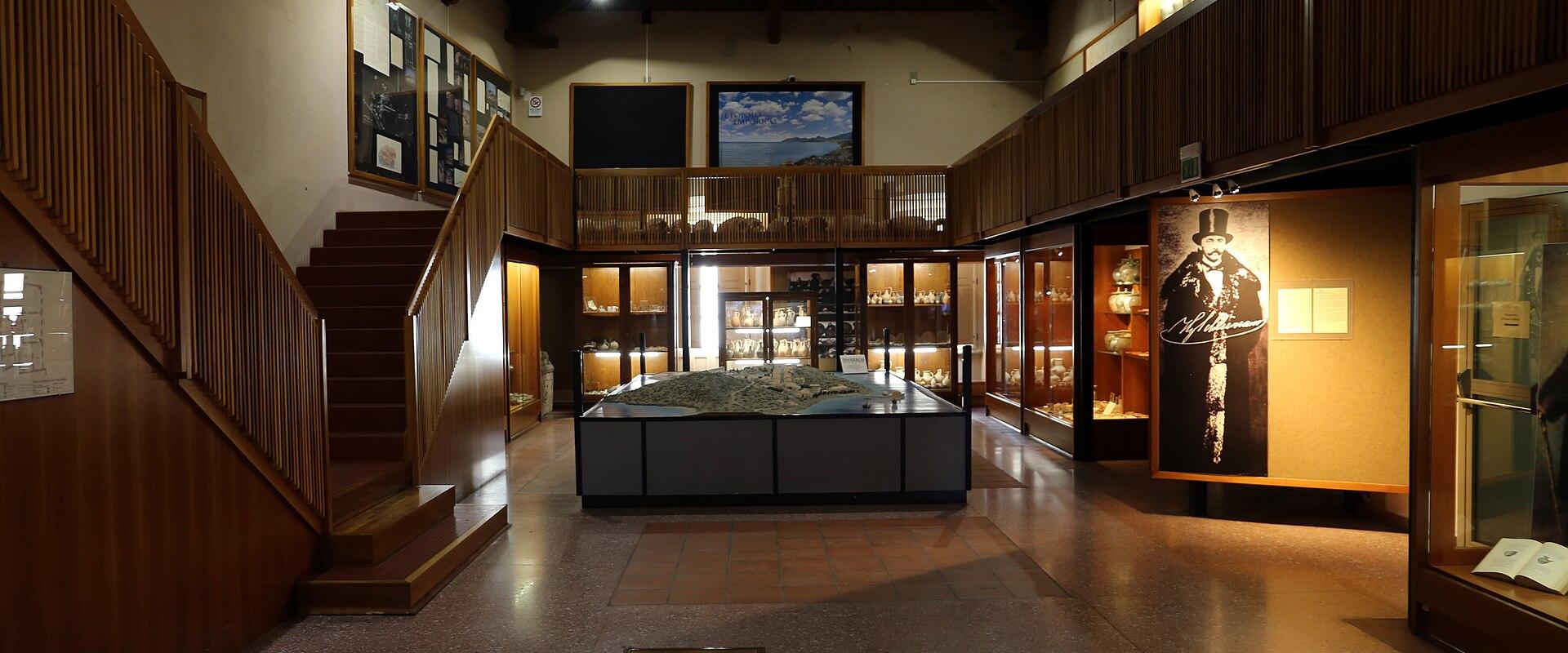
The National Archaeological Museum of Oristano, officially known as the Antiquarium Arborense, is the most significant museum in the city. Since 1992, it has been housed within the 19th-century Palazzo Parpaglia, in the historic center. The museum was founded in 1938, and its collection grew from local finds and donations, and from excavations carried out on the Sinis peninsula, the headland north of Oristano that was one of the most important areas of ancient Sardinia. It holds a vast archaeological collection of ancient items dating back to various eras, including the Nuragic, Punic, Roman and medieval periods, and it offers deep insights into the region’s history and anthropology, making it an essential stop for understanding Sardinia’s past.
The Nuragic civilization is the oldest of these layers. From the Bronze Age, the island’s people built the nuraghi, stone towers that still dot the landscape in their thousands, and the objects displayed in the museum, bronze tools, ceramic vessels, small bronze votive figures and stone implements, show the daily life and beliefs of this culture. In the first millennium BC, Phoenician and then Carthaginian, or Punic, traders and settlers founded coastal towns on Sardinia. The most important of these in this area was Tharros, a city on the tip of the Sinis, whose finds form one of the strongest parts of the collection: jewelry, amulets, glass beads, masks and pottery from its tombs, along with inscriptions that show the Punic language.
Roman rule left sculpture, inscriptions, mosaics, glassware and coins, and the museum’s Roman rooms show how Tharros and the surrounding country were absorbed into the empire. The medieval section is linked to the Judgeship of Arborea, the independent Sardinian state, centered on Oristano, that lasted until the 15th century and whose best-known ruler, Eleonora d’Arborea, issued a famous law code, the Carta de Logu. Together the galleries trace several thousand years in a compact space.
The museum is currently closed temporarily. When open, standard hours are Monday through Friday from 9:00 AM to 8:00 PM, and on Saturdays and Sundays from 9:00 AM to 2:00 PM and from 3:00 PM to 8:00 PM. Hours may vary on special days or holidays, so visitors are recommended to check directly with the museum and reserve time slots if necessary. Because of the temporary closure, it is wise to confirm that it has reopened before making a special trip.
Exploring the Antiquarium Arborense offers insight into Oristano’s cultural heritage. It is a key destination to appreciate the archaeological legacy of the Arborea region. The combination of historical depth and artistic artifacts makes it a meaningful destination. It complements visits to other landmarks in Oristano, such as the Cathedral of Santa Maria Assunta, with its domed bell tower, and the Sartiglia, the famous carnival joust on horseback that fills the city’s streets in February or March. Visitors are advised to allocate sufficient time to view the extensive collections, and to combine the museum with a trip to the ruins of Tharros on the coast, where the stones of the ancient city stand beside the sea.
Categories
More photos coming soon
Nearby Attractions
Other places to visit in Oristano

Questions people ask
Quick Facts
Best Time to Visit
Visit between April and June or September and October for mild temperatures and fewer crowds.