







Lungomare Falcomatà
1.7km waterfront promenade with Liberty architecture
- Where
- Reggio Calabria, Calabria
- Directions
- Directions
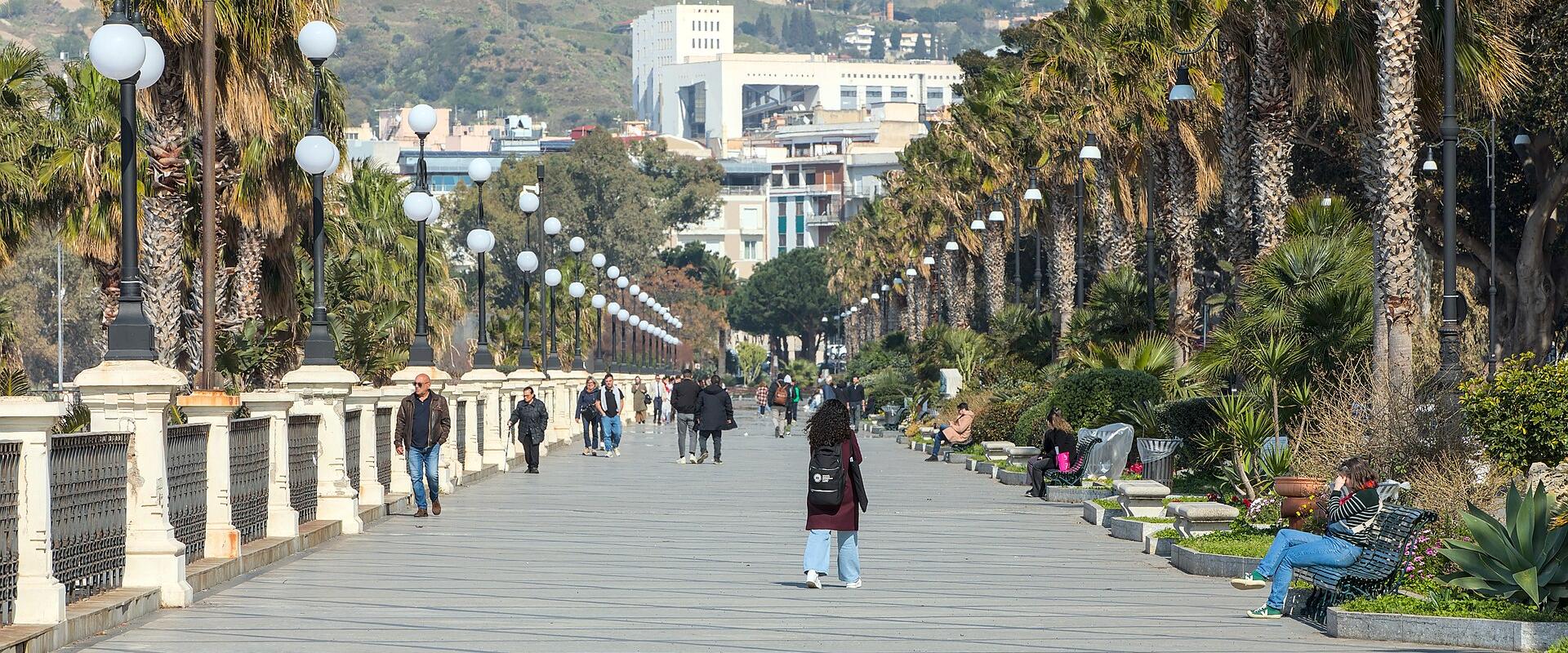
The Lungomare Falcomatà is a 1.7-kilometre waterfront promenade in Reggio Calabria, in the toe of Italy, often cited as the most beautiful kilometre in Italy, a phrase attributed to the writer Gabriele D'Annunzio. It is a romantic focal point overlooking the Strait of Messina, with Sicily and Mount Etna across the water, and it functions as the natural extension of the city's historic centre, linking the old streets of Reggio with the sea. It has wide terraces, benches, palm trees and a long balustrade, and the view of the strait, with the ferries crossing between Reggio and Messina, is the main reason to come.
The promenade has undergone four major phases of reconstruction. The first began after the great earthquake of 1783, when the Engineer Giovan Battista Mori designed the initial open space along the shore, as part of the rebuilding of the city. The arrival of the railway and the subsequent rebuilding after the earthquake of 1908, which destroyed Reggio and killed tens of thousands of people, gave the waterfront its present form, with a grand series of buildings in the Liberty style, the Italian Art Nouveau, along the front. A major redevelopment in 1994, known as the Primavera di Reggio, the Spring of Reggio, created multi-level paths and terraces, and transformed it into one of Europe's largest public spaces of its kind.
The area was named in honour of Italo Falcomatà, the mayor of the city in the 1990s who led the redevelopment, and whose tenure is remembered as a time of renewal. It comprises several streets along the front, including the Lungomare Falcomatà, the Lungomare Matteotti and Corso Vittorio Emanuele III and Via Marina, and it passes in front of the Villa Zerbi and other palaces. The Liberty villas, with their curving balconies, floral decoration and wrought iron, are the best preserved examples of the style in southern Italy, and they were built by wealthy families after the earthquake. At one end stands the Castello Aragonese, the Aragonese Castle, and a small botanical garden.
One of the unusual sights of the strait is the Fata Morgana, a mirage that sometimes appears on hot, still days, when the shore of Sicily seems to rise into the sky and to shimmer, with towers and palaces, and old stories said that it was an illusion made by the fairy Morgana. It is a rare optical effect, and the promenade is the best place to look for it.
The promenade is open at all hours and free. In the evening, the people of Reggio walk along it, ice cream in hand, and in summer concerts and events are held. Close by, the National Archaeological Museum of Reggio Calabria, which holds the famous Riace Bronzes, two Greek statues found in the sea, the Duomo and the Church of San Giorgio dei Greci are within walking distance, and Palazzo Zani stands in the old town. Visit at sunset, when the strait turns gold. Today, the promenade is also a place for cyclists and joggers. Calabria’s other sights can be reached by train.
Categories
More photos coming soon
Nearby Attractions
Other places to visit in Reggio Calabria
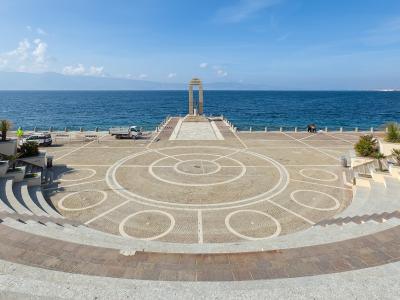
Arena dello Stretto (Anfiteatro Ciccio Franco)
Greek-style open-air theatre on the seafront, facing the Strait
City Promenades · Public Statues
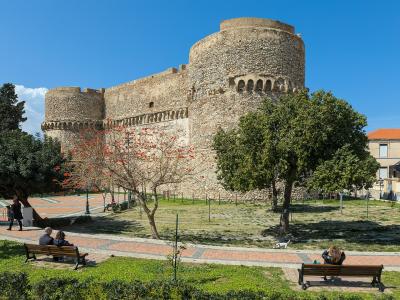
Castello Aragonese
Two great Aragonese towers on Piazza Castello, a fort since 536
History & Heritage · Castles & Fortresses
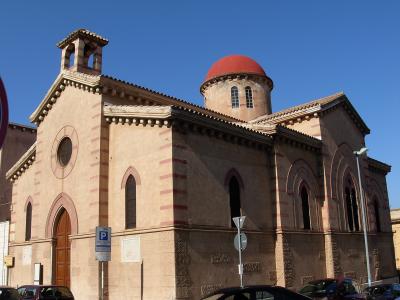
Chiesa degli Ottimati
Byzantine-Norman church rebuilt in 1933 with medieval mosaic floors
History & Heritage · Historic Churches
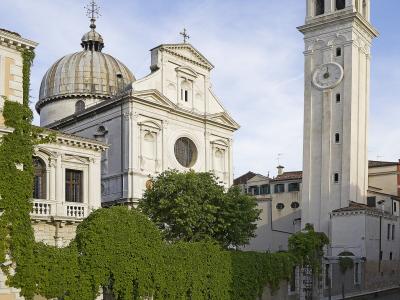
Chiesa di San Giorgio dei Greci
Oldest Christian site in Reggio Calabria, founded 1112
Architectural Monuments · Historic Churches
Questions people ask
Quick Facts
Best Time to Visit
Visit between April and June or September and October for mild temperatures and fewer crowds.