







Lungarni (Arno River Banks)
Riverside promenade lined with historic palaces and museums
- Where
- Pisa, Tuscany
- Directions
- Directions
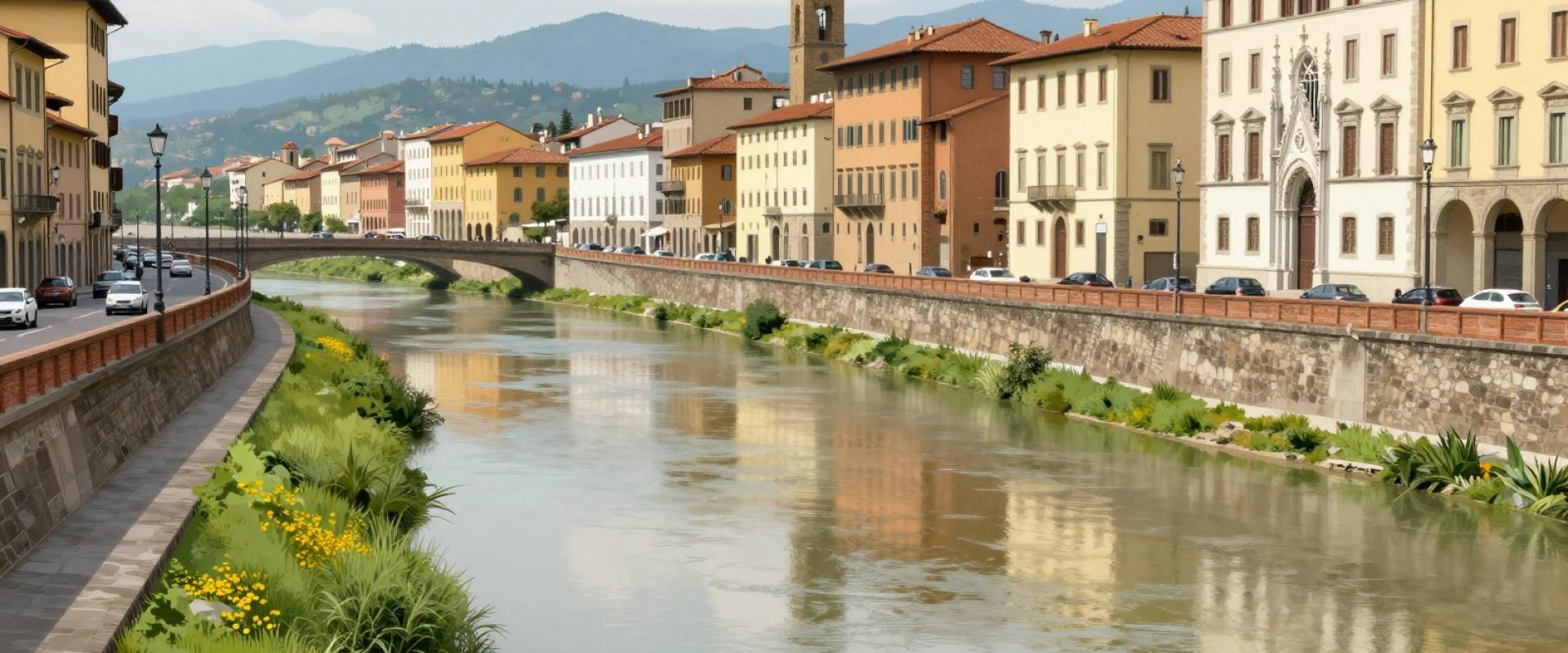
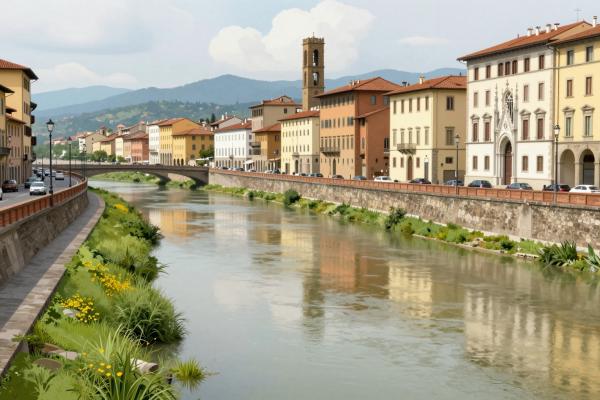
The Lungarni are the embankments along both sides of the Arno River in Pisa, the broad streets that follow the curve of the water through the centre of the city, and they are one of the most pleasant places in Pisa for a walk. Each stretch has its own name, such as Lungarno Pacinotti, Lungarno Mediceo, Lungarno Gambacorti and Lungarno Galilei, and together they form a continuous promenade with views of the river, the bridges and the facades of palaces that rise directly from the quays. The river bends in a graceful arc, and the buildings on the outer curve face the water, which gives the city a rhythm of curved fronts in pastel and ochre colours. Compared with the crowds on the Piazza dei Miracoli, the riverside is calm and local.
The Lungarni have a strong historical connection with the life of the city. Pisa was a great maritime republic in the Middle Ages, with a fleet that rivalled Genoa and Venice, and the river was the artery of its trade and shipbuilding. In the 13th century, the military and commercial power of the city was at its height, and the Old Citadel, the Cittadella Vecchia, near the western end of the embankment, was a shipyard fortress. The Medici, who ruled from the 16th century, built the Arsenali Medicei, the Medici arsenals, where galleys were built, and the Palazzo Reale on Lungarno Pacinotti, a palace that was the Medici residence and is now home to the National Museum. The embankments are thus lined with noble palaces and a series of squares, such as Piazza Carrara and Palazzo Lanfreducci. The Leaning Tower and the Duomo are a short walk inland.
The area works as a kind of museum system, with sites along the river. The Palazzo Reale, now the Museo Nazionale, displays furniture, paintings and objects from the Medici and later periods. The Museo delle Navi Antiche di Pisa, the Museum of Ancient Ships, in the restored Medici arsenals, displays Roman ships and cargoes found in the ancient harbour at San Rossore, which were preserved in the mud, in a remarkable exhibition. The Museum of Calculating Machines, in the former Old Slaughterhouse, traces the history of computing, in a city that built one of Italy’s first computers. Elsewhere, the tiny Gothic church of Santa Maria della Spina, covered in pinnacles and statues, stands right at the edge of the river on Lungarno Gambacorti, and the Palazzo Blu, a gallery of art exhibitions, is close by.
The Lungarni are free and open at all times, and they are best enjoyed at a gentle pace, by day or at sunset, when the light turns the river gold. The most famous events take place here, among them the Luminara on 16 June, when thousands of candles light the facades of the buildings along the river, and the Regatta of San Ranieri on the following day. The Lungarni connect the sights of the Leaning Tower, the Baptistery of St. John, the Pisa Cathedral and the Campo Santo Monumentale with the market of the Mercato di Pisa and the Orto Botanico di Pisa. They suit walkers and those who want to see everyday Pisa.
Categories
More photos coming soon
Nearby Attractions
Other places to visit in Pisa
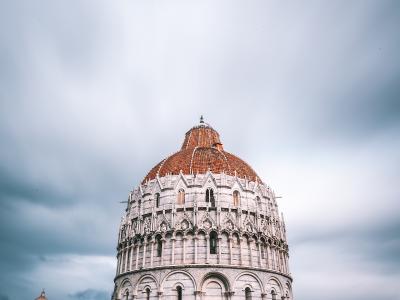
Baptistery of St. John
Italy's largest baptistery in Pisa's Piazza dei Miracoli
From €11 Architectural Monuments · Cultural Tours
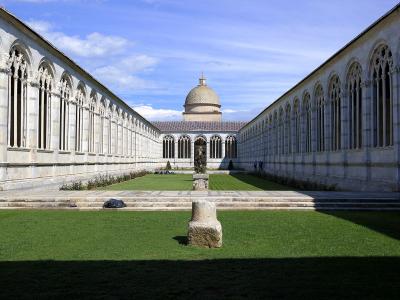
Campo Santo Monumentale
13th-century cemetery with sacred Golgotha soil
History & Heritage · Museums & Culture
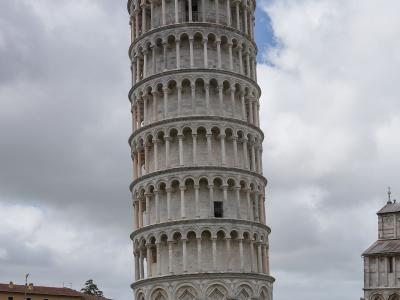
Leaning Tower of Pisa
Freestanding Romanesque bell tower with a 4-degree lean
From €20 Architectural Monuments · Historic Churches
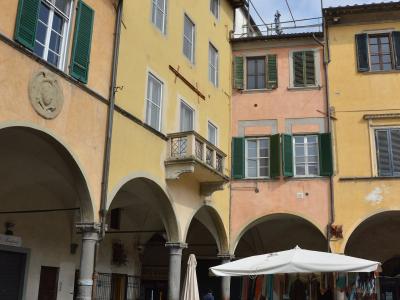
Mercato di Pisa
Historic arcaded food market with medieval towers
Free Historic Districts · Local Cuisine
Questions people ask
Quick Facts
Best Time to Visit
Visit between April and June or September and October for mild temperatures and fewer crowds.