







- Admission
- €20
- Hours
- Daily 8am-8pm
- Where
- Pisa, Tuscany
- Directions
- Directions
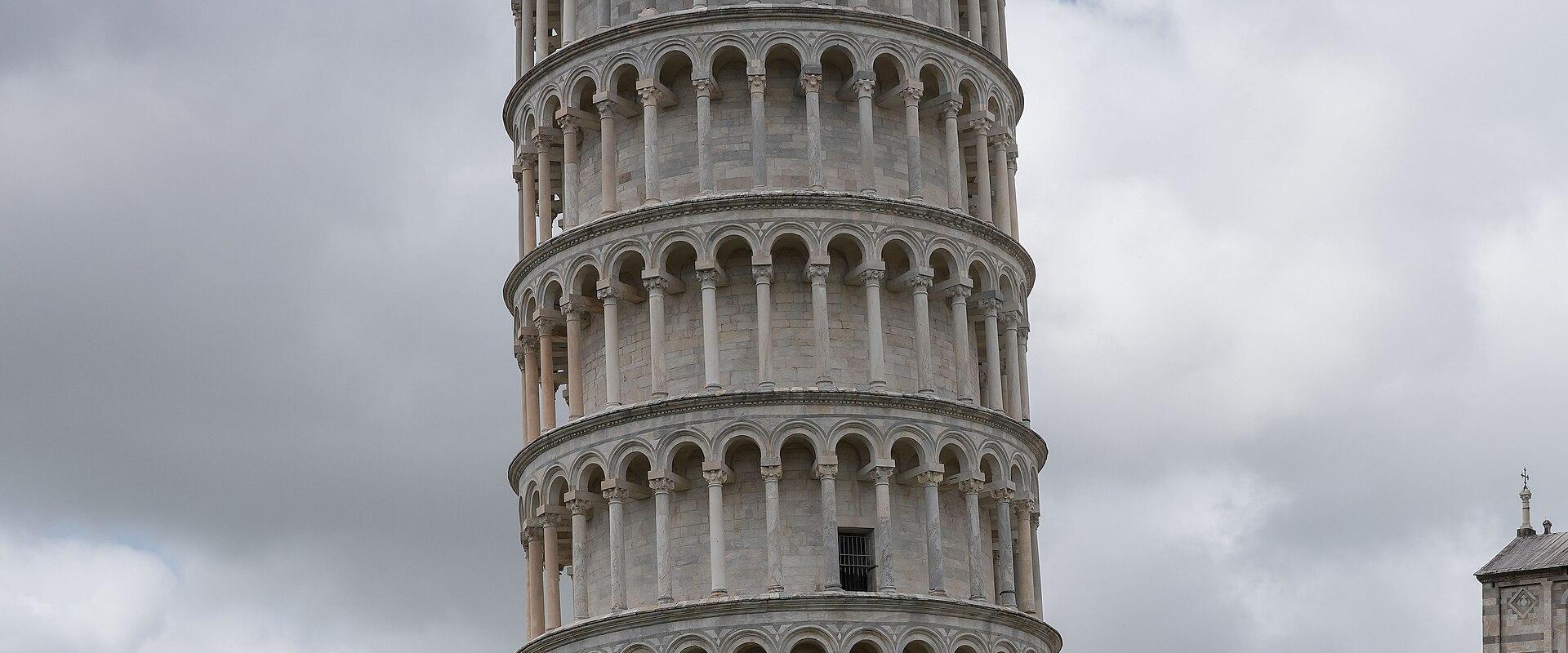
The Leaning Tower of Pisa is a freestanding Romanesque bell tower in Pisa, Italy, the campanile of the Pisa Cathedral, and one of the most recognizable buildings in the world. Known globally for its nearly four-degree lean, caused by an unstable foundation, the tower is about 56 meters tall on the low side and weighs roughly 14,500 tonnes. Construction began in 1173 and was completed in 1372, spread over almost two centuries. It is one of three structures in the Piazza del Duomo, the Piazza dei Miracoli, alongside the Cathedral and the Baptistery, and the whole group, with the cemetery, the Campo Santo, is a UNESCO World Heritage Site.
The lean began early. Work started on the white marble tower in the 12th century, on ground made of soft clay and sand beside the Arno, and when the builders had completed the third floor, around 1178, the tower had begun to sink on its southern side. Work stopped for roughly a century, partly because of wars between Pisa and its rivals, and this pause, by letting the soil settle, probably saved the tower from collapsing. When building resumed, the engineers made the upper floors slightly taller on the low side to compensate, which gives the tower its subtle curve, like a banana, and the last stage, the bell chamber, was added in the 14th century. Over the centuries the lean increased, reaching more than five degrees by the late 20th century, and in 1990 the tower was closed to visitors while engineers worked to stabilize it. Soil was carefully removed from under the north side and counterweights were used, and by 2001 the lean had been reduced by about half a degree, which was enough to make the tower safe for several centuries.
The tower features 294 or 296 steps, depending on the side counted, which visitors climb to reach the top, spiraling up inside the walls past the arcaded galleries. The ascent has a strange feel, as the stairs seem to tilt, and walkers feel the lean in their legs. At the top, the bell chamber holds seven bells, one for each note of the musical scale, and the terrace gives a view over the cathedral, the baptistery, the roofs of Pisa and the plain toward the sea.
The tower is visited by a very large number of people every year, making it one of Italy’s most iconic landmarks, and it is highly recommended to book tickets online in advance to secure a time slot and avoid long queues, since the number of visitors allowed on the tower at one time is limited. Opening hours and prices change with the season, and children are admitted only under certain conditions, so check the official site of the cathedral’s works authority. Climbing the tower offers a unique perspective of the Piazza del Duomo and the surrounding city. The experience combines historical appreciation with physical activity.
It is an essential stop to understand the architectural ingenuity and historical significance of Pisa. The combination of medieval engineering and global fame makes it a memorable destination. It complements visits to the Cathedral, with its striped marble facade and Romanesque interior, and the Baptistery, a vast round building with remarkable acoustics, providing a view of the square’s artistic and religious heritage. Go early or late in the day to avoid the crowds.
Categories
More photos coming soon
Hours & Fees
- Open
- Daily 8am-8pm
- Admission
- €20
Hours and prices change, especially out of season. Check with the venue before you go.
Nearby Attractions
Other places to visit in Pisa
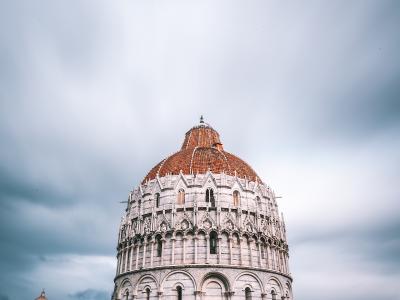
Baptistery of St. John
Italy's largest baptistery in Pisa's Piazza dei Miracoli
From €11 Architectural Monuments · Cultural Tours
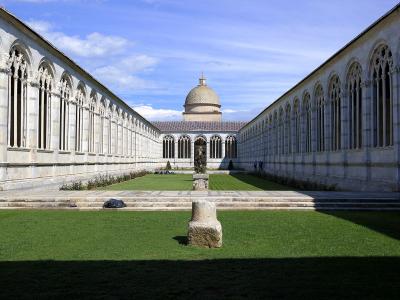
Campo Santo Monumentale
13th-century cemetery with sacred Golgotha soil
History & Heritage · Museums & Culture
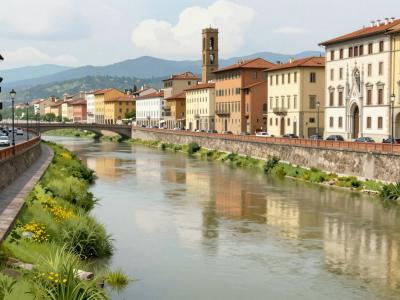
Lungarni (Arno River Banks)
Riverside promenade lined with historic palaces and museums
City Promenades · Historic Districts
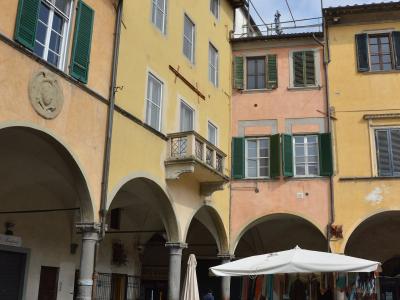
Mercato di Pisa
Historic arcaded food market with medieval towers
Free Historic Districts · Local Cuisine
Questions people ask
Quick Facts
Best Time to Visit
Visit between April and June or September and October for mild temperatures and fewer crowds.