







- Where
- Procida, Campania and Amalfi Coast
- Directions
- Directions
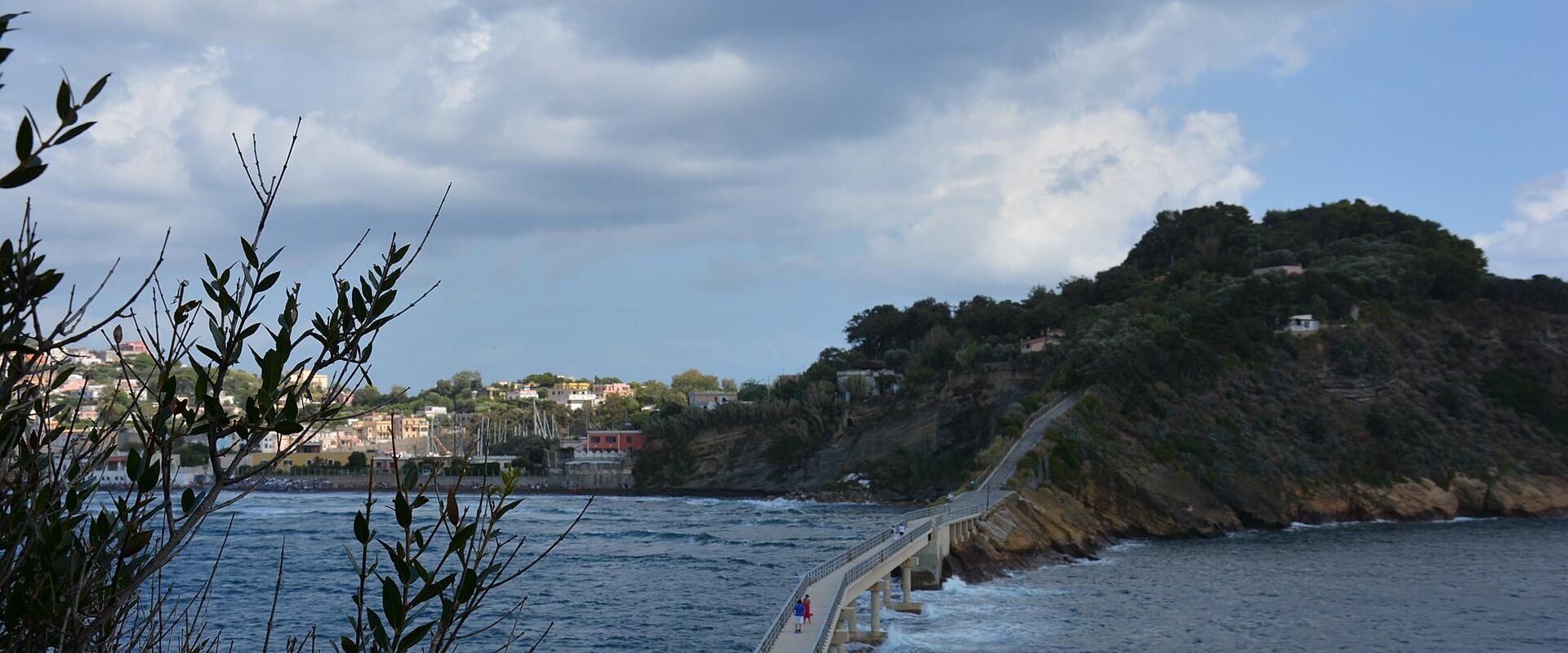
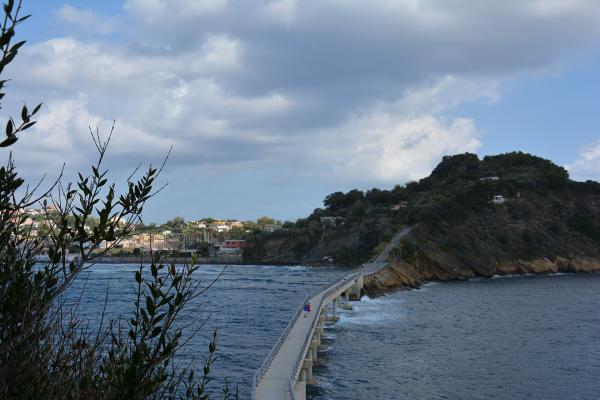
The Isola di Vivara is a small crescent-shaped volcanic island in the Bay of Naples, between Procida and Ischia, and it is a State Natural Reserve, one of the most precious pieces of unspoilt land in the area. It is joined to Procida by a short bridge at Chiaiolella, the southern harbour of Procida, and it forms the remains of a volcanic crater, whose northern half has been eroded by the sea, so that the island has the form of a crescent opening to the south. Geologists say that it was formed more than fifty thousand years ago, in a series of eruptions of the volcanic area of the Phlegraean Fields. Today, it is covered with Mediterranean scrub and woodland, with dense vegetation of holm oak, myrtle and mastic, and its cliffs shelter birds such as the Peregrine Falcon, so that it is considered a sanctuary for biodiversity.
The island has a human history that goes back to the Bronze Age. In the 1930s, the archaeologist Giorgio Buchner began excavations that revealed the remains of a prehistoric settlement on the island, which was an important trading post in the Middle Bronze Age, around the 16th century BC. Pottery imported from the Mycenaean world was found here, which shows that trade and contact reached across the sea to Greece long before the Greek colonies were founded on the Italian coast. Later excavations confirmed the importance of the site. The land has subsided over the centuries because of the volcanic soil, so part of the ancient village is now submerged some nine metres below the surface in the sea that surrounds the island, which has been protected as the Regno di Nettuno, the Kingdom of Neptune, a marine protected area that also covers Ischia and Procida.
The island is described as a fragile ecosystem that needs respect and organisation, not a casual city park, and visits are controlled. Access is generally on foot, by guided visit, on set days and times, and sometimes by reservation, to protect the vegetation and the nesting birds, and visitors must keep to the paths. On the island’s heights, there are the remains of an old estate, with a historic villa, the Villa del Duca, in a ruined state, which used to belong to the lords of the island and later became a hunting reserve, established in 1681 as a personal reserve by Giovanni de Guevara, Duke of Bovino, and the Villa del Duca, the House of Hunt, is the only surviving building from that time. The paths are partly shaded by woods and open to sea views over Ischia, Capri and the mainland, and walkers can take in the scents of the Mediterranean scrub.
Because rules and opening arrangements change, it is essential to check the current regulations with the reserve before planning a visit. Bring water, a hat and sturdy shoes, since there are few facilities. The walk takes a couple of hours. Procida is a short ferry ride from Naples and Pozzuoli, and its other sights include Terra Murata, the fortified medieval village on the highest point, with its abbey and former prison, the Marina Corricella, a colourful fishing harbour, and the Fortress, the Rocca di Procida. The geological and archaeological heritage of the Phlegrean Islands is on show here. The island suits walkers, birdwatchers and those interested in archaeology and nature.
Categories
More photos coming soon
Nearby Attractions
Other places to visit in Procida
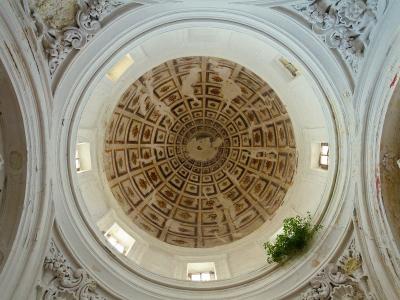
Abbey of San Michele Arcangelo
Abbey of Procida's patron saint at the top of Terra Murata
History & Heritage · Historic Churches
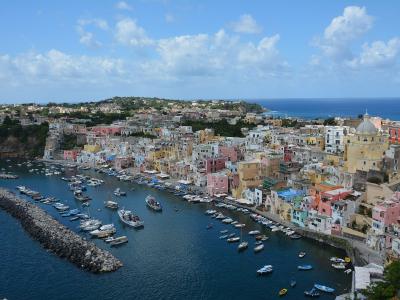
Marina Corricella
Car-free fishing harbour of stacked pastel houses below Terra Murata
Fishing Villages · Harbor Views
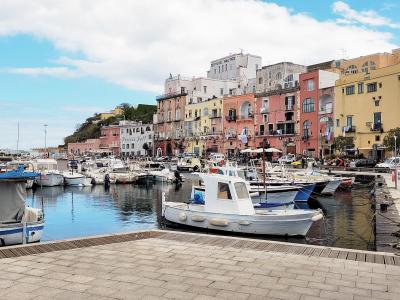
Marina di Procida
Historic fishing port in Procida
Coastal & Maritime · Historic Districts
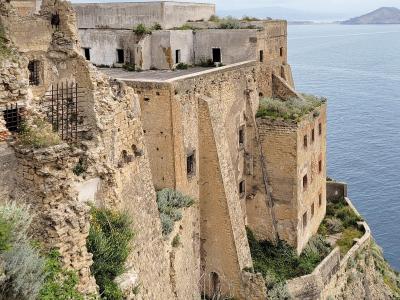
Palazzo d'Avalos
1563 noble palace on Terra Murata, a Bourbon prison until 1988
History & Heritage · Urban Exploration
Questions people ask
Quick Facts
Best Time to Visit
Visit between May and June or September and October for warm weather and fewer crowds.