







- Admission
- €10
- Hours
- 8:30 a.m.-7:30 p.m.
- Where
- Sirmione, Lombardy
- Directions
- Directions
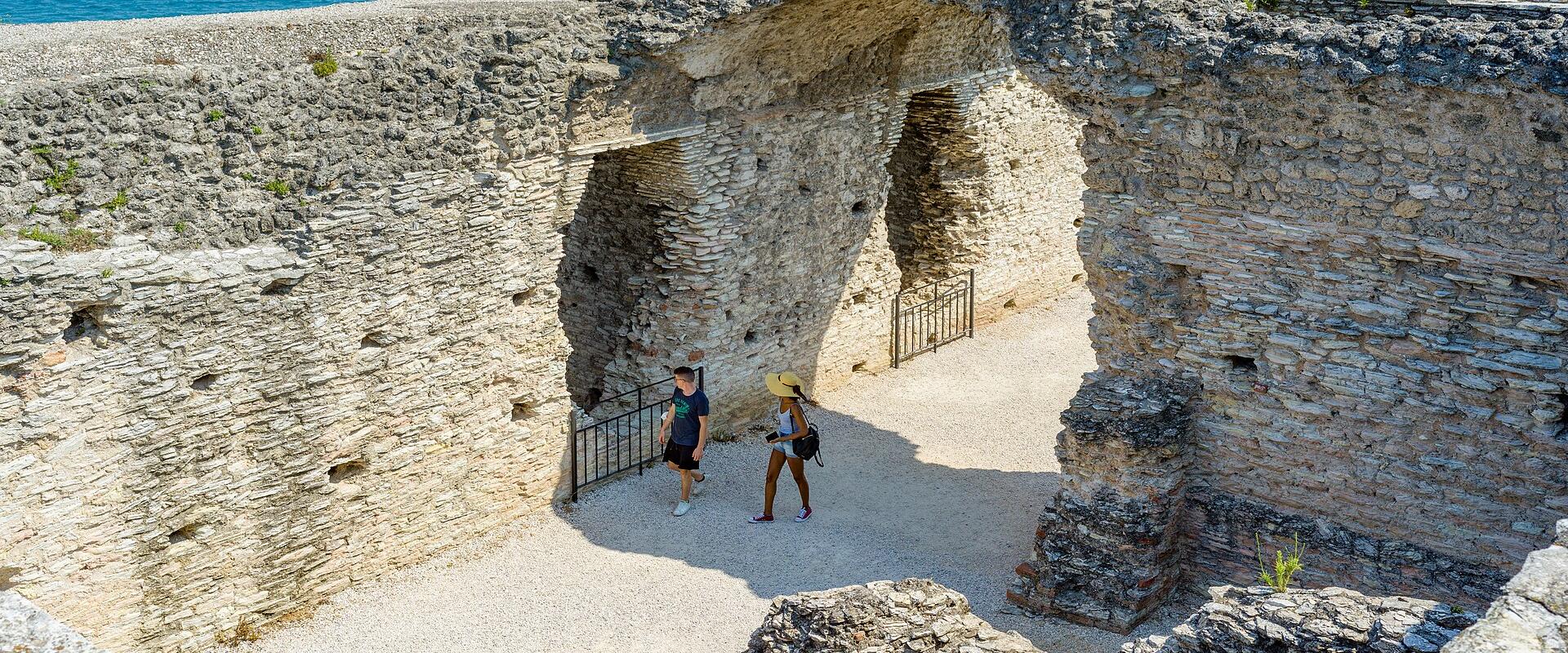
The Grotte di Catullo, the Grottoes of Catullus, is the archaeological area at the tip of the Sirmione peninsula where the ruins of a huge Roman villa spread across a platform above Lake Garda. Despite the name, there are no true caves. When early visitors found arched openings in the rock and in the overgrown walls, they called them grottoes, and the name stuck, though what they saw were the vaulted substructures that held up the terraces of the villa. The link to Catullus, the Roman poet Gaius Valerius Catullus, born in Verona in the first century BC, is traditional rather than proven. He wrote affectionately of Sirmio, calling the peninsula the jewel of all peninsulas and islands, and mentioned a home here, and since the villa dates from the same era, later generations linked the two. Modern scholars think that the villa may have belonged to a wealthy family of the Roman elite, perhaps related to the poet’s circle.
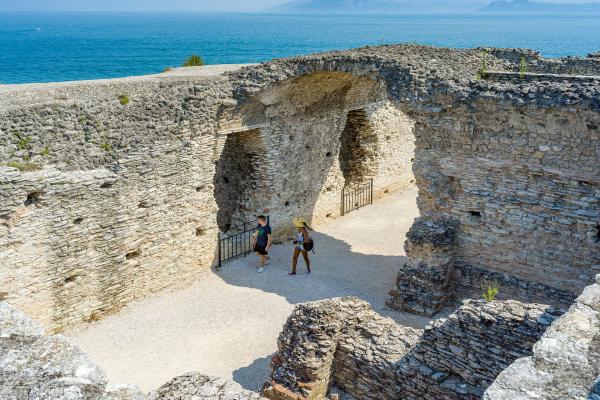
The ruins cover roughly two hectares and are among the largest of their kind in northern Italy. The villa was built in the late 1st century BC and extended in the following century, as a luxurious retreat for leisure, with rooms and porticoes arranged around terraces, a bath complex, and long covered galleries, called cryptoporticoes, that allowed people to walk in shade or in rain. The ground plan can be traced on the site, and you can recognise areas by the remains of thick walls, vaulted halls and a section of the baths. Some of the structure reaches up several storeys, and from the edge of the platform, the view down to the water is dramatic.
The visit is a walk through an olive grove, along paths that lead through the ruins and past low walls and arches, to the viewing points at the end of the peninsula. A small archaeological museum on site displays finds from the villa, among them fragments of painted plaster, mosaics, glass, ceramics and bronze objects, and helps to bring the ruins to life. Information panels in several languages explain the structures. The terrain is uneven and has few places for shade, so sturdy shoes, water and a hat are recommended in summer.
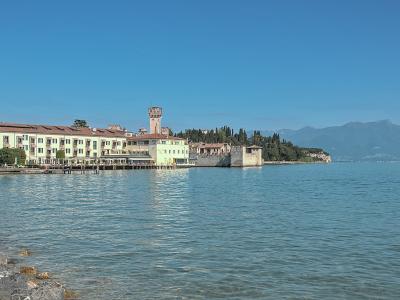
The site is at the far northern end of the peninsula, a walk of about a kilometre from the old town, along the lakeside and through the olive trees, and it is also reached by road from Desenzano del Garda, around twelve kilometres away. It combines naturally with the Rocca Scaligera at the entrance to the town and with the Terme di Sirmione, the thermal baths on the peninsula. Opening times and ticket prices change between seasons, so check them in advance. The Grotte suit anyone interested in Roman history and in the scenery of Lake Garda, and the end of the afternoon, when the light on the water is soft and the crowds begin to thin, is an especially fine moment to be there.
Categories
More photos coming soon
Hours & Fees
- Open
- 8:30 a.m.-7:30 p.m.
- Admission
- €10
Hours and prices change, especially out of season. Check with the venue before you go.
Nearby Attractions
Other places to visit in Sirmione
Questions people ask
Quick Facts
Best Time to Visit
Visit between April and June or September and October for mild temperatures and fewer crowds.