







- Hours
- 9:30 am to 12:00 pm and 4:00 pm to 8:00 pm
- Where
- Positano, Campania and Amalfi Coast
- Directions
- Directions
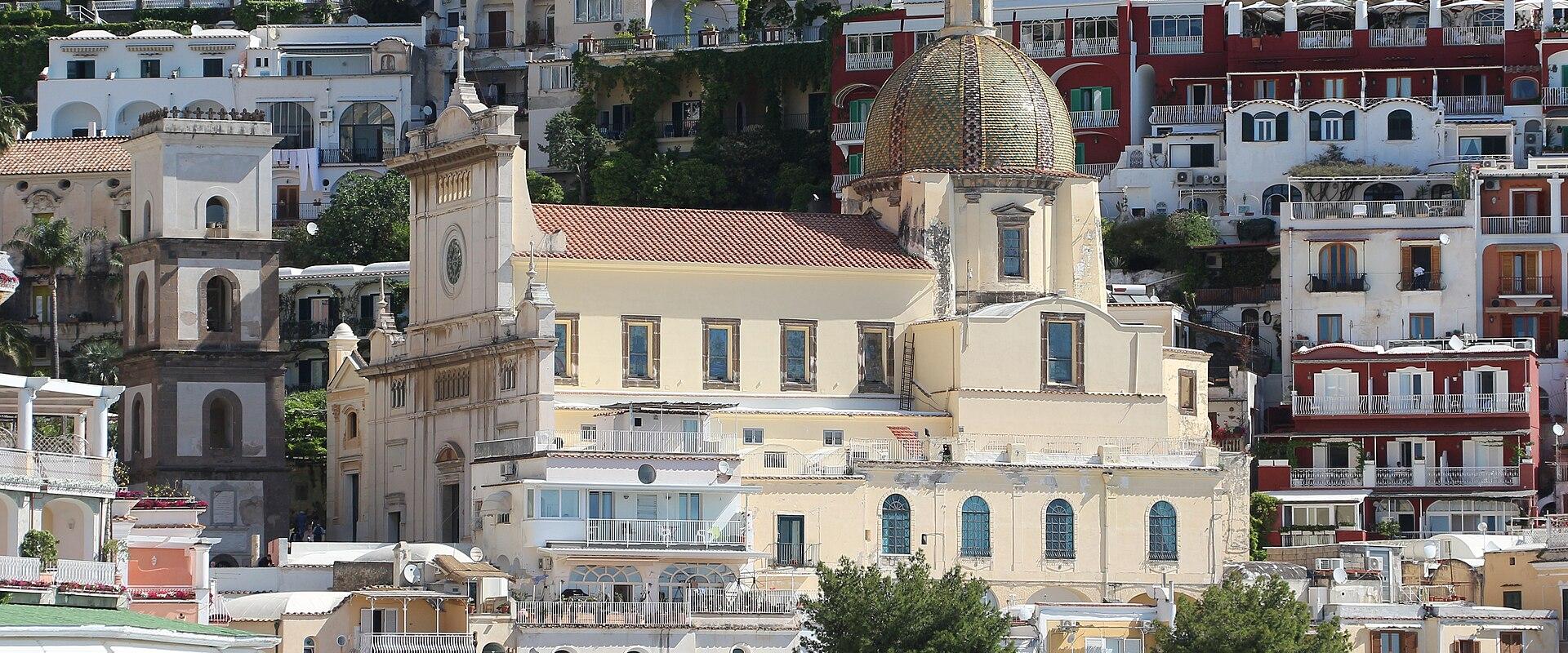
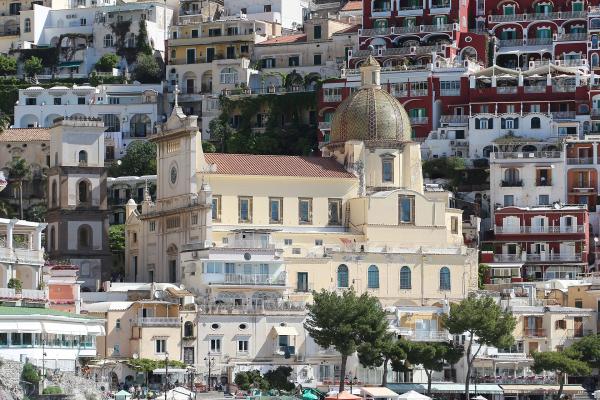
The Church of Santa Maria Assunta, commonly known as Chiesa Santa Maria Positano, is the parish church of Positano and the most recognisable building in the town, with its dome covered in bright majolica tiles in yellow, green and blue that glitters among the houses piled up on the cliff above the sea. Positano is a village on the Amalfi Coast built on a steep slope, with pastel-coloured houses climbing from the beach, and the dome of the church, seen from the beach or from boats, is the image that appears on postcards. The church stands in the middle of the village, close to the beach, in a small square that opens toward the sea.
The history of the church is linked with the Benedictine monastery of Saint Mary, which, according to oral tradition, goes back to the second half of the 10th century. The abbey is associated with a Byzantine icon of the Virgin, a dark panel painting in the Eastern style, which, according to legend, was brought to Positano from the East, perhaps by sea, and was set up for veneration in the church. A well-known tale says that pirates stole the icon, but that a storm threatened their ship, and a voice from the icon told them to put it down, in the dialect, posa, posa, which became the name of the town. Whether the story is true or not, the icon remains the focus of local devotion, and it hangs above the altar. The church was rebuilt in the 18th century in the Baroque style, and the majolica dome, a typical feature of the Amalfi Coast, dates from that time.
Inside, the church is bright and spacious, with a nave and chapels in an elegant white and gold, with a marble floor and altars decorated with stucco. A particularly interesting feature is the Roman remains beneath the church. Excavations have revealed the walls and rooms of a Roman villa, with traces of wall paintings, which show that Positano was already a place of residence for the wealthy in antiquity, and the finds are a reminder of the long history of the coast. Access to these may be limited, so check before visiting.
The parish church is open to visitors at set hours in the morning and in the late afternoon and evening, and it is also open before Mass celebrations, which are held on Sundays and feast days at times that change between winter and summer. The visit is short, usually about twenty minutes, and visitors are expected to dress modestly. Other local churches, such as the Church of Our Lady of Graces and the Church of St. Catherine, can be found in the village. The village streets, with steps and shops, lead down to Spiaggia Grande, the main beach, and the other beach of Fornillo is a walk along the coast. Via dei Mulini is a charming street in the old part. Nearby, the Grotta dello Smeraldo, the Emerald Grotto, can be visited by boat, and the Path of the Gods (Sentiero degli Dei) is a famous hiking route above the sea. The church suits those who like religious heritage, folklore and the scenery of the Amalfi Coast.
More photos coming soon
Opening Hours
- Open
- 9:30 am to 12:00 pm and 4:00 pm to 8:00 pm
Hours and prices change, especially out of season. Check with the venue before you go.
Nearby Attractions
Other places to visit in Positano
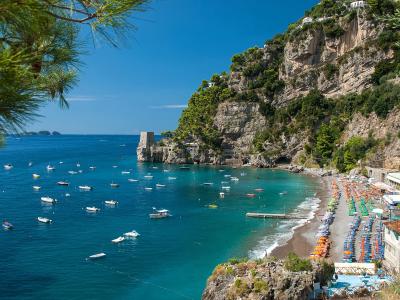
Fornillo Beach
Sheltered cove with calm waters near Positano
Beaches · Scenic Viewpoints
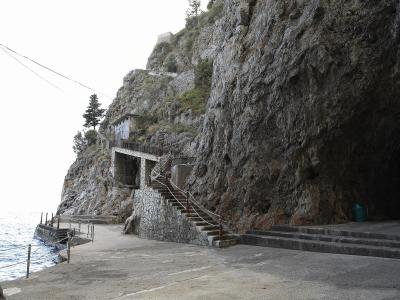
Grotta dello Smeraldo (Emerald Grotto)
Karst cave with emerald light reflections
Activities & Wellness · Coastal & Maritime
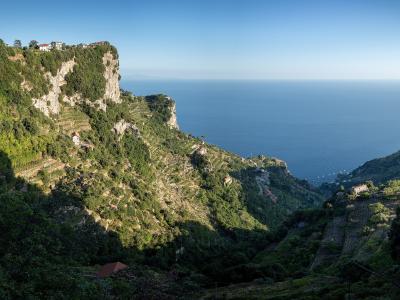
Path of the Gods (Sentiero degli Dei)
5.6km cliff-edge trail above Positano
Coastal Walks · Guided Hikes
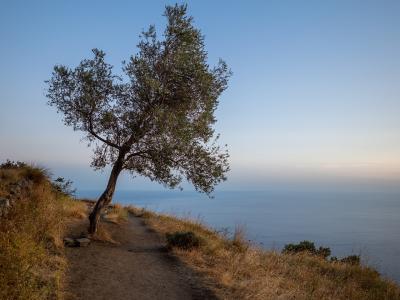
Sentiero degli Dei (Path of the Gods)
8-km cliffside trail 600m above Amalfi Coast
Coastal Walks · Hiking Trails
Questions people ask
Quick Facts
Best Time to Visit
Visit between April and June or September and October for mild temperatures and fewer crowds.