







Cathedral of Saint Andrew (Duomo di Amalfi)
Medieval cathedral housing Saint Andrew's relics
- Where
- Amalfi, Campania and Amalfi Coast
- Directions
- Directions
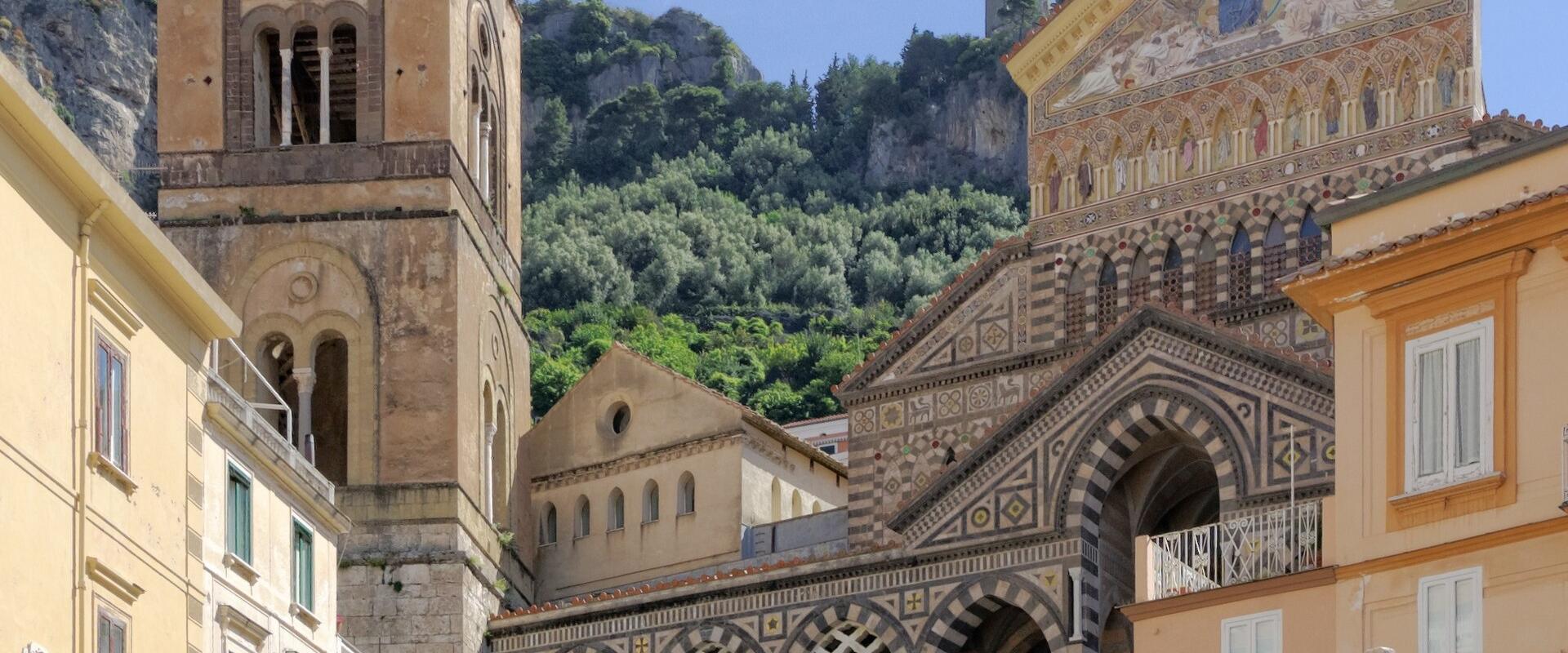
The Cathedral of Saint Andrew (Duomo di Amalfi), officially the Monumental Complex of the Cathedral of Sant’Andrea, is the most important landmark of Amalfi and of the Amalfi Coast, and it dominates the Piazza del Duomo at the top of a broad flight of steps. It was originally the seat of the Diocese of Amalfi, and since 1986 it has been the seat of the Diocese of Amalfi-Cava de’ Tirreni. It is deeply connected with the history of Amalfi as one of the great maritime republics of the Middle Ages, which rivalled Pisa, Genoa and Venice in trade with the East, and it reflects the wealth and cultural links that came with that role, in particular with the Byzantine and Arab worlds.
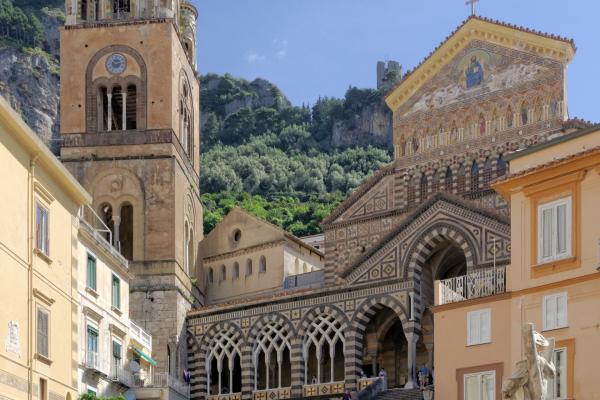
Construction began in the 9th and 10th centuries, over an earlier temple, and it grew from two separate churches, which were joined into a single entity by the 12th century. The result is a complex overlay of architectural styles: Romanesque, Arab-Norman, Gothic, Renaissance and Baroque all have their place. The most striking exterior feature is the facade, which was rebuilt in the late 19th century in a Norman-Arab-Byzantine style, with a striped pattern in black and white and bright polychrome mosaics in the upper part and a high triangular gable that glitters in the sun. The bell tower, from the 12th and 13th centuries, is crowned with a cap of yellow and green majolica tiles and is one of the most graceful on the coast. The great bronze door at the entrance is one of the oldest in Italy, cast in Constantinople in the 11th century, the work of Byzantine craftsmen, and a sign of Amalfi’s trade ties.
Inside, the cathedral has a Baroque interior, with a high nave, gilded ceilings and chapels with marble altars, and it also preserves older elements. The main attraction is the Crypt of St. Andrew, the shrine of the old Maritime Republic, decorated with 17th-century frescoes and stucco, which houses the relics of Saint Andrew the Apostle, the patron of the town. According to tradition, the relics were brought to Amalfi from Constantinople in 1206, and local legend tells of the manna of Saint Andrew, an oily liquid that is said to have exuded from the saint’s body and that was long believed to have healing powers. A statue of the saint, in bronze, stands in the crypt. The adjoining cloister and the museum, in the former Basilica of the Crucifix, form part of the same complex.
The cathedral is an active church, so visitors should dress modestly, and visits may be limited during services. A ticket is needed for the cloister and museum, and opening times change with the season. Climbing the sixty-odd steps to the entrance is part of the experience, and it is better to arrive early, before the crowds. A visit takes about an hour. The cathedral lies close to Marina Grande Beach and the Amalfi Paper Artisan Workshops, which are in the valley behind the town. It suits those interested in medieval history, architecture and religious art, and it is the best starting point for a walk through Amalfi.
More photos coming soon
Nearby Attractions
Other places to visit in Amalfi
Amalfi Paper Artisan Workshops
Historic paper museum with hands-on workshops
History & Heritage · Museums & Culture
Cloister of Paradise (Chiostro del Paradiso)
13th-century cloister with Arab-influenced pointed arches
Architectural Monuments · Historic Cemeteries
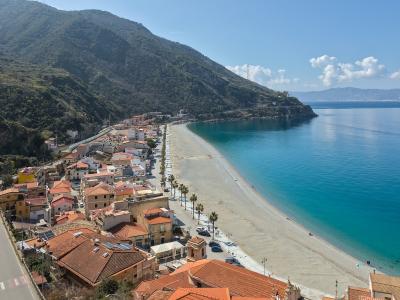
Marina Grande Beach
Historic pebble beach overlooking Amalfi's center
Beaches · Water Sports
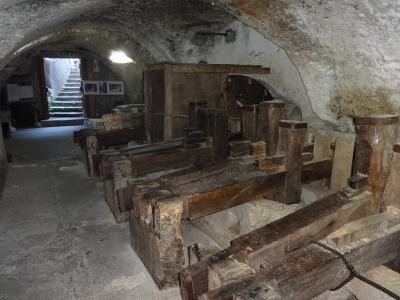
Paper Museum (Museo della Carta)
Historic paper mill museum in Amalfi's Valle dei Mulini
History & Heritage · Museums & Culture
Questions people ask
Quick Facts
Best Time to Visit
Visit between April and June or September and October for mild temperatures and fewer crowds.